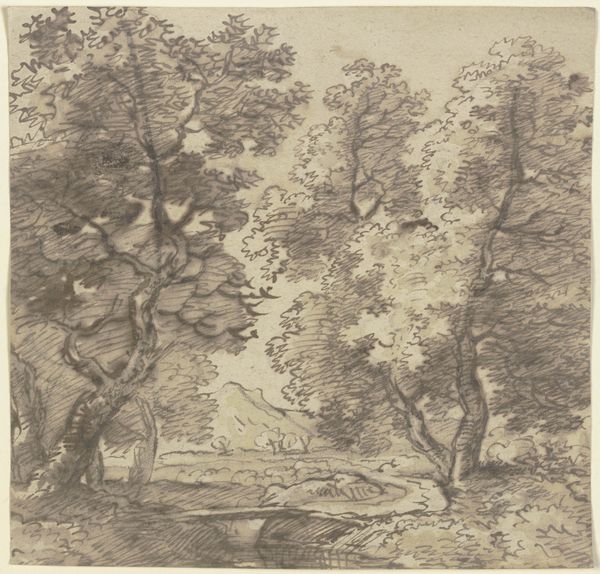
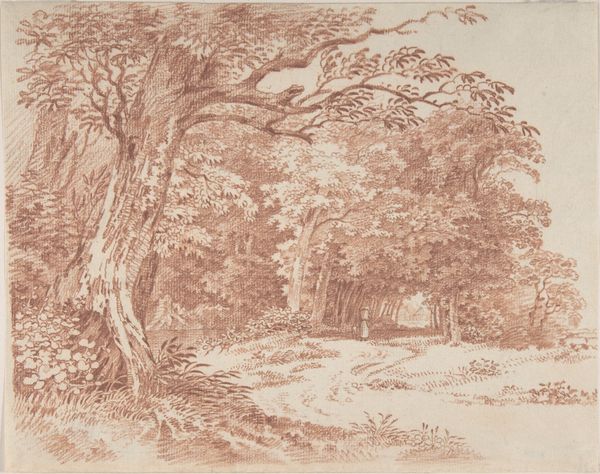
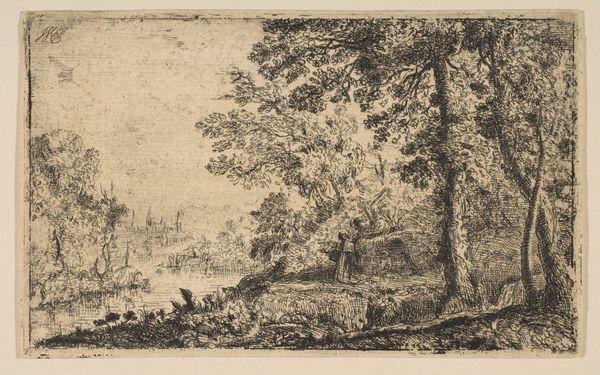
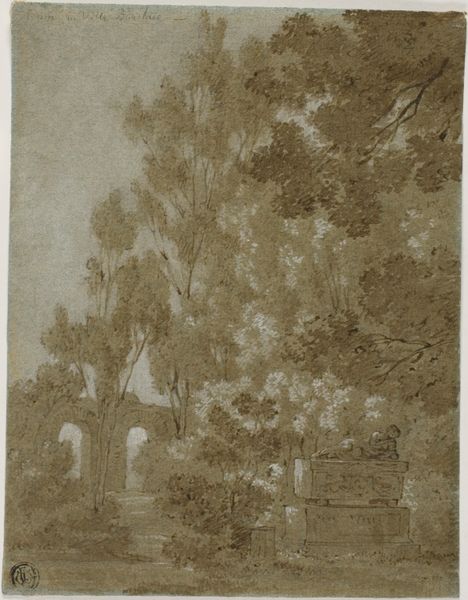
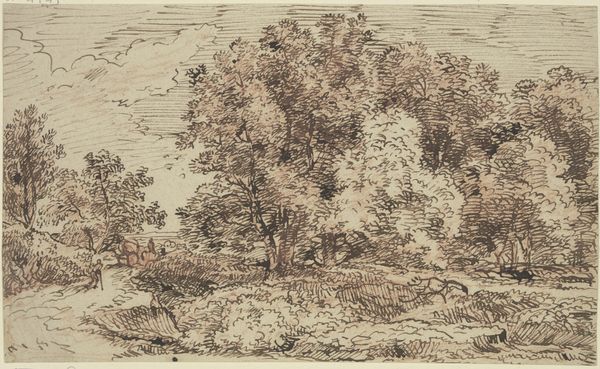
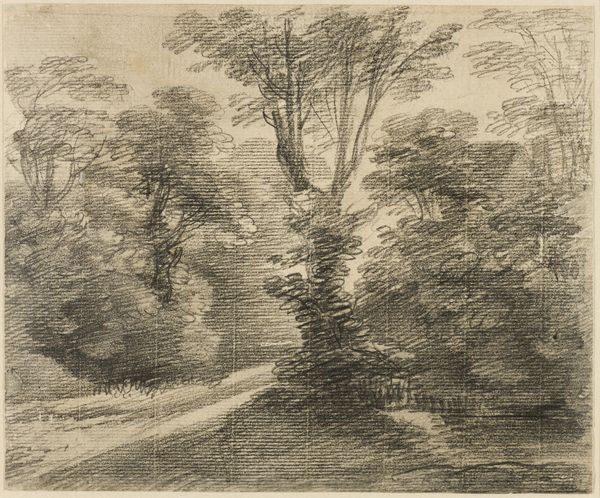
drawing, plein-air, ink
drawing
organic
baroque
plein-air
landscape
etching
ink
Dimensions: overall: 8.5 x 12.4 cm (3 3/8 x 4 7/8 in.)
Copyright: National Gallery of Art: CC0 1.0
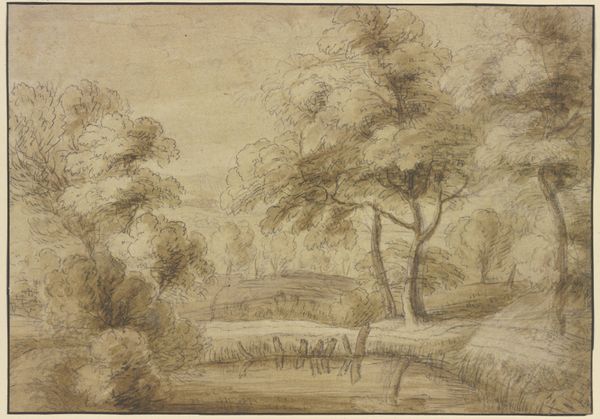
Editor: This is "Grove of Trees" by Claude Lorrain, made around 1640. It’s an ink and wash drawing, evoking a rather tranquil scene. What strikes you about it? Curator: I'm particularly interested in Lorrain’s plein-air drawing practice here. What kind of labor went into producing those washes, achieving those effects, the sheer process of transporting and working with materials outside? Editor: That’s a great question. I guess I was focused more on the overall visual harmony, but the labor aspect is important. Were these drawings just studies, or were they intended as artworks in themselves? Curator: The relationship between sketch and finished painting is revealing. Think about the economic context. Patrons would often buy paintings, but a drawing like this, made directly from observation, possesses a unique immediacy tied to its production. It becomes a commodity of experience, not just depiction. The consumption of "nature" itself changes through its material representation. Editor: So, it's about more than just representing nature; it's about the whole system of how it was made and what it meant to possess it. Curator: Precisely. Consider also the social aspect. Who had the leisure to engage in plein-air drawing? It speaks to class and the consumption of landscape as a privilege. It also anticipates later Impressionist movements that centered the artist and the act of painting itself. Editor: It’s fascinating to consider how the materials and method of creation are so tied to larger societal structures. It gives a whole new dimension to looking at what I previously just saw as a nice drawing. Curator: Indeed. By focusing on the means of production and the social context, we uncover hidden layers of meaning in what might initially appear as a simple landscape. It also helps us challenge preconceived notions of art’s place in society.
Comments
No comments
Be the first to comment and join the conversation on the ultimate creative platform.
 React
React Comment