1769 - 1778
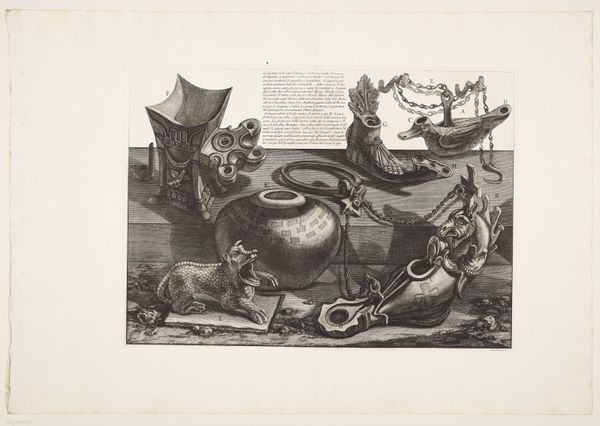
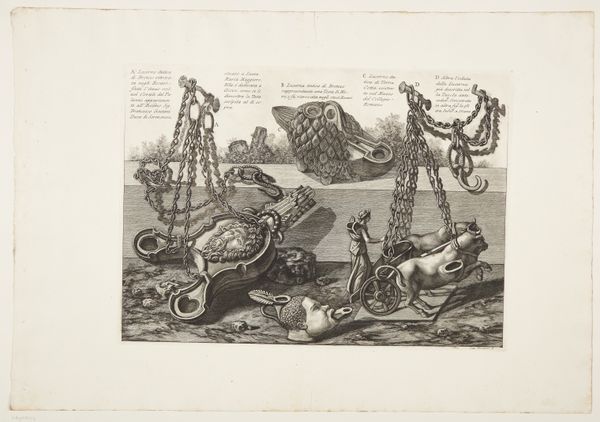
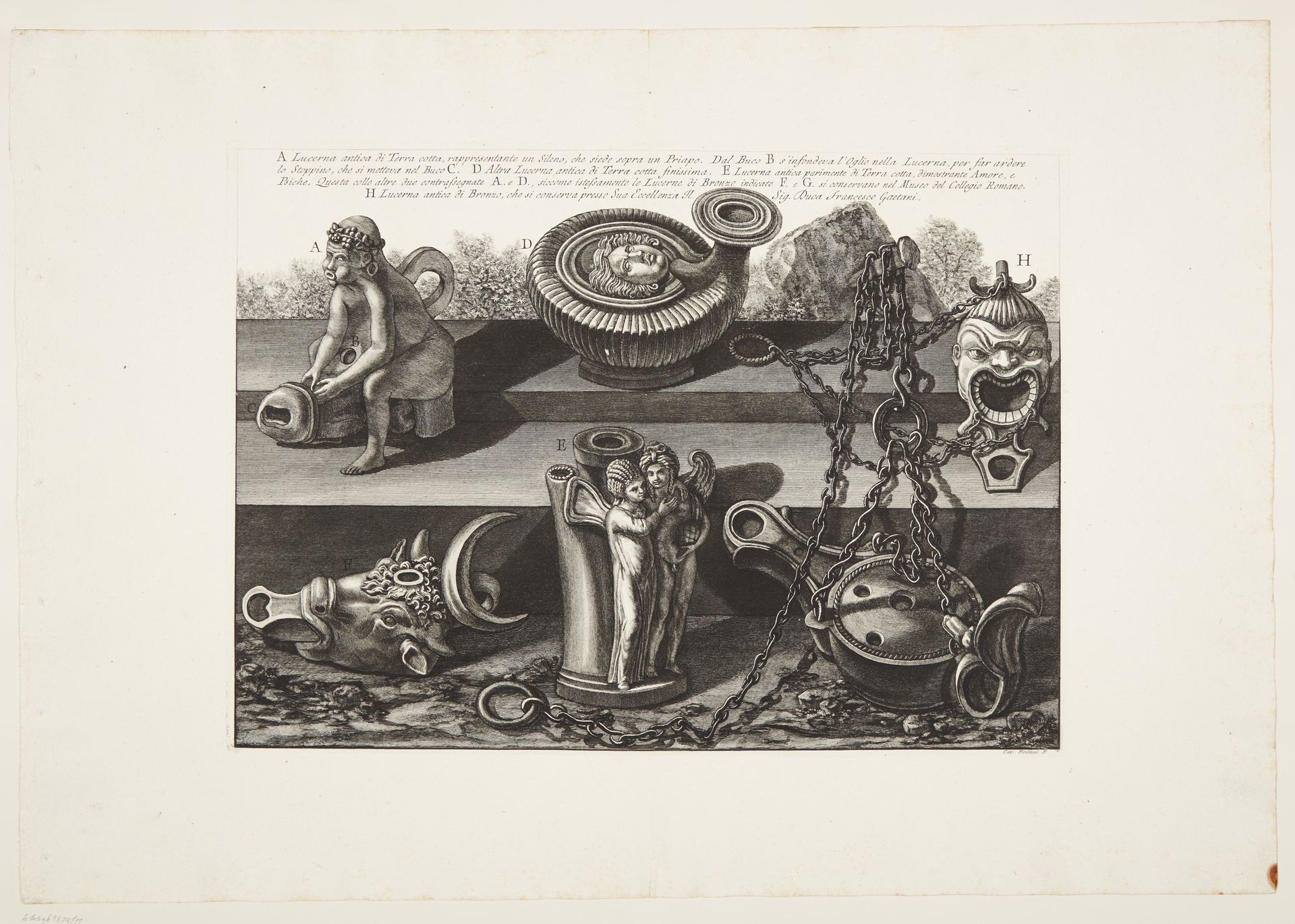
Various lamps of bronze and terracotta, one of them representing a small Silenus seated on a Priapus


Listen to curator's interpretation
Curatorial notes
Giovanni Battista Piranesi created this engraving showcasing various bronze and terracotta lamps. Note the lamp depicting Silenus, a companion of Dionysus, seated on Priapus, a fertility god. These figures are steeped in symbolism, linked to themes of revelry, nature, and procreation. Silenus, often depicted as drunk and jovial, represents primal instincts, while Priapus embodies the generative power of nature. This coupling echoes through history in bacchanalian art, and even resurfaces in carnivalesque traditions. Consider how such imagery, initially tied to religious and cultural practices, evolves into motifs associated with satire and social commentary. The enduring appeal of these symbols lies in their connection to our collective memory, tapping into subconscious desires and anxieties surrounding pleasure and mortality. Like the cyclical patterns in nature, these symbols reappear, transformed yet fundamentally linked to their origins, engaging us on a primal level.