1682 - 1730
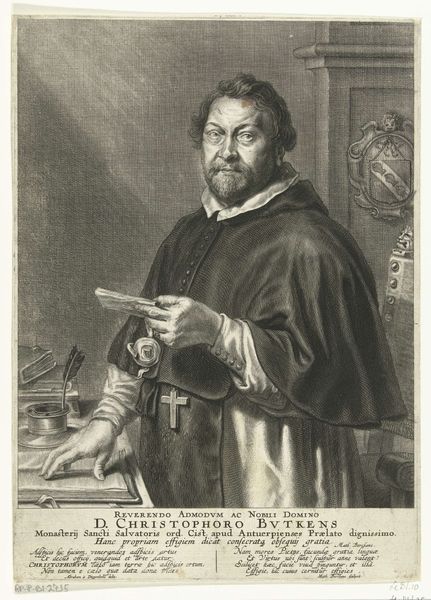
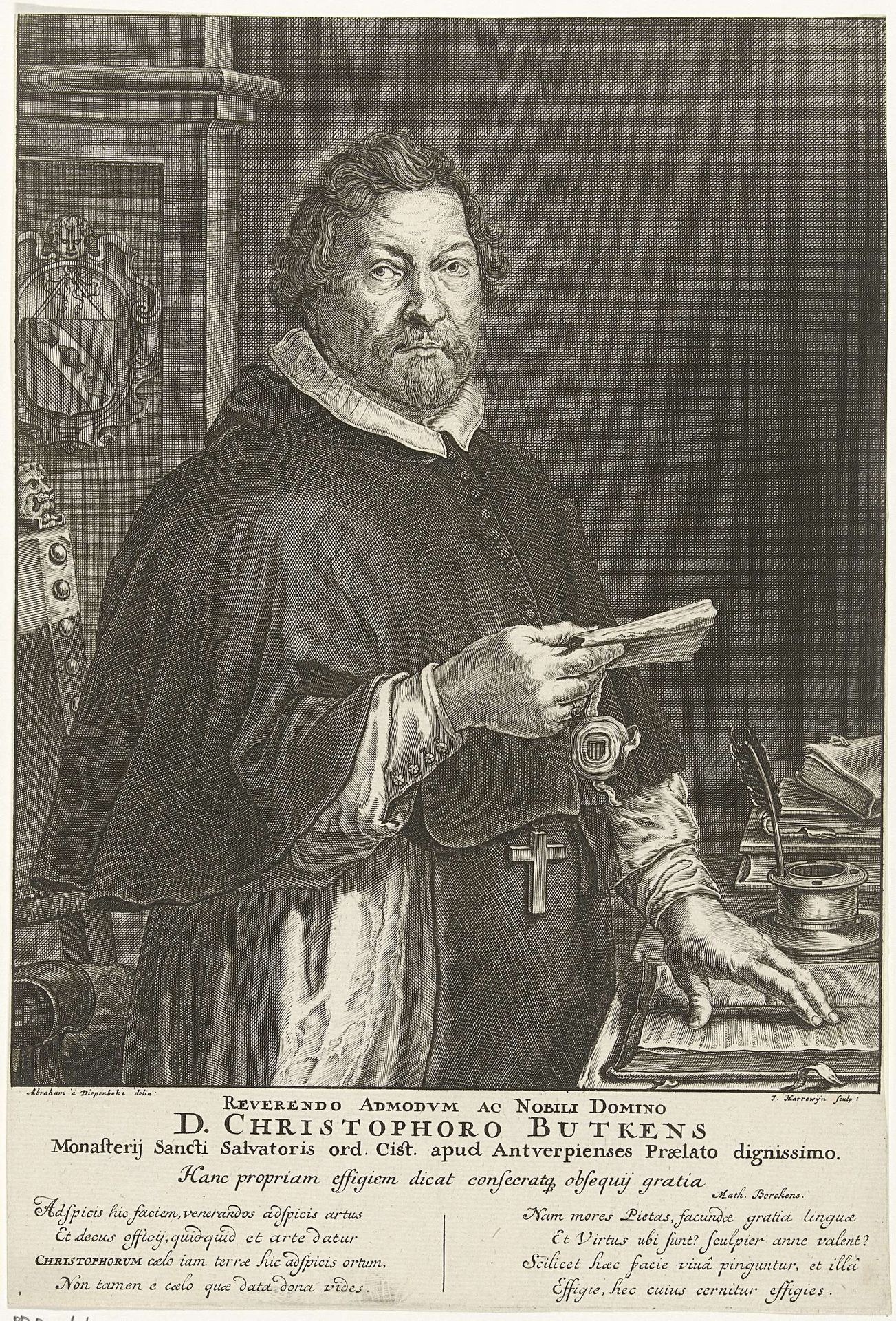
Portret van Christophorus Butkens

Jacobus Harrewijn
1660 - 1732Location
RijksmuseumListen to curator's interpretation
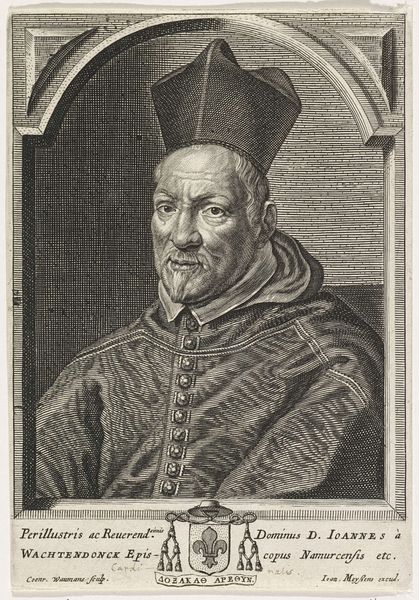
Curatorial notes
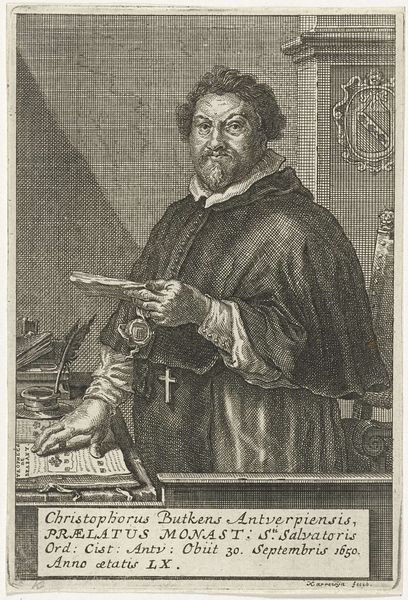
Editor: So, this is Jacobus Harrewijn's "Portret van Christophorus Butkens," likely from between 1682 and 1730, a baroque engraving now hanging in the Rijksmuseum. The texture is so rich, especially given it's a print. I’m curious about the context around portraits like this - what can we learn from this piece? Curator: We see here not just an individual, but a representation carefully constructed to convey status and authority. Look at the inscribed Latin text and Butkens’ attire. How do these contribute to an understanding of Butkens within the socio-religious structure of his time? Editor: Well, the Latin suggests he’s highly educated, and his robes, plus the cross, suggest a high-ranking cleric, someone of importance. It’s like the artist is making a statement about his subject’s position in society. Curator: Exactly. And consider the historical context. The late 17th and early 18th centuries saw the rise of powerful religious institutions. Portraits served as a tool to cement and project that authority. What do you notice about the coat of arms? How would that be significant to those viewing it? Editor: I hadn't really noticed it. I suppose the crest establishes this Butkens within a family, anchoring him further within society and possibly linking him to nobility or privilege? It adds another layer to his identity. Curator: Precisely! This engraving isn’t just a likeness. It's a political statement about the subject's lineage and significance within society and within the Church. Editor: So, it’s less about capturing individual personality and more about presenting a public image that reinforces specific social and power dynamics. That changes how I view it! Curator: And perhaps highlights the museum's role in continuing these historical power dynamics today. It really emphasizes the continuing social life of images.