

c. 1940
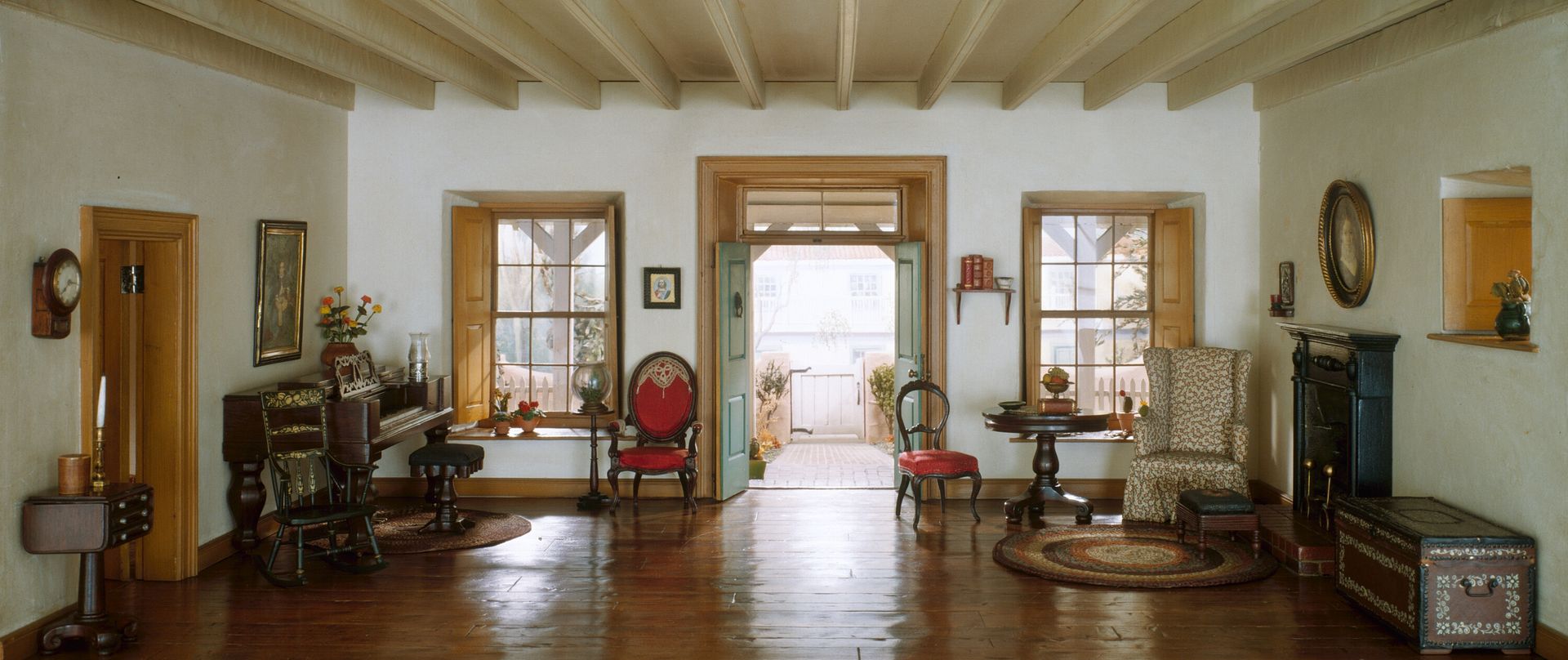
A36: California Living Room, 1850-1875


Listen to curator's interpretation
Curatorial notes
Editor: This is "A36: California Living Room, 1850-1875" a miniature room, around 1940, by Narcissa Niblack Thorne. It's currently housed at the Art Institute of Chicago. The perspective is almost like looking into a dollhouse. The wood tones give it a sense of warmth and domesticity. What captures your attention most in this piece? Curator: It’s utterly captivating, isn't it? Stepping back to observe, I see echoes of sun-drenched afternoons and lives steeped in simple elegance. I'm struck by the architectural accuracy. Consider how light streams through those shuttered windows – do you notice the stark contrast it creates, defining shapes with an almost cinematic precision? There’s a peaceful air about it all. Almost makes me want to settle in with a glass of lemonade and watch the day slowly melt away… Don't you feel that yearning for simpler times looking at this? Editor: I can see that! And it's fascinating how a miniature can evoke such grand feelings. What's your read on why Thorne created these miniatures? Curator: Ah, that’s the delicious mystery, isn't it? Some might see them merely as demonstrations of skill, miniature trophies of domestic history. But I suspect something deeper: perhaps a longing for connection to past generations, or maybe a quiet rebellion against the fast pace of modern life. Each piece of furniture, carefully placed, becomes a verse in a poem about home, heritage, and memory. Do you get that impression of stories just waiting to be told? Editor: Definitely. Looking closer, the objects tell stories, don’t they? Like a history book in miniature. It makes you think about the everyday lives of people who inhabited such spaces. Curator: Exactly! We’ve touched upon the magic – it's more than just scale; it’s the intimate details whispered across time. The ability to freeze an aesthetic and feeling with careful detail… delicious.