Dimensions: image: 25.5 x 28.6 cm (10 1/16 x 11 1/4 in.) mount: 27.9 x 35.6 cm (11 x 14 in.)
Copyright: CC0 1.0
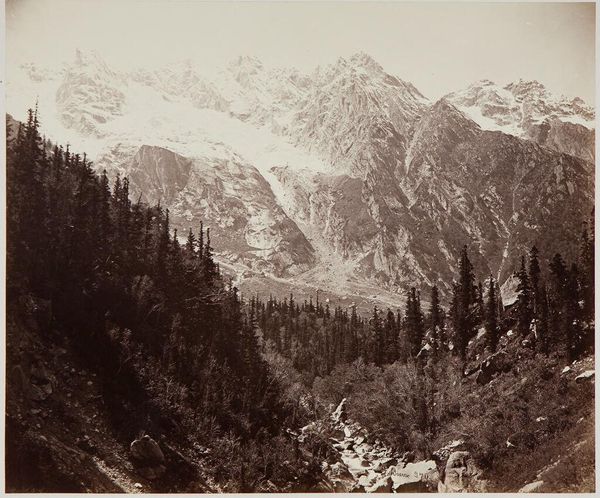
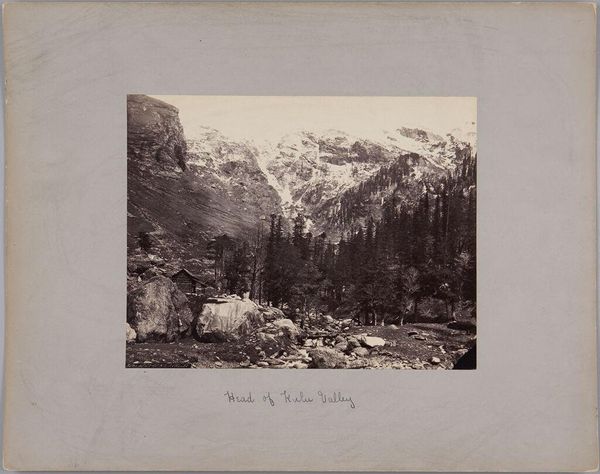
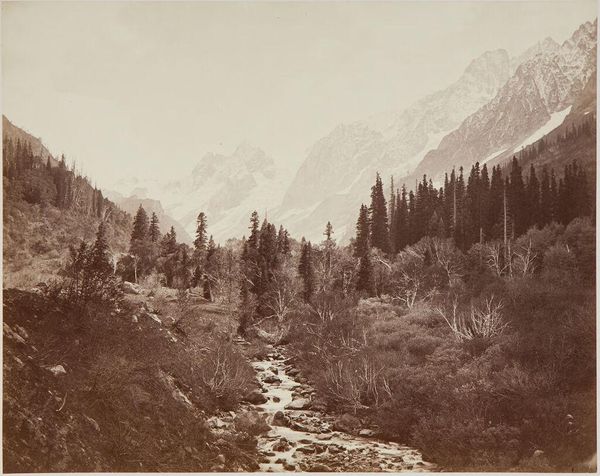
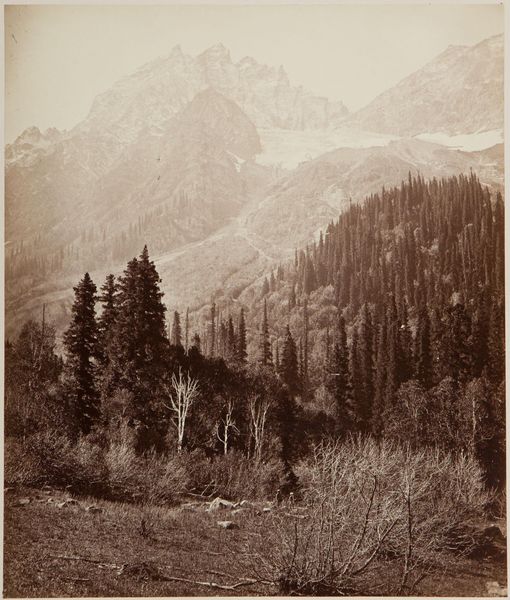
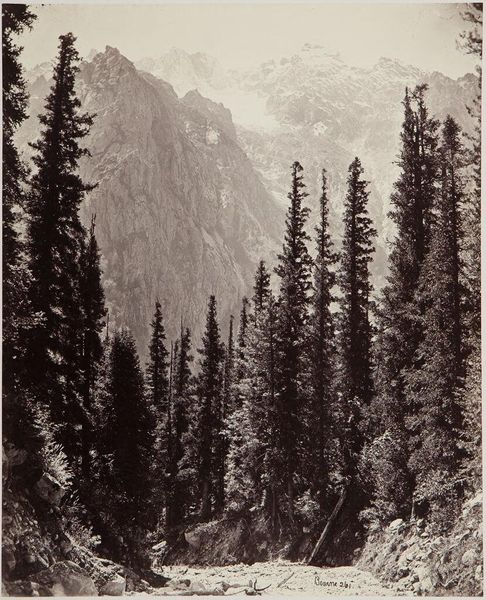
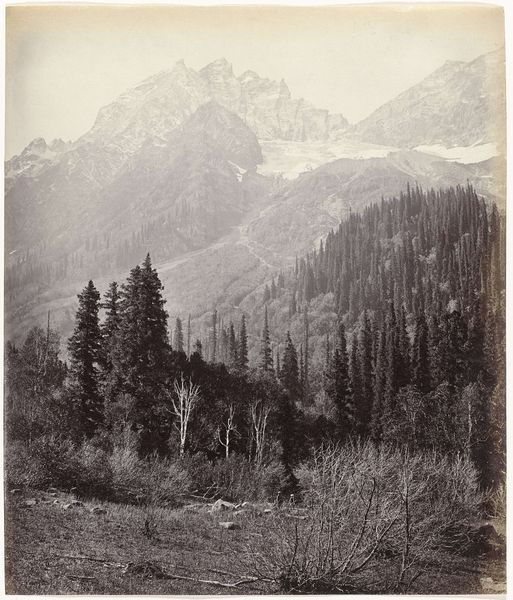
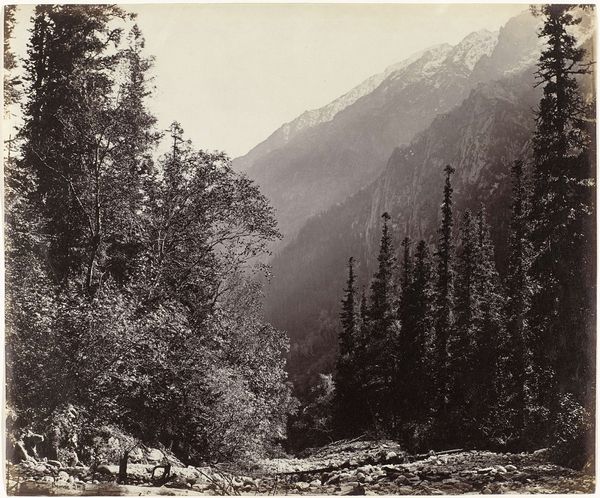
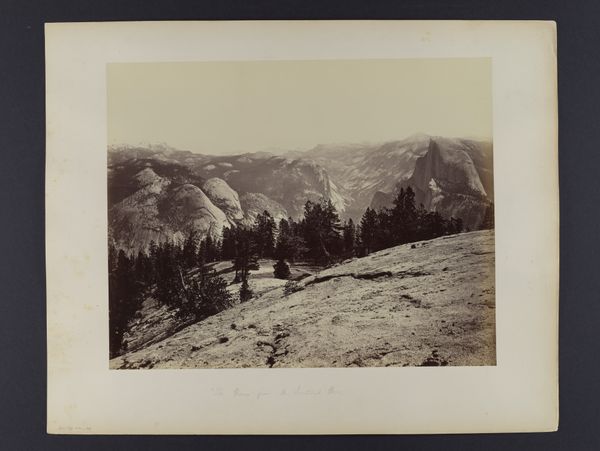
Curator: This is Samuel Bourne’s, "The Wanga Valley," a landscape photograph. Bourne was active in India during the latter half of the 19th century. Editor: The photograph has a majestic, almost imposing feel. The sheer scale of the mountains is quite striking. Curator: Bourne's photographs played a role in shaping perceptions of the Indian subcontinent within British society. His work contributed to the visual rhetoric of empire. Editor: Yes, and viewing it through that lens makes me think about colonial exploration and the often romanticized depictions of landscape used to justify control. Curator: Precisely. Bourne’s images contributed to the visual archive that supported colonial narratives. It’s important to remember whose perspective is being centered. Editor: Absolutely. It reminds us that even landscape photography is never neutral, that images are always shaped by power dynamics. Curator: A crucial point. It prompts a deeper inquiry into the relationship between art, representation, and the colonial project. Editor: Food for thought, indeed.
Comments
No comments
Be the first to comment and join the conversation on the ultimate creative platform.
 React
React Comment