About this artwork
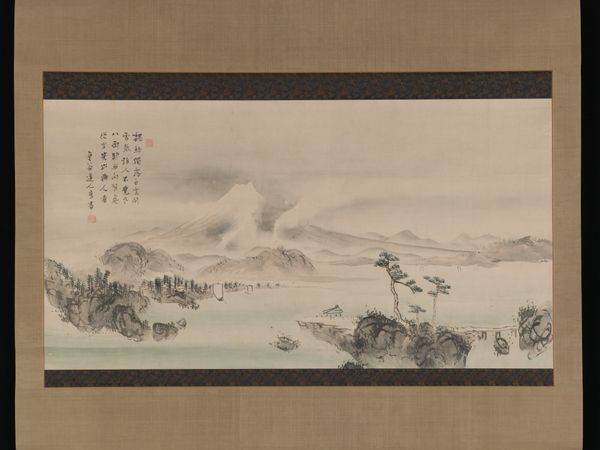
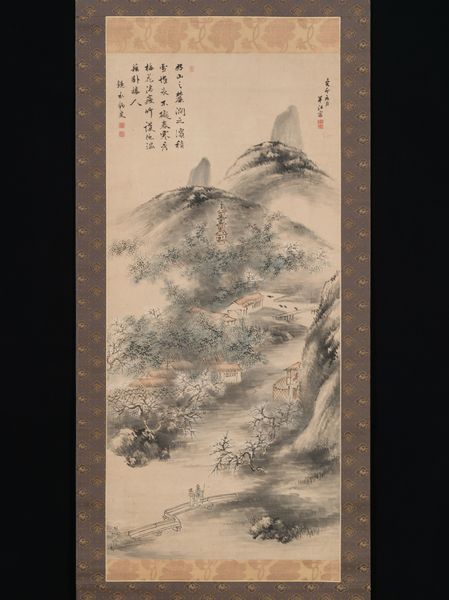
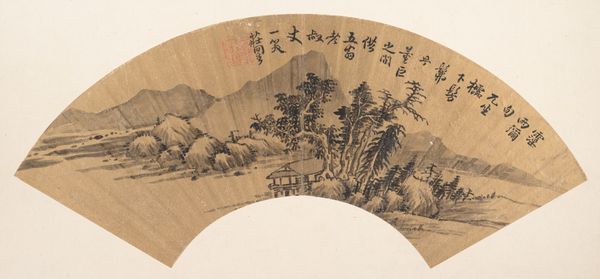
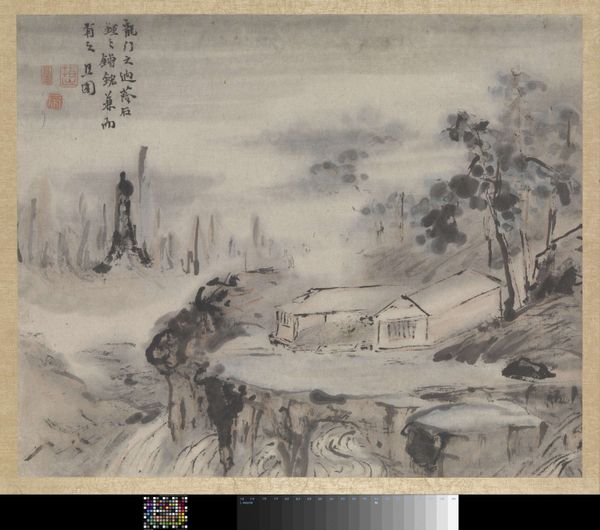
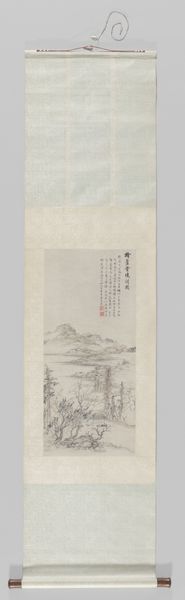
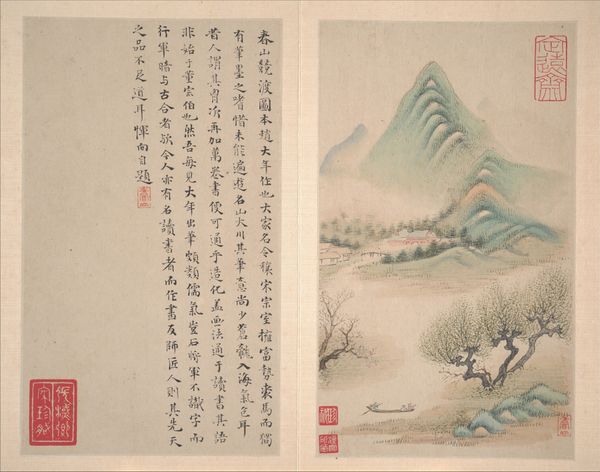
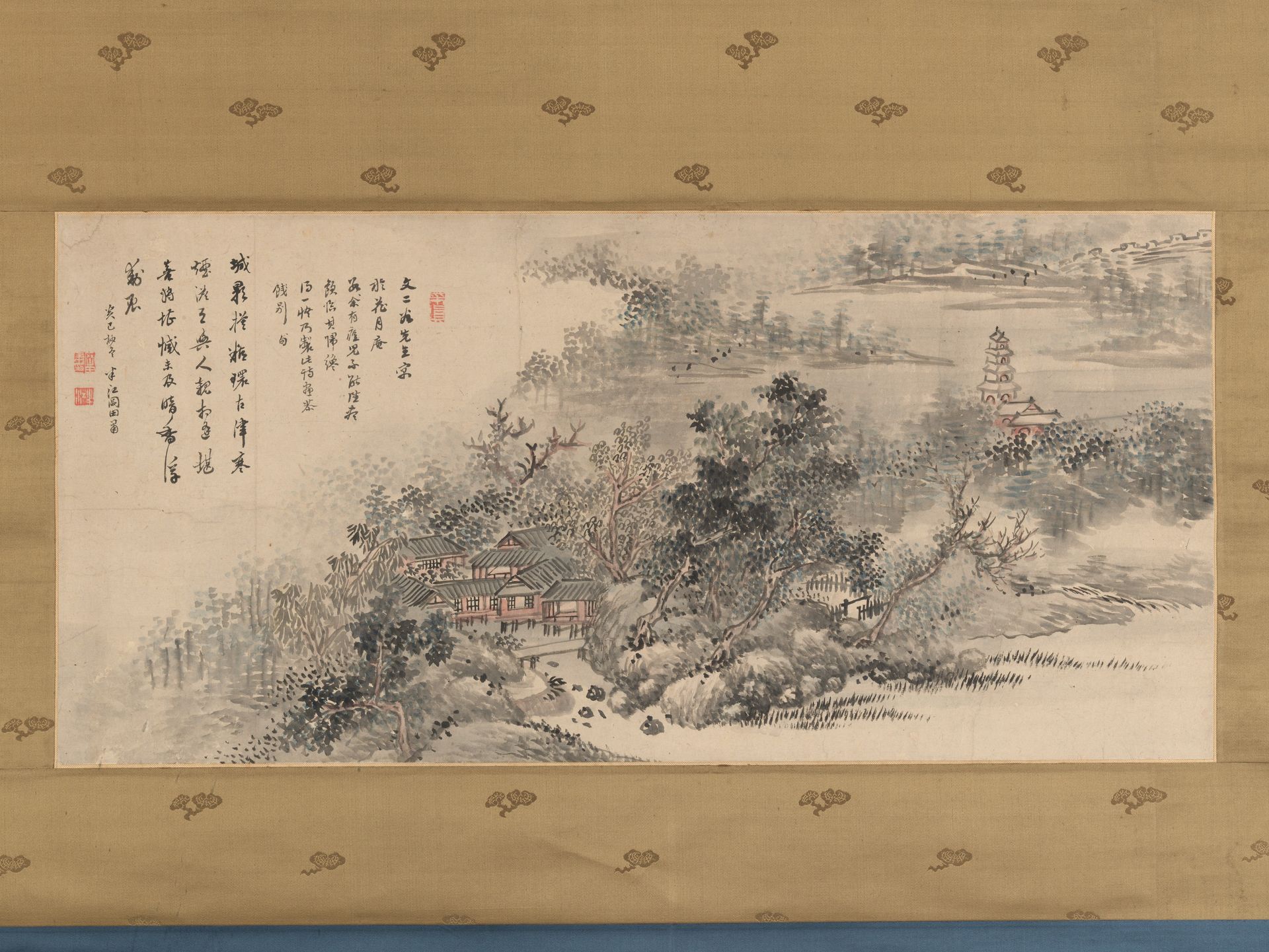
Okada Hankō created this painting, Farewell Gift to Tani Bunji, using ink and color on paper. The composition reveals a muted landscape, where soft grays and gentle browns define a scene of layered depth and serene distance, evoking a sense of calm reflection. Hankō masterfully uses the structure of traditional landscape painting to convey more than just scenery. Note the interplay of near and far, achieved not through Western perspective but through strategic placement of forms and subtle gradations of ink. The carefully rendered architecture, nestled amidst the foliage, serves as a focal point, suggesting human integration with nature. This is reinforced by the calligraphic inscriptions, integral to the painting's structure, weaving literary and visual elements together. The artwork destabilizes the conventional dichotomy between image and text. Its invitation to contemplate nature's beauty also presents an intellectual engagement through poetry and artistic expression, where the materiality of ink becomes a conduit for philosophical thought.
Farewell Gift to Tani Bunji 1833


Artwork details
- Medium
- painting, paper, ink
- Dimensions
- Image: 11 13/16 × 25 1/16 in. (30 × 63.7 cm) Overall with mounting: 50 3/16 × 31 3/4 in. (127.5 × 80.6 cm) Overall with knobs: 50 3/16 × 34 3/16 in. (127.5 × 86.8 cm)
- Location
- Metropolitan Museum of Art, New York, NY
- Copyright
- Public Domain
Tags
painting
asian-art
landscape
paper
ink
Comments
No comments
About this artwork
Okada Hankō created this painting, Farewell Gift to Tani Bunji, using ink and color on paper. The composition reveals a muted landscape, where soft grays and gentle browns define a scene of layered depth and serene distance, evoking a sense of calm reflection. Hankō masterfully uses the structure of traditional landscape painting to convey more than just scenery. Note the interplay of near and far, achieved not through Western perspective but through strategic placement of forms and subtle gradations of ink. The carefully rendered architecture, nestled amidst the foliage, serves as a focal point, suggesting human integration with nature. This is reinforced by the calligraphic inscriptions, integral to the painting's structure, weaving literary and visual elements together. The artwork destabilizes the conventional dichotomy between image and text. Its invitation to contemplate nature's beauty also presents an intellectual engagement through poetry and artistic expression, where the materiality of ink becomes a conduit for philosophical thought.
Comments
No comments