About this artwork
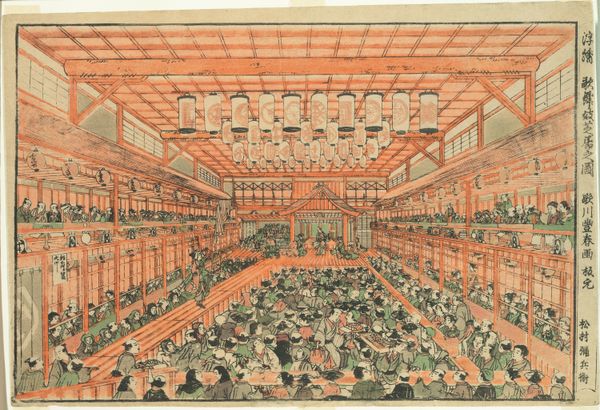
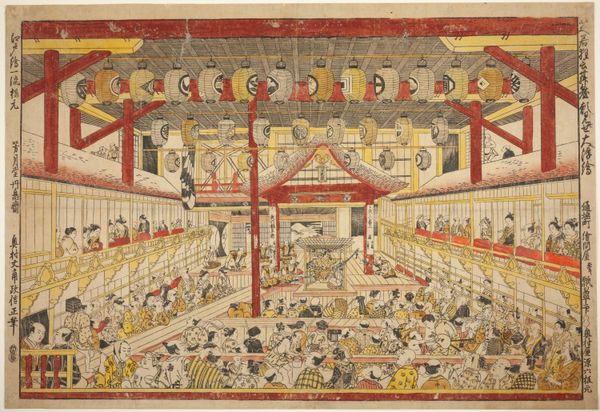
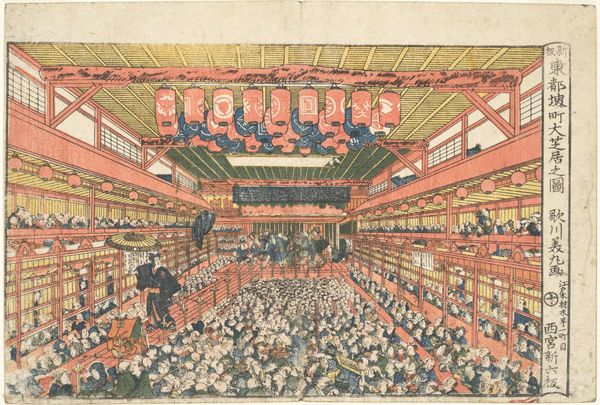
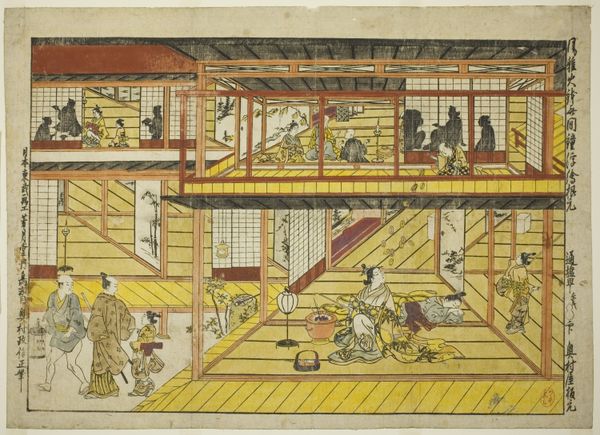
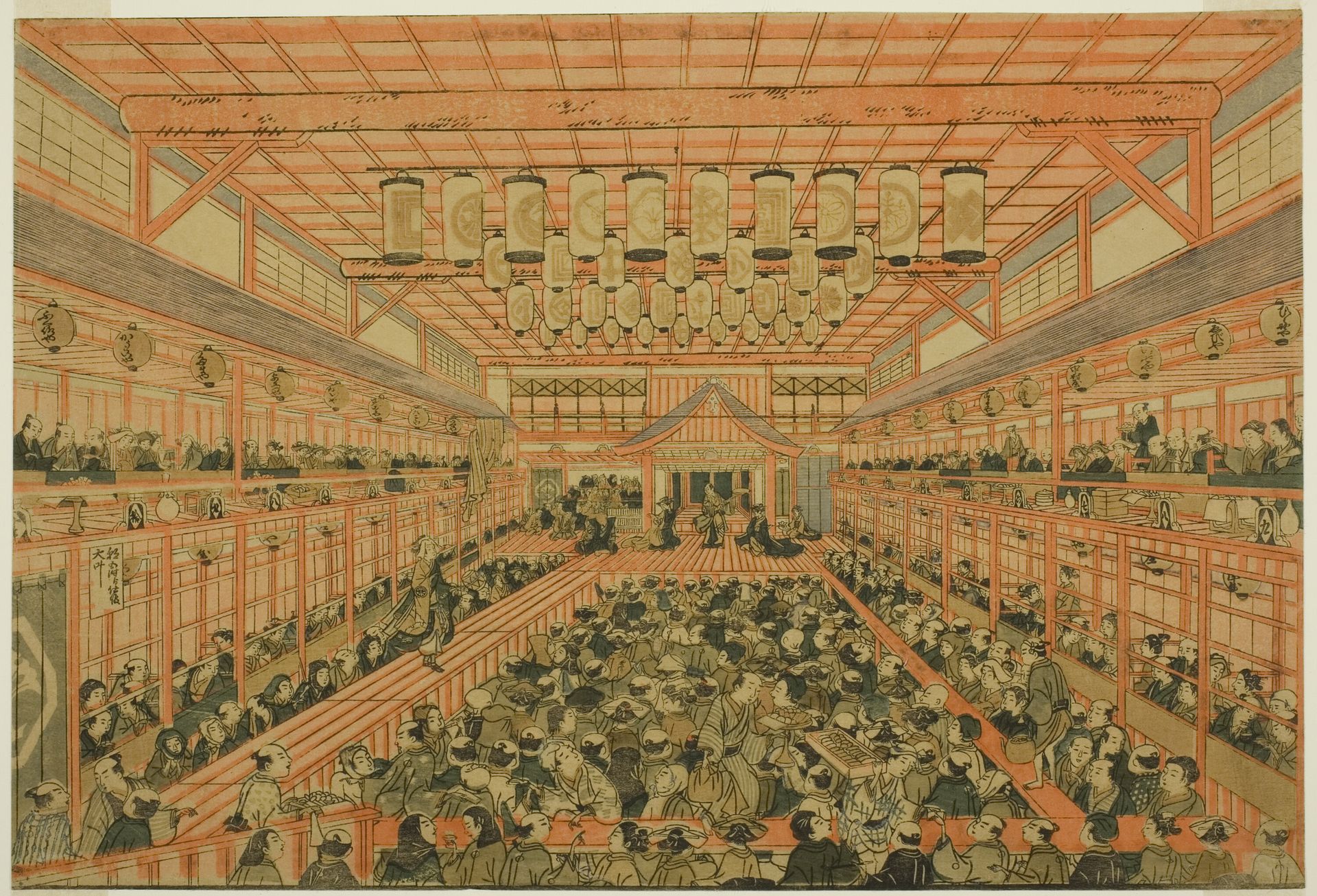
Utagawa Toyoharu's woodblock print, made around 1770, offers a glimpse into a Kabuki theater, alive with symbolic meaning. Suspended above the audience, paper lanterns cast a soft glow, these lanterns, symbols of enlightenment and celebration, draw the eye upwards. The lanterns remind us of similar practices from various times and places, for example, ancient Roman festivals that used light to ward off the darkness of ignorance. This practice reflects a fundamental human impulse to illuminate our surroundings, both literally and metaphorically. The arrangement of the theater and the lanterns overhead creates an atmosphere where the collective unconscious is awakened, and where we become aware of our own subconscious, mirroring the emotional drama unfolding on stage. Such symbols are not static; they evolve and resurface across epochs. The light from the lanterns creates a shared experience, binding the audience together in a cyclical dance of light and shadow.
Perspective Picture of a Kabuki Theater (Uki-e Kabuki shibai no zu)
c. 1776


Artwork details
- Medium
- print, woodblock-print
- Dimensions
- 9 3/4 × 14 3/8 in.
- Location
- The Art Institute of Chicago
- Copyright
- Public Domain
Tags
Comments
Share your thoughts
About this artwork
Utagawa Toyoharu's woodblock print, made around 1770, offers a glimpse into a Kabuki theater, alive with symbolic meaning. Suspended above the audience, paper lanterns cast a soft glow, these lanterns, symbols of enlightenment and celebration, draw the eye upwards. The lanterns remind us of similar practices from various times and places, for example, ancient Roman festivals that used light to ward off the darkness of ignorance. This practice reflects a fundamental human impulse to illuminate our surroundings, both literally and metaphorically. The arrangement of the theater and the lanterns overhead creates an atmosphere where the collective unconscious is awakened, and where we become aware of our own subconscious, mirroring the emotional drama unfolding on stage. Such symbols are not static; they evolve and resurface across epochs. The light from the lanterns creates a shared experience, binding the audience together in a cyclical dance of light and shadow.
Comments
Share your thoughts