Possibly 1675 - 1717
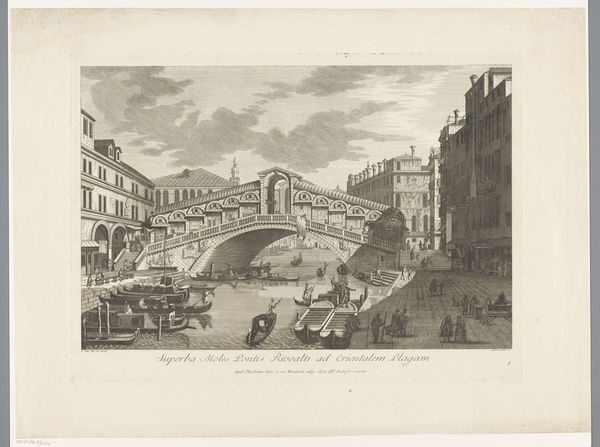
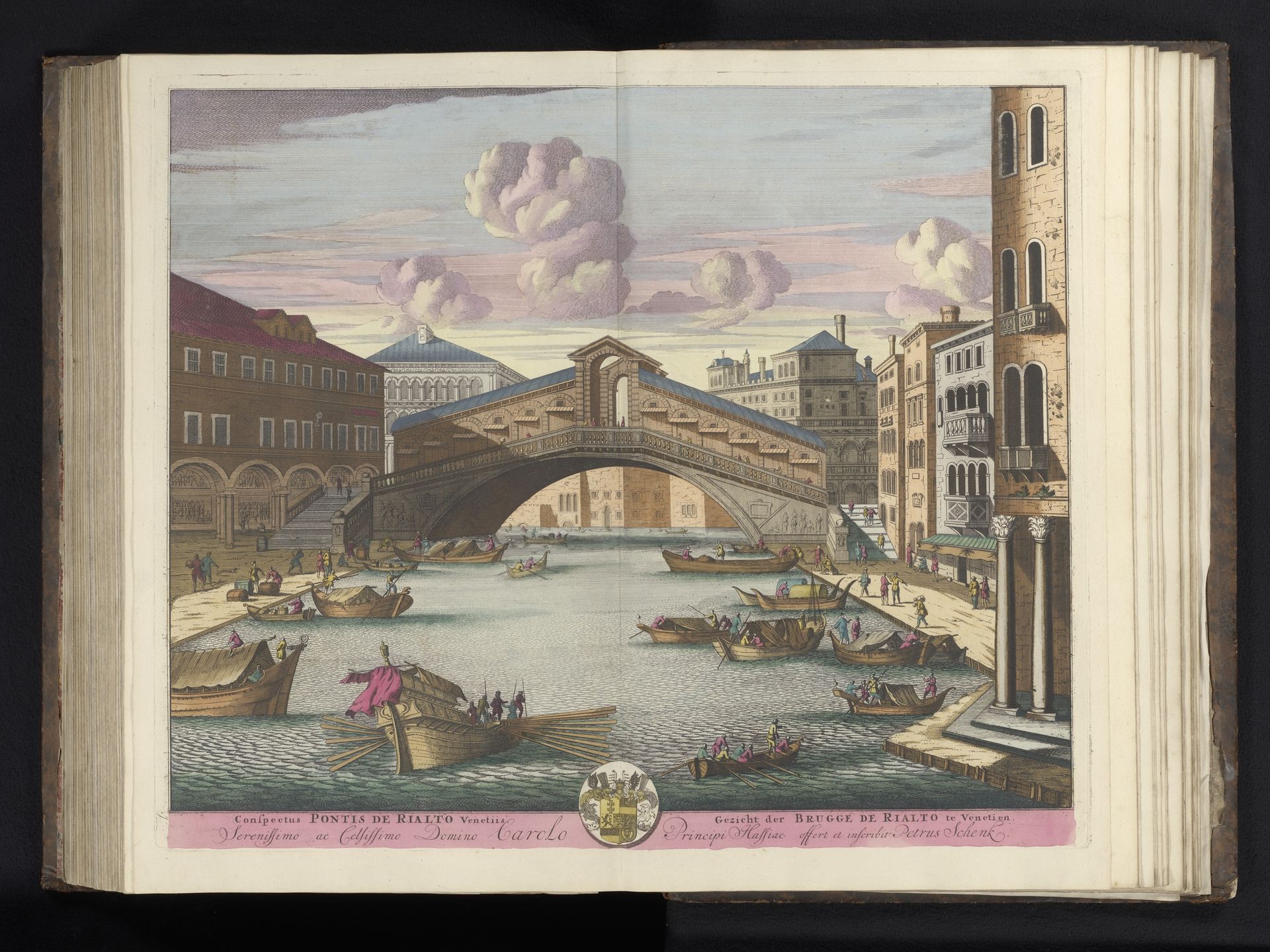
Gezicht op het Canal Grande en de Rialtobrug te Venetië

Pieter Schenk
1660 - 1711Location
RijksmuseumListen to curator's interpretation
Curatorial notes
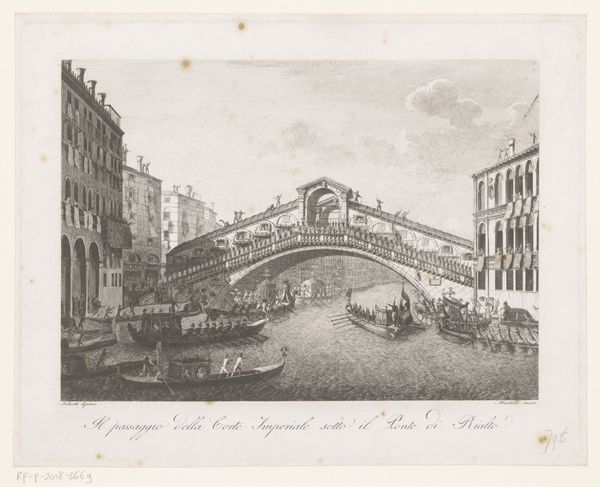
Editor: This etching, "View of the Grand Canal and the Rialto Bridge in Venice," is attributed to Pieter Schenk, possibly dating from 1675 to 1717. It’s striking how bustling and populated it feels; you can almost hear the sounds of the city. What stands out to you in this piece? Curator: I see a depiction deeply rooted in the political and economic power structures of 17th-century Venice. While seemingly a simple landscape, it's a careful construction reinforcing Venice's self-image as a prosperous, stable, and divinely ordained center of trade. Consider the Rialto Bridge: not just a crossing point, but a symbol of connection, commerce, and control. Editor: So, beyond its beauty, the image served a specific purpose? Curator: Absolutely. These vedute, or view paintings and prints, were highly sought after by wealthy merchants and nobles, reinforcing their status as patrons of the arts and controllers of Venetian society. Notice how the perspective seems almost staged, placing the viewer in a position of power overlooking the bustling activity. Even the artist’s choice of printmaking allows for mass production and dissemination, spreading a very specific image of Venice. Editor: That’s fascinating; I hadn't considered how actively this print is shaping its audience's perception. Were there alternative viewpoints excluded from such images? Curator: That’s precisely the critical question! We rarely see depictions of the city’s underclass, the marginalized communities whose labor and existence fueled this opulent facade. By focusing on the Grand Canal and the Rialto, Schenk’s etching perpetuates a carefully curated narrative, obscuring the complex social realities that underpinned Venetian power. Editor: So it is simultaneously beautiful and propagandistic! I'll never look at a cityscape the same way again. Curator: Indeed! Analyzing art through such socio-political lenses encourages us to consider whose stories are being told—and more importantly, whose are not.