

c. 1575 - 1580
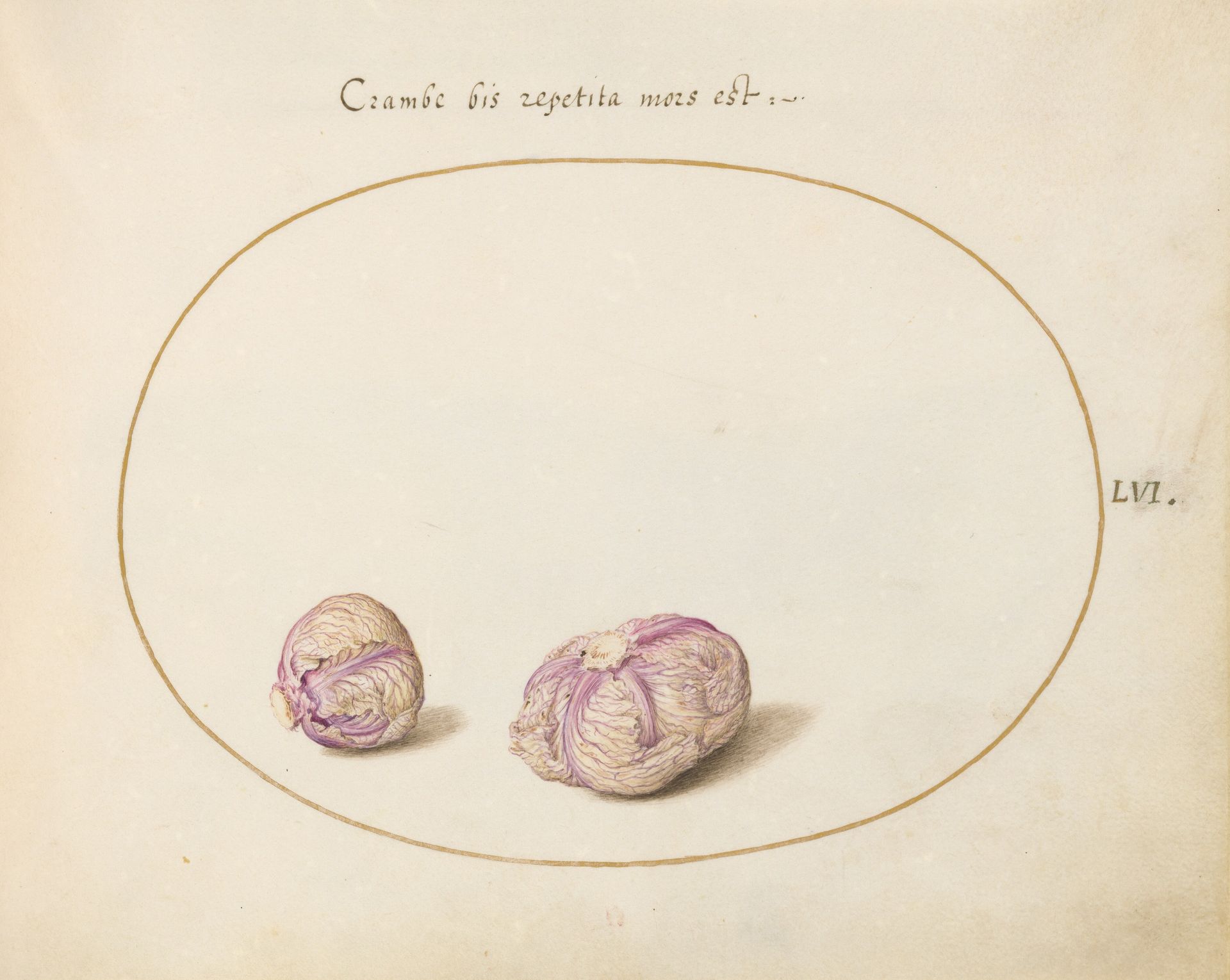
Plate 56: Two Heads of Cabbage


Listen to curator's interpretation
Curatorial notes
Editor: Joris Hoefnagel's "Plate 56: Two Heads of Cabbage," created around 1575-1580, presents these two humble cabbages almost like portraits, isolated within a clean, oval frame on paper. I find the detail remarkable; you can almost feel the texture of the leaves. How would you interpret this focus on something so ordinary? Curator: It's fascinating, isn't it? Hoefnagel was working in a period where botanical illustration was shifting. These weren't merely scientific recordings, but rather imbued with cultural and political weight. Consider the burgeoning global trade routes. Suddenly, these specimens represented far-off lands, exotic trade, and even colonial power. Editor: So, are you saying that something like a cabbage could be read as a symbol of wealth or connection? Curator: Absolutely. It’s also worth remembering the tradition of emblem books at the time, where plants and animals often carried symbolic meanings. The Latin inscription above the cabbages – "Crambe bis repetita mors est…" – adds another layer of complexity. Cabbage served twice is death. It prompts the question: what larger meaning or social commentary is being made here about indulgence, perhaps, or even political greed? Editor: I never would have considered the political implications of a cabbage! Do you think its display within a gallery changes the reading? Curator: Undoubtedly. Museums and galleries are not neutral spaces. How this drawing is displayed—alongside other works, with what didactic information—shapes its reception. Showing it might subtly celebrate scientific observation or maybe critique early capitalist accumulation of the natural world. What did you initially feel about how the gallery decided to display it? Editor: Initially, I saw its detail as just artistry, but I see your point. Context shapes the conversation. I’ll certainly think about that relationship more deeply in other viewings. Curator: Exactly. The image, its history, and the institution – all are interwoven.