About this artwork
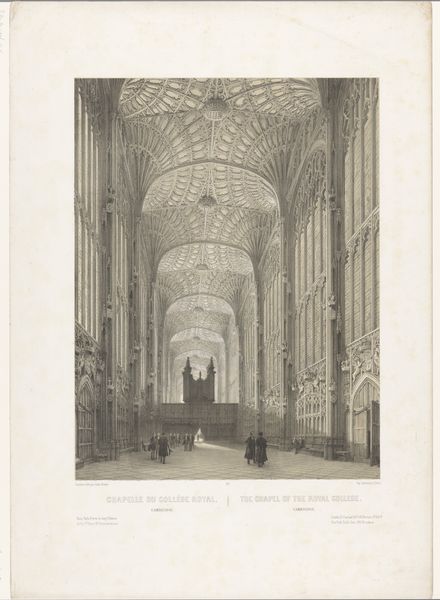
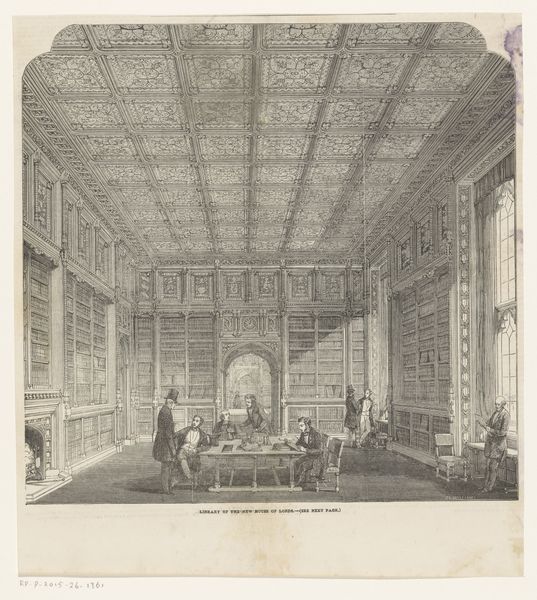
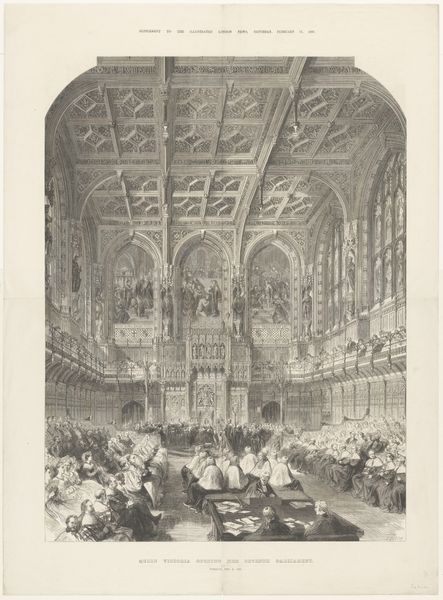
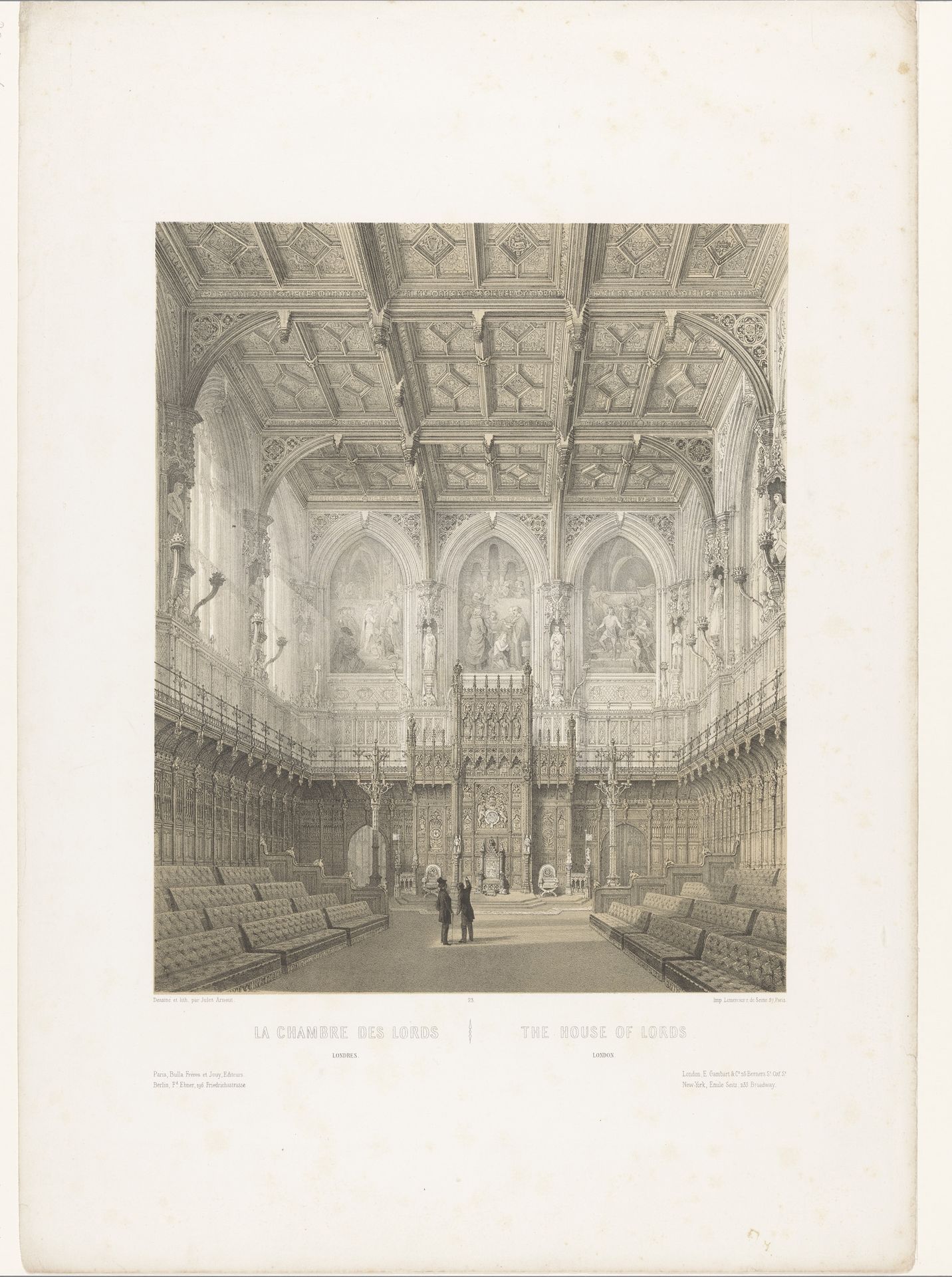
Louis Jules Arnout rendered this view of the interior of the House of Lords in the Houses of Parliament sometime in the mid-19th century. As the elected upper house of the UK parliament, it was, and remains, a space of immense power, historically occupied by aristocratic men. In Arnout’s rendering of this space, light streams in from the side, illuminating the ornate details of the architecture. Yet it also casts shadows, perhaps hinting at the hidden aspects of governance. The two figures in the foreground appear diminutive against the backdrop of the immense room, suggesting the limited access of ordinary citizens to this realm of power. The House of Lords was historically a bastion of the British aristocracy, a symbol of inherited privilege and class division. While the space has undergone changes, consider the ongoing debates about its composition and role in contemporary British society. What does this image say about who has access to power, and who is excluded?
Interieur van het Hogerhuis in de Houses of Parliament
1855 - 1856

Artwork details
- Medium
- print, engraving, architecture
- Dimensions
- height 561 mm, width 400 mm
- Copyright
- Rijks Museum: Open Domain
Tags
Comments
Share your thoughts
About this artwork
Louis Jules Arnout rendered this view of the interior of the House of Lords in the Houses of Parliament sometime in the mid-19th century. As the elected upper house of the UK parliament, it was, and remains, a space of immense power, historically occupied by aristocratic men. In Arnout’s rendering of this space, light streams in from the side, illuminating the ornate details of the architecture. Yet it also casts shadows, perhaps hinting at the hidden aspects of governance. The two figures in the foreground appear diminutive against the backdrop of the immense room, suggesting the limited access of ordinary citizens to this realm of power. The House of Lords was historically a bastion of the British aristocracy, a symbol of inherited privilege and class division. While the space has undergone changes, consider the ongoing debates about its composition and role in contemporary British society. What does this image say about who has access to power, and who is excluded?
Comments
Share your thoughts