

1652 - 1654
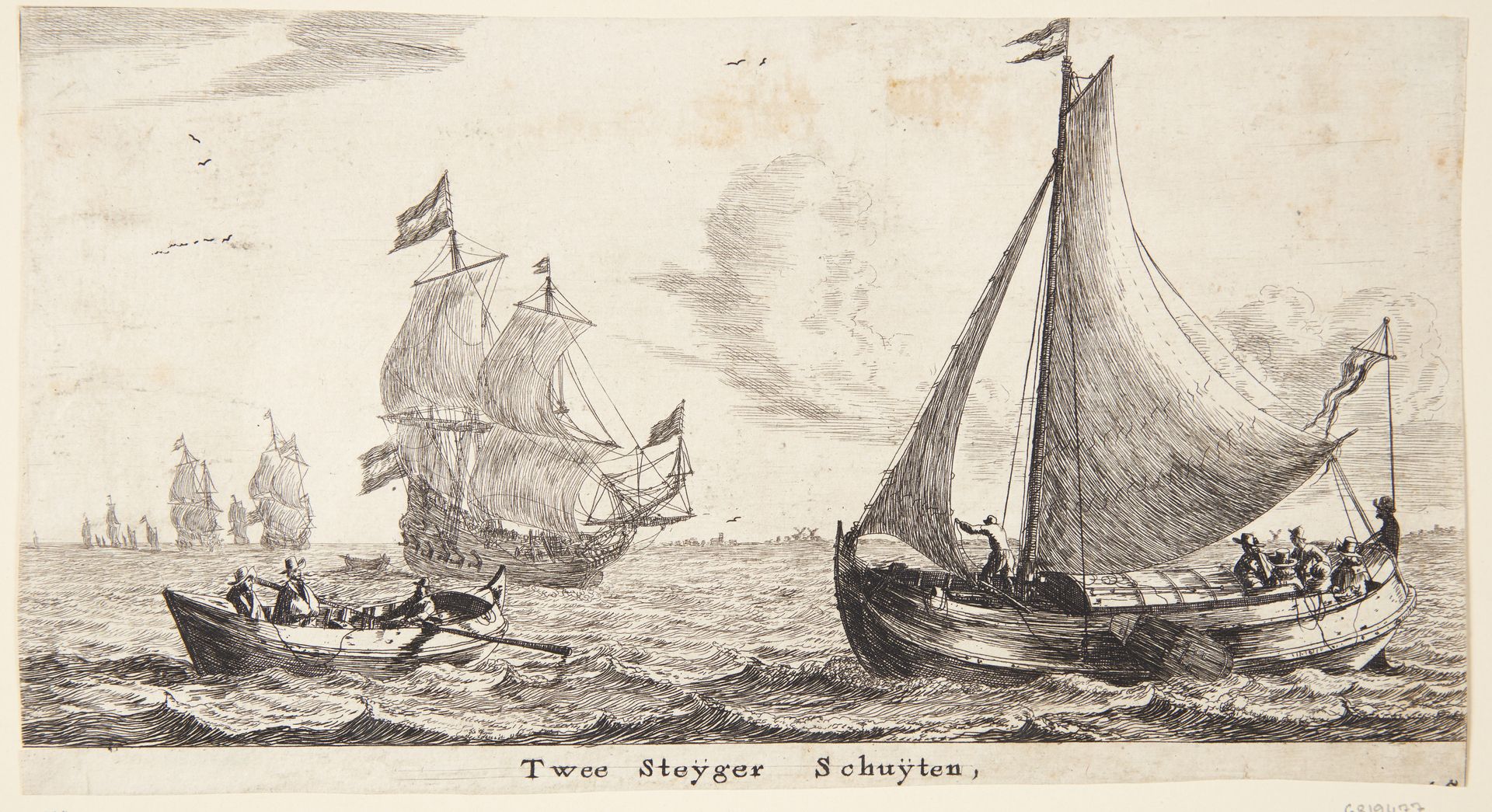
To pramme, den ene for sejl


Listen to curator's interpretation
Curatorial notes
Editor: This is "To pramme, den ene for sejl" by Reinier Nooms, made between 1652 and 1654. It's an etching. The scene feels very dynamic, with all the boats moving in different directions, almost like a snapshot of a bustling harbor. How do you interpret this work? Curator: The beauty here truly lies in the network of lines Nooms creates. Observe the meticulous rendering of the sails – each line contributes to the illusion of volume and texture, a testament to his mastery of the etching technique. Note also the contrast between the finely etched details of the ships and the more broadly defined waves. Editor: It's interesting how you focus on the lines. I was initially drawn to the ships themselves. Curator: Of course! The ships, undoubtedly, serve as the primary subject. Yet, their effectiveness stems from Nooms' astute understanding of line and composition. See how the diagonals of the sails draw the eye across the scene, creating a sense of depth and movement. Ask yourself, how does the composition contribute to the overall feeling of maritime activity? Editor: I see what you mean about the diagonals now. It does create a flow. Is there anything else that stands out regarding Nooms’ technique? Curator: Consider the economy of line. He uses very few lines to create believable figures within each boat. Note too, the variation in the thickness of the lines. This helps define forms and create areas of shadow, without the use of shading as such. Editor: It's amazing how much he achieves with what seems so simple at first glance. Thank you. I'll definitely pay closer attention to those lines in future prints! Curator: A careful study of his line work will be fruitful. It reveals the underlying structure and artistry of the image.