
Curatorial notes
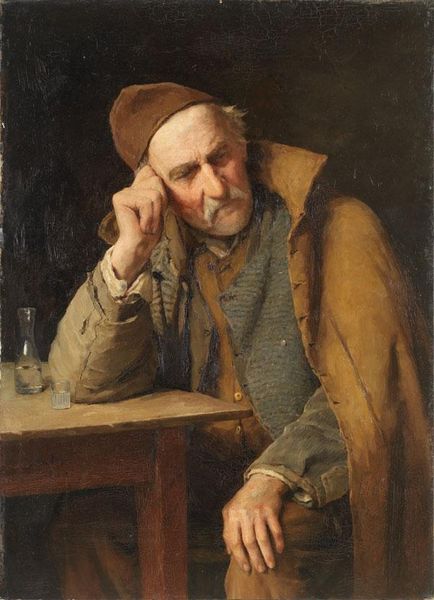
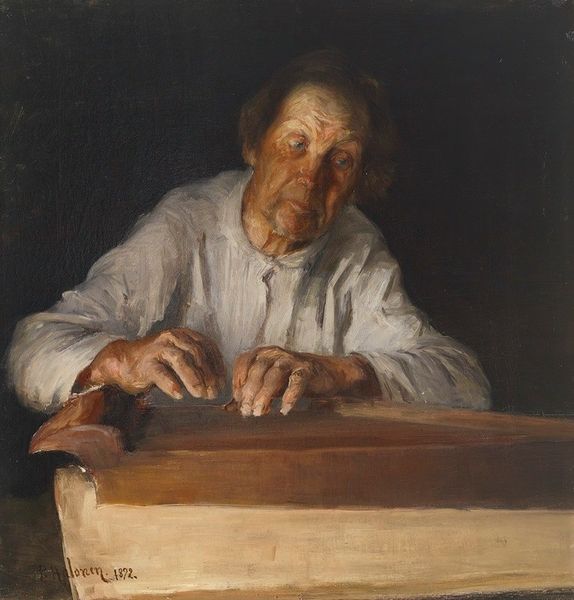
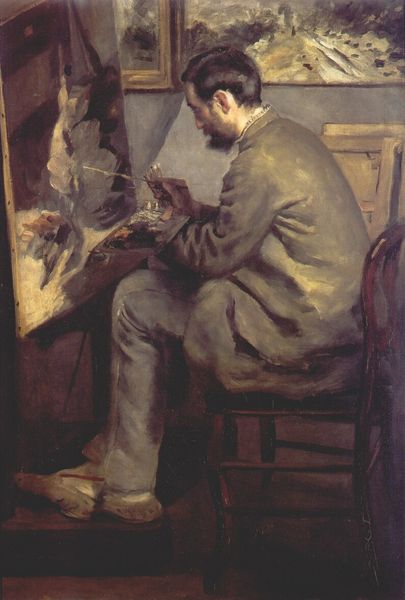
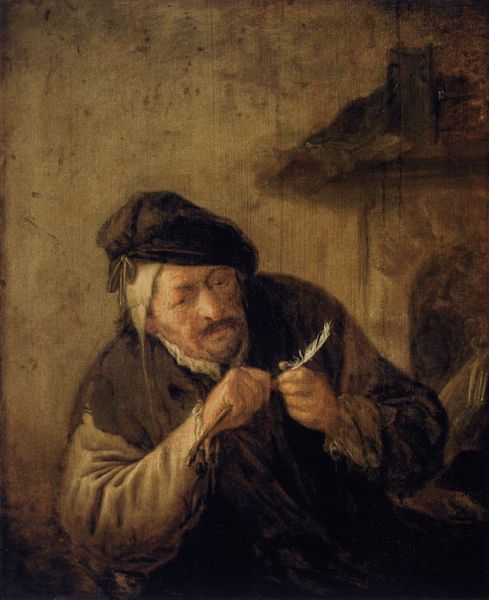
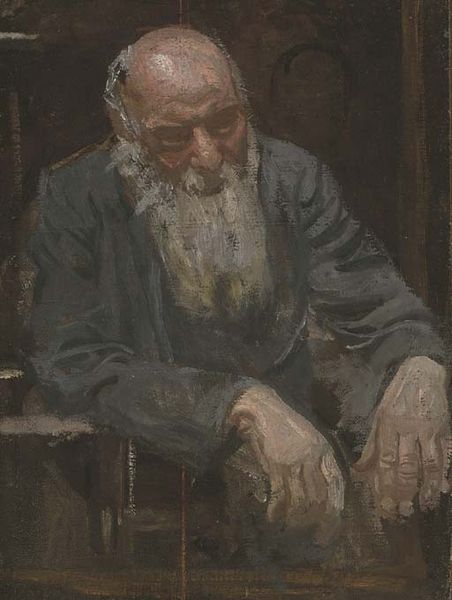
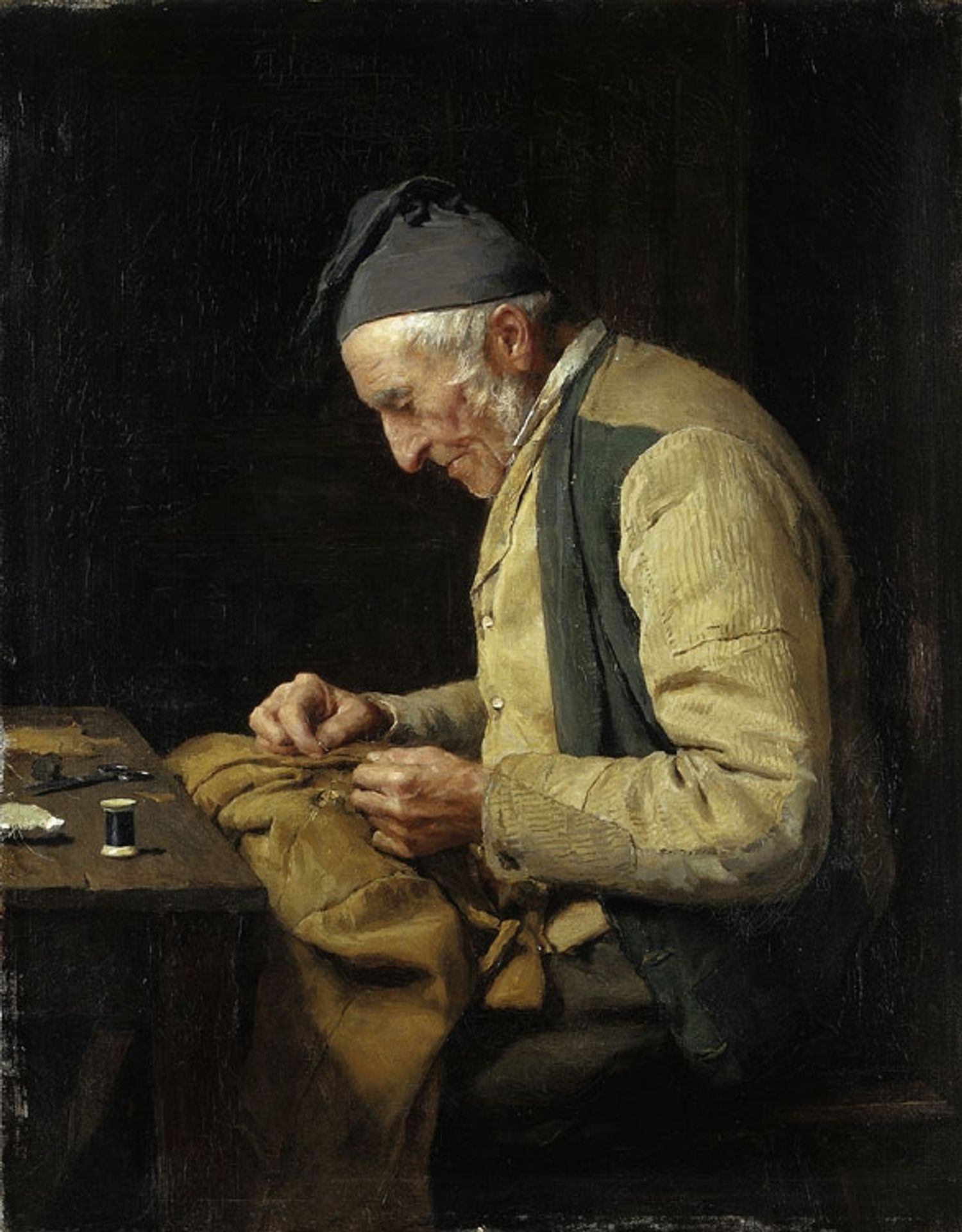
Editor: This is "The Village Tailor," painted by Albrecht Anker in 1894. It's an oil painting, depicting, well, exactly what the title suggests! I find it incredibly intimate, almost melancholic in its quiet focus. What symbolic weight might it carry? Curator: Anker, indeed, captures a powerful image of societal continuity. What do you observe beyond the surface-level representation? Notice how the tailor’s hands, aged and worn, meticulously mend the fabric. Consider this in relation to the cyclical nature of mending – repairing not only cloth, but also potentially the social fabric of the village. What feelings does the darkness surrounding him evoke? Editor: It definitely emphasizes his solitude, like he’s carrying the weight of the community on his shoulders. It's poignant. Does his clothing tell us anything further? Curator: Precisely. His humble attire, coupled with his dedicated labor, speaks volumes about the dignity of work. And consider, tailoring itself holds symbolic value - of fitting in, adapting, being remade or restored. It reminds me of depictions of Saint Joseph at his workbench. Is there a religious or moral dimension to the artist’s decision? Editor: Hmm, I never thought of it like that! So, it's not just a portrait of a tailor, but also a portrait of a certain value system, where diligence and community service are venerated. Curator: Precisely. The cultural memory embedded here transcends a simple portrayal of labor. It also preserves a fading era and, further, the hope for redemption and preservation. Editor: I’m starting to see how much depth a seemingly simple image can hold! I am really fascinated by how the symbols, or images can affect one’s understanding. Curator: The layers reveal themselves when we are willing to look closer. Now, can you appreciate Anker's legacy with an enriched sensibility?