1884
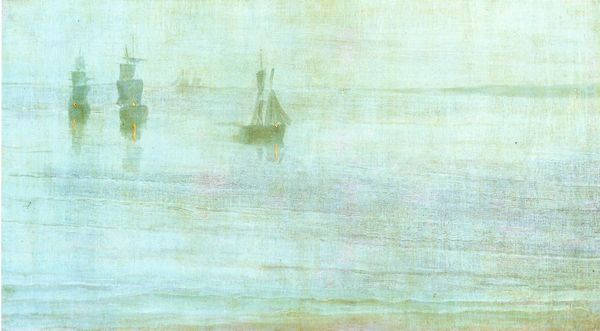
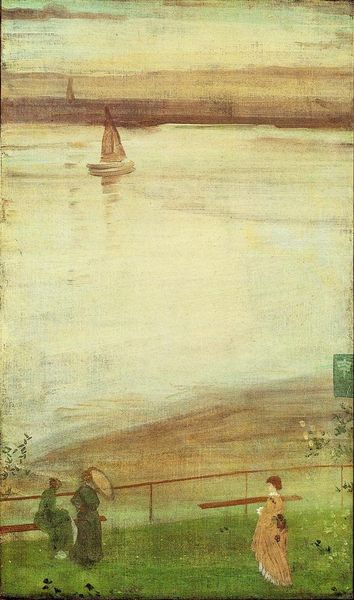
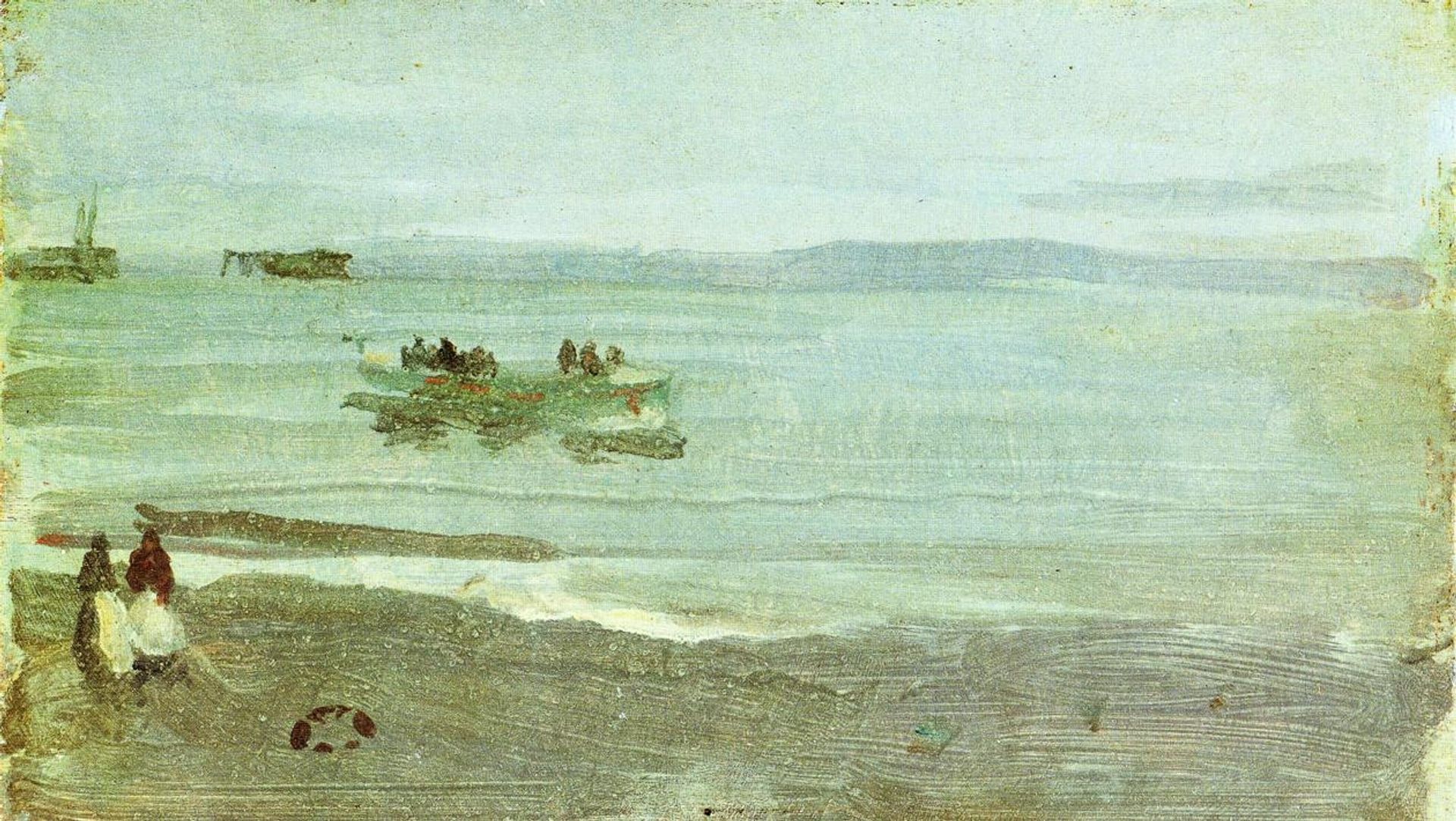
Grey and Silver Mist - Lifeboat

Listen to curator's interpretation
Curatorial notes
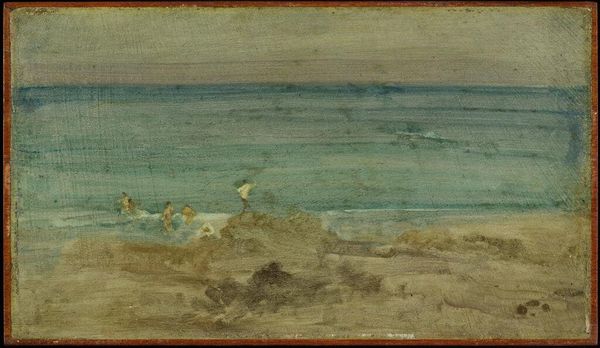
Editor: We're looking at James McNeill Whistler's watercolor, "Grey and Silver Mist - Lifeboat," painted in 1884. The delicate washes create a hazy, almost dreamlike seascape. I’m struck by how Whistler uses so few details to evoke such a specific atmosphere. What do you make of this composition? Curator: It is the artist’s reduction to essentials which dictates the impact. Note the structural elegance; the way Whistler employs horizontal bands of varying tonal value, subtly divided, creates a cohesive visual field. The very limited palette furthers this aesthetic project, harmonizing sky, sea, and shore. Editor: It’s interesting that you call it a "visual field." The almost total lack of contrast really minimizes any sense of depth, flattening the entire image. Is this deliberate, or just a consequence of the watercolor medium? Curator: That 'flattening', as you call it, is no accident. Observe the brushstrokes; they deny any deep recession. Whistler seems less interested in representational accuracy than in an exploration of form and color as self-sufficient entities. His work invites a decoding through close engagement with compositional syntax rather than with external reality. Editor: I see what you mean. Looking at it as an arrangement of shapes and tones makes the subtle gradations in color much more noticeable, like a study in tonal harmony. Curator: Precisely. How might the term “nocturne”, so frequently assigned to his work, relate to our understanding of the painting's mood or feeling? Editor: Well, there's definitely a quiet stillness. I think I appreciate Whistler's approach more now, recognizing the painting as less a representation and more an orchestration of visual elements. Curator: Indeed. Such a viewing permits an appreciation for art’s intrinsic, autonomous existence, moving past representational demands and towards an aesthetic ontology.