About this artwork
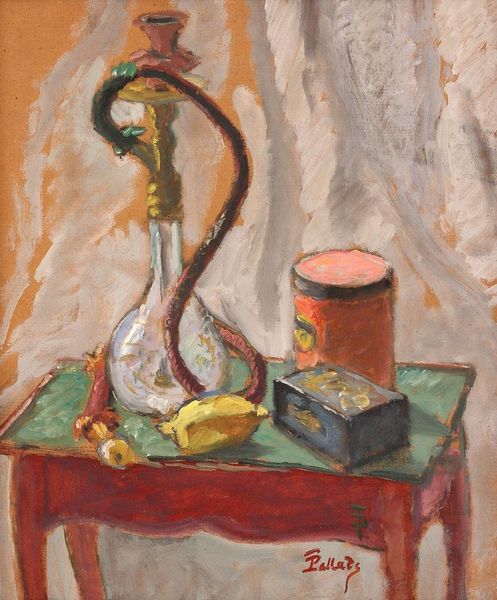
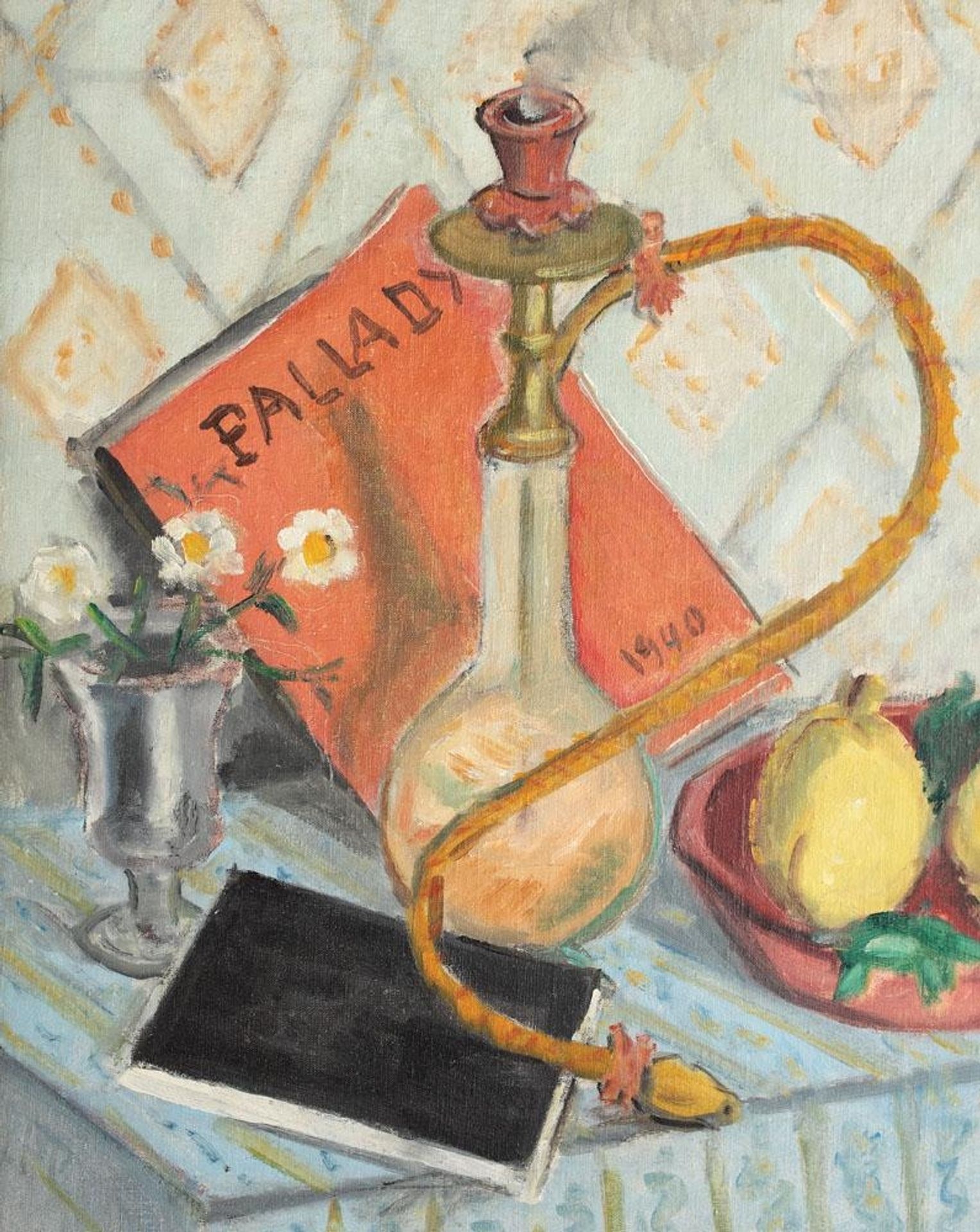
Editor: This is Theodor Pallady's "Still Life with Hookah and Quince," painted in 1940. It's an oil painting, and the composition has this quiet, almost melancholic mood. The colors are muted, but the orange book really pops. What strikes you most about this work? Curator: You know, it's interesting you say melancholic. To me, it hums with a different kind of stillness, perhaps the reflective peace one finds after a long conversation. Notice how Pallady places objects seemingly at random - the hookah, the quinces, even a book by him! It feels deeply personal, doesn’t it? Editor: Yes, it does. Like a glimpse into his world. I’m curious about the hookah though. What's the significance of that object in a still life, especially one made in 1940? Curator: That’s a good question. It could be merely aesthetic. Artists sometimes choose objects for their visual interest - the curves, the play of light, the exotic allure. But I wonder if it also hinted at something more. Pallady spent a significant portion of his life in Paris; maybe it represents a longing for that bohemian lifestyle or a contemplative escape in turbulent times. It’s a moment of pause, wouldn’t you agree? Editor: That makes a lot of sense. I hadn't considered that it might be a way of bringing a piece of Paris into his space. I love how the book in the back serves to frame the entire picture and offers more biographical detail! Curator: Exactly. It’s like Pallady whispering a little secret: this isn’t just a collection of objects; it's a fragment of a life lived and considered. Editor: This painting now seems like more than just a simple arrangement; it’s a carefully constructed moment in time, viewed through the artist’s own, very distinct, lens. Curator: Beautifully put. Sometimes, the simplest scenes contain the greatest depths.

Artwork details
- Medium
- oil-paint
- Copyright
- Theodor Pallady,Fair Use
Tags
Comments
Share your thoughts
About this artwork
Editor: This is Theodor Pallady's "Still Life with Hookah and Quince," painted in 1940. It's an oil painting, and the composition has this quiet, almost melancholic mood. The colors are muted, but the orange book really pops. What strikes you most about this work? Curator: You know, it's interesting you say melancholic. To me, it hums with a different kind of stillness, perhaps the reflective peace one finds after a long conversation. Notice how Pallady places objects seemingly at random - the hookah, the quinces, even a book by him! It feels deeply personal, doesn’t it? Editor: Yes, it does. Like a glimpse into his world. I’m curious about the hookah though. What's the significance of that object in a still life, especially one made in 1940? Curator: That’s a good question. It could be merely aesthetic. Artists sometimes choose objects for their visual interest - the curves, the play of light, the exotic allure. But I wonder if it also hinted at something more. Pallady spent a significant portion of his life in Paris; maybe it represents a longing for that bohemian lifestyle or a contemplative escape in turbulent times. It’s a moment of pause, wouldn’t you agree? Editor: That makes a lot of sense. I hadn't considered that it might be a way of bringing a piece of Paris into his space. I love how the book in the back serves to frame the entire picture and offers more biographical detail! Curator: Exactly. It’s like Pallady whispering a little secret: this isn’t just a collection of objects; it's a fragment of a life lived and considered. Editor: This painting now seems like more than just a simple arrangement; it’s a carefully constructed moment in time, viewed through the artist’s own, very distinct, lens. Curator: Beautifully put. Sometimes, the simplest scenes contain the greatest depths.
Comments
Share your thoughts