About this artwork
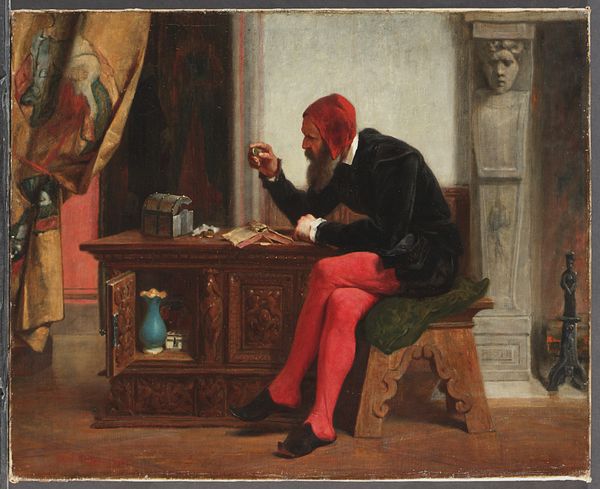
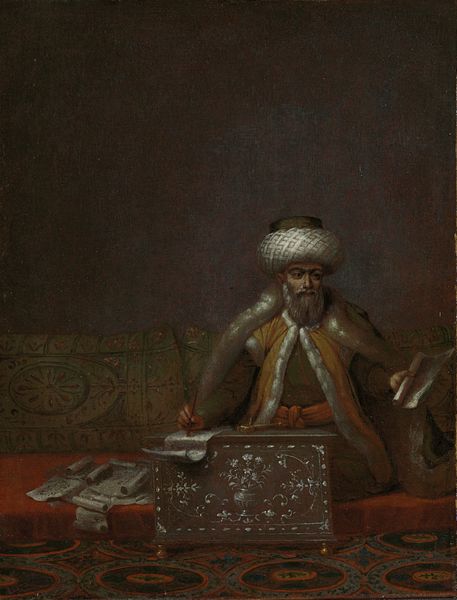
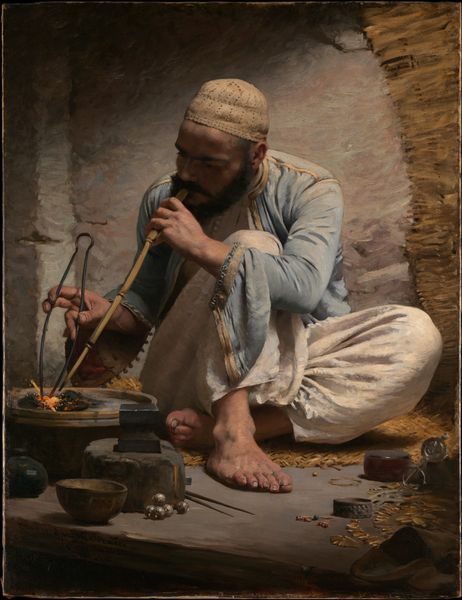
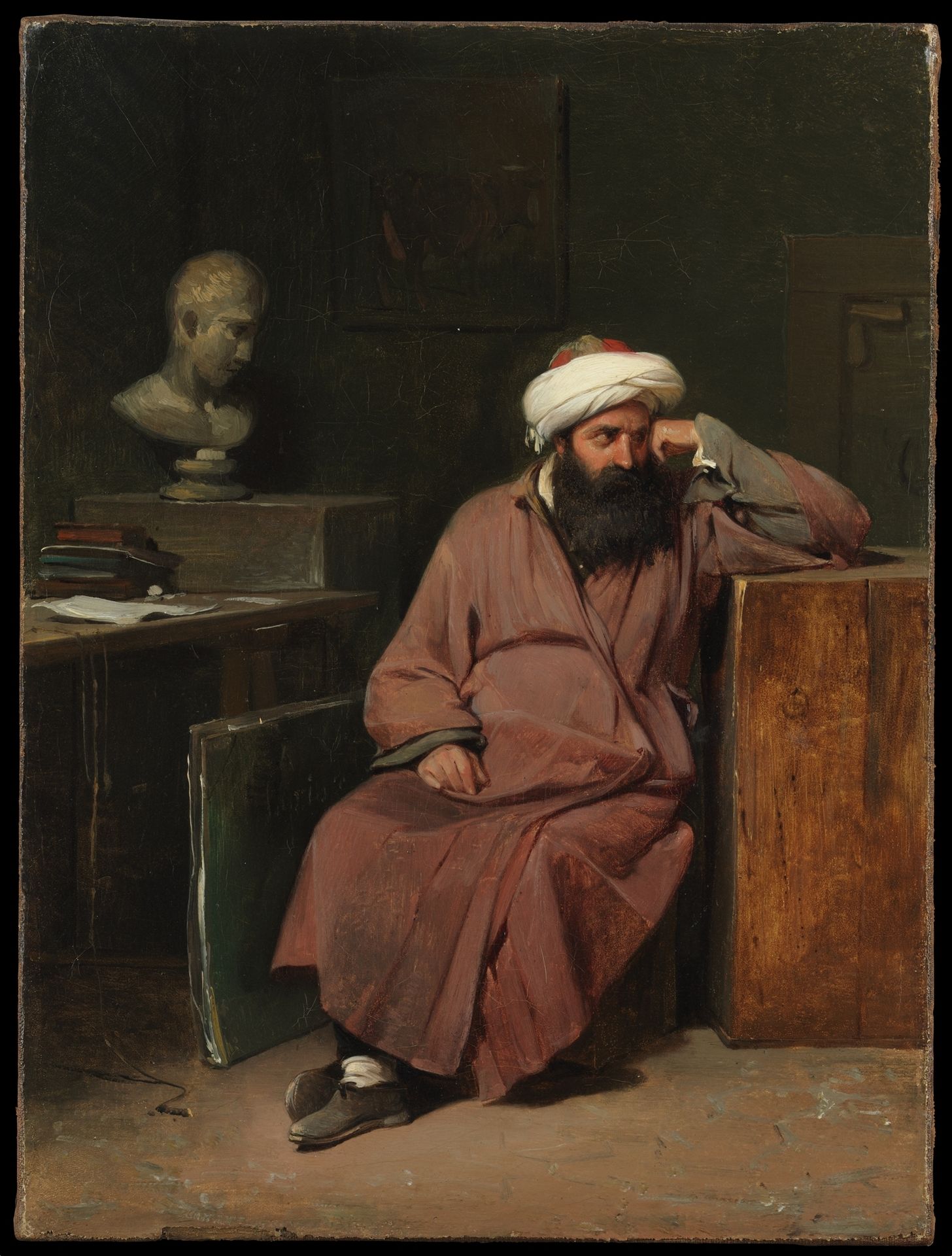
Auguste-Xavier Leprince, a French artist, painted "A Man from the Middle East in the Artist's Studio" using oil on canvas. The artist’s studio is carefully rendered; a plaster bust of a man sits on a table, with books and papers piled nearby. Leprince’s interest, however, is focused on the man, who is presumably a model, and his elaborate costume. The application of the oil paint is relatively thin and even throughout the piece. Yet, the artist uses the medium to convey the rich textural variations of the man’s turban, beard, and robes. The way the materials are depicted reflect a cultural fascination with faraway lands, or the “Orient,” a product of trade, colonialism, and the developing global economy. This painting reflects the artist’s interest in both the craft of painting, and the social context of his time. It invites us to consider the relationships between art, labor, and cultural representation, issues that continue to resonate today.
A Man from the Middle East in the Artist's Studio
1823 - 1826

Auguste-Xavier Leprince
1799 - 1826
The Metropolitan Museum of Art
Metropolitan Museum of Art, New York, NYArtwork details
- Medium
- painting, oil-paint
- Dimensions
- 12 7/8 x 9 5/8 in. (32.7 x 24.4 cm)
- Location
- Metropolitan Museum of Art, New York, NY
- Copyright
- Public Domain
Tags
Comments
Share your thoughts
About this artwork
Auguste-Xavier Leprince, a French artist, painted "A Man from the Middle East in the Artist's Studio" using oil on canvas. The artist’s studio is carefully rendered; a plaster bust of a man sits on a table, with books and papers piled nearby. Leprince’s interest, however, is focused on the man, who is presumably a model, and his elaborate costume. The application of the oil paint is relatively thin and even throughout the piece. Yet, the artist uses the medium to convey the rich textural variations of the man’s turban, beard, and robes. The way the materials are depicted reflect a cultural fascination with faraway lands, or the “Orient,” a product of trade, colonialism, and the developing global economy. This painting reflects the artist’s interest in both the craft of painting, and the social context of his time. It invites us to consider the relationships between art, labor, and cultural representation, issues that continue to resonate today.
Comments
Share your thoughts