

1655 - 1718
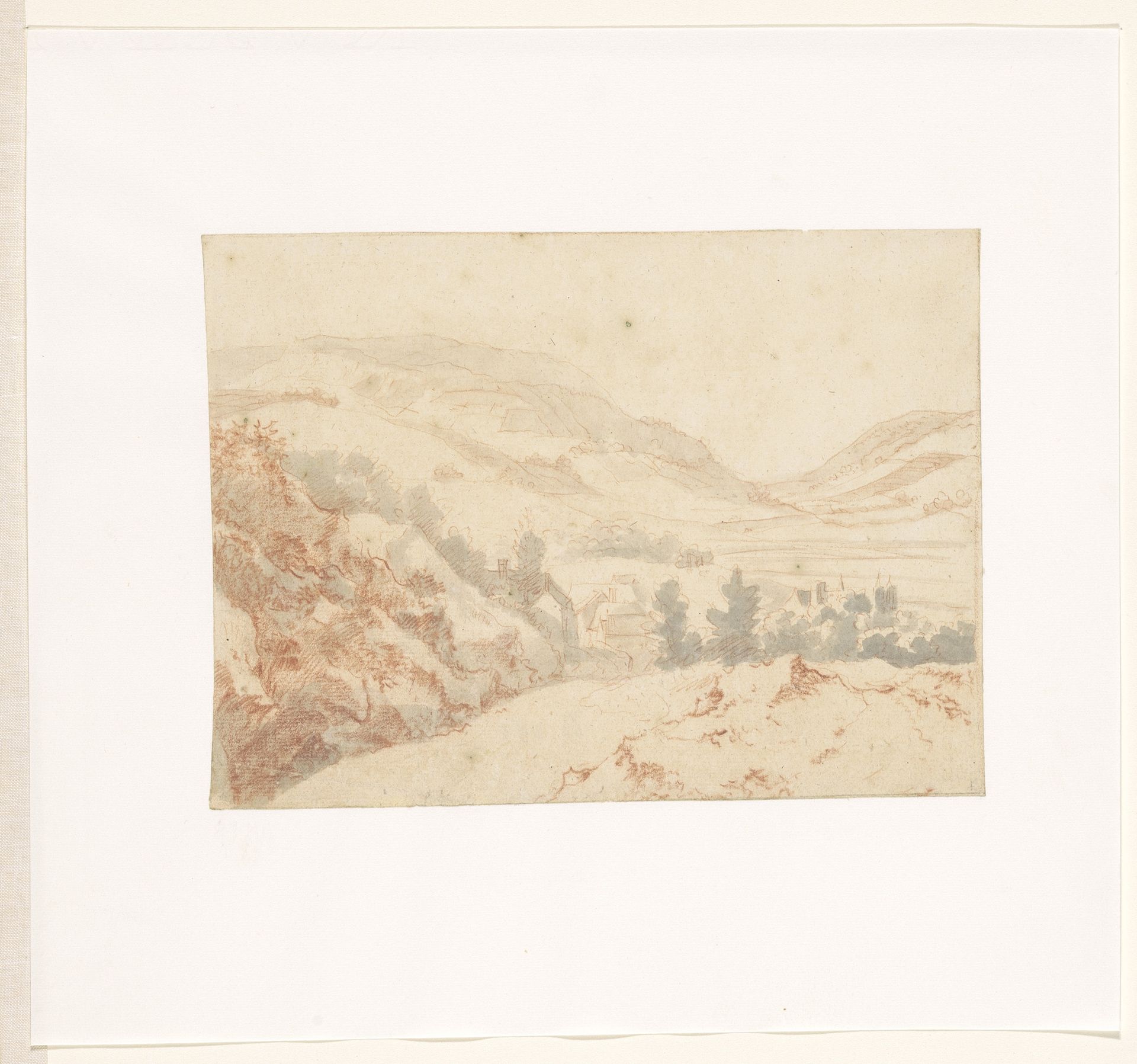
Heuvellandschap met gezicht op een dorpje

Listen to curator's interpretation
Curatorial notes
Curator: Let's discuss Jan Griffier's "Heuvellandschap met gezicht op een dorpje," a watercolor drawing created sometime between 1655 and 1718. Editor: It has an unfinished quality to it. It seems to suggest a landscape rather than define it. Given this emphasis on form over detail, what specifically strikes you about its visual structure? Curator: Precisely. Note the artist's strategic use of line and wash. Griffier establishes spatial depth not through meticulous rendering but through a calibrated layering of these translucent watercolor washes. Observe how the receding planes of the landscape are subtly differentiated by varying intensities of colour, building atmosphere and guiding the viewer's eye. Editor: The washes are so delicate. Almost monochromatic. Is there a reason to mute the colors like that? Curator: Colour, here, acts not as a descriptive element, but rather as a formal tool for structuring the composition. By restricting his palette, Griffier prioritizes tonal relationships. Where does the line quality stand out for you? Editor: In the reddish brown, along the side; the hill has a palpable three-dimensionality. This line work defines the slope distinctly. What about this technique contributes to the impact of the work? Curator: Exactly. Griffier's manipulation of line and colour creates a composition defined by subtle nuances and precise modulations. Editor: It’s fascinating how much he conveys with so little. Thanks for the focus on these pictorial choices, without reference to history! Curator: Indeed, understanding the intrinsic qualities of art enhances appreciation. The power lies in its materiality and composition.