

1843 - 1847
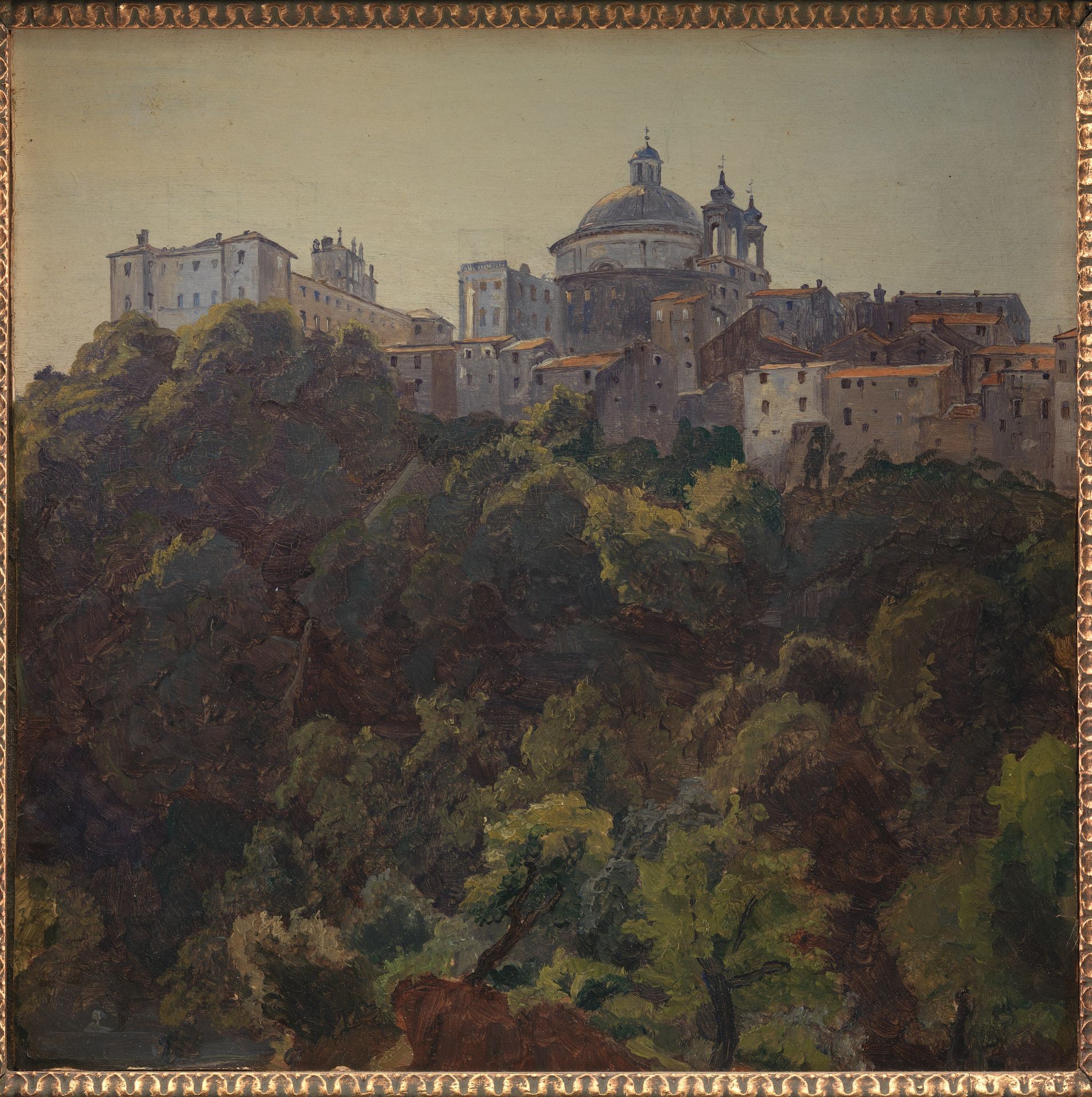
View towards Ariccia and the Palazzo Chigi and S. Maria dell'Assunzione, Italy


Listen to curator's interpretation
Curatorial notes
Curator: Looking at this landscape, I feel a distinct sense of place and time. The somber shades cast an almost mystical atmosphere. What catches your attention first? Editor: The sheer verticality of it. All those buildings crammed on the hilltop like a precarious, stony flower. There's a heaviness about it, despite the natural greens. The oil paints giving the impression of some distant realm. Curator: You've sensed the heaviness, and indeed. What we're observing is "View towards Ariccia and the Palazzo Chigi and S. Maria dell'Assunzione, Italy" by Thorald Læssøe, created between 1843 and 1847. This is oil on paper and encapsulates the Romantic style with elements of realism. The dome of that church, so dominant, almost mocks the earth itself, no? Editor: That dome definitely commands the scene, drawing the eye upwards—classic example of religious and secular power asserting itself on the landscape. In art historical contexts, domed churches often suggest the all-encompassing embrace of faith, the promise of shelter. Think of it like a visual reassurance amid a potentially chaotic world, or… is it trying to eclipse nature, maybe? Curator: Yes, but note how the brushstrokes depicting those trees seem almost to push back, a sort of natural resistance. I think it’s precisely the tension that Læssøe masterfully captures. We're peering into a moment of human aspiration set against the enduring, perhaps indifferent, presence of the land. It is, after all, Romanticism at its core, with that constant push and pull. It echoes our own yearnings set against life's inevitable limitations. Editor: Limitations perhaps imposed by these very institutions! That is where the social memory embedded in the symbolism sparks for me. It all conveys this narrative of control—buildings above the people. Even nature has to contend with this construction. The evergreen, everreaching forests fight this somewhat. Fascinating. Curator: And so a seemingly straightforward cityscape becomes a contemplation of ambition, faith, nature, and their intricate dance upon the stage of human existence. It is beautiful when the images unfold their secrets to us in a discussion like this. Editor: Absolutely! It is a reminder of art’s capability to freeze time. You catch echoes and murmurs within something that otherwise might only appear an objective landscape scene.