print, etching, paper, engraving
# print
#
etching
#
landscape
#
paper
#
coloured pencil
#
cityscape
#
engraving
#
rococo
Dimensions: height 254 mm, width 423 mm
Copyright: Rijks Museum: Open Domain
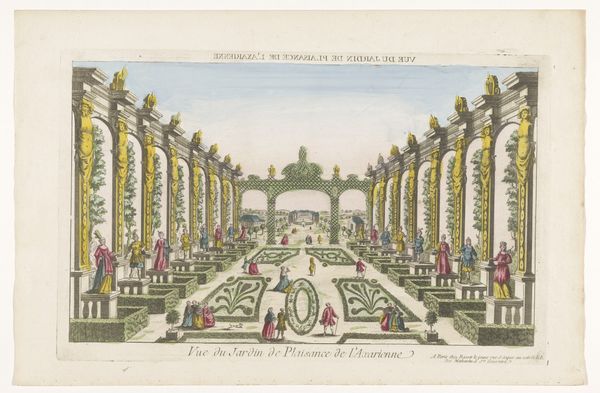
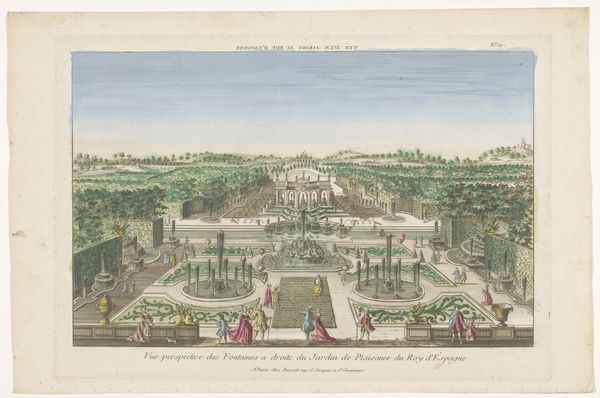
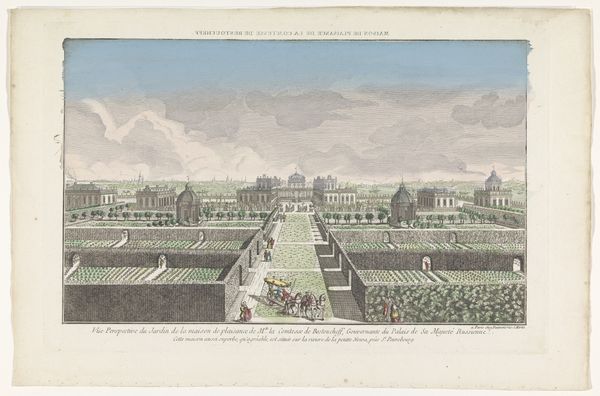
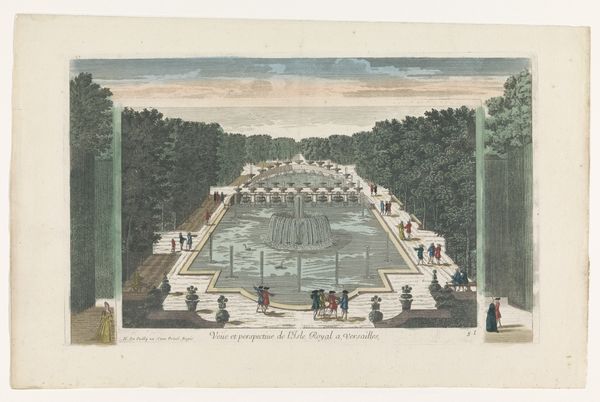
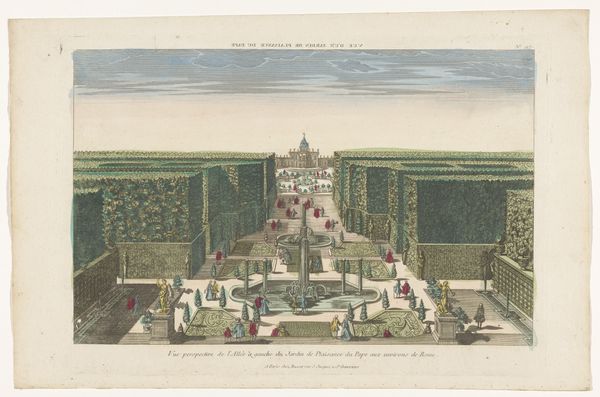
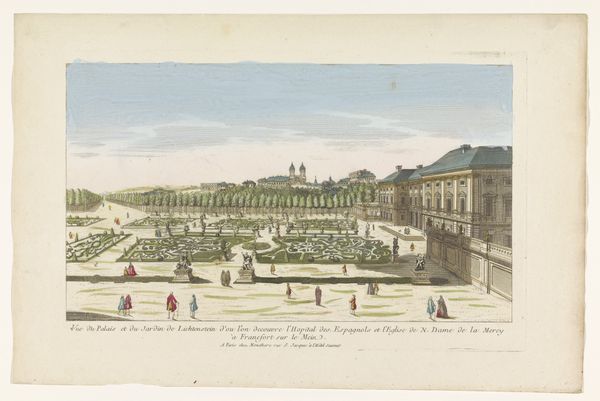
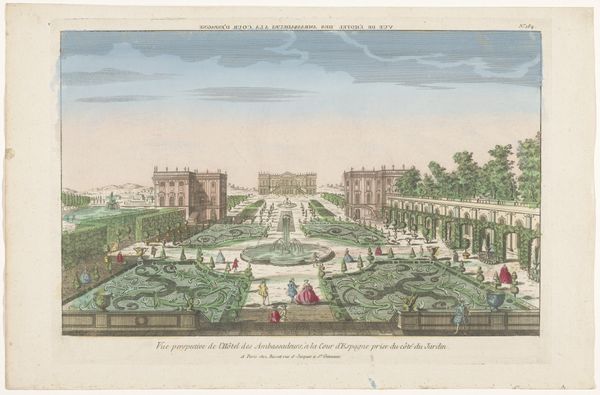
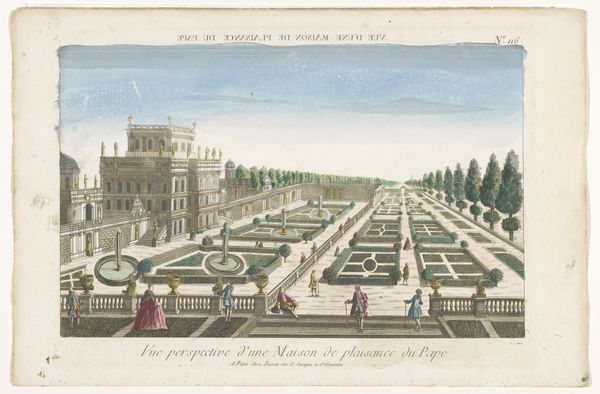
Curator: This is "Gezicht op een tuin en een paleis van de doge van Venetië," an 18th-century print by Chéreau, currently residing here at the Rijksmuseum. The technique appears to combine etching and engraving, printed on paper. Editor: Immediately, I'm struck by the almost theatrical artifice of it all. The extreme perspective, the manicured gardens... it feels more like a stage set than a real place. Curator: Indeed, the manipulation of perspective is central to its construction. Notice how the artist uses converging lines and diminishing scale to create a sense of immense depth, leading the eye towards the distant palace. Editor: And those sculptures and decorative urns in the foreground! They are positioned almost like actors waiting for their cues, full of allegorical weight, each with wings, garlands and helmets... Curator: Precisely. In terms of symbolism, consider how gardens often represent order and control. Here, that notion is amplified to a degree, reflecting the Doge’s power, a projection of his dominion over both nature and civic life. Editor: There's a certain melancholy too, though. Despite all the ornamentation and supposed perfection, the colors are muted, the lines precise but somewhat lifeless. The image communicates an impressive, well-kept location yet remains...stiff. Curator: I see what you mean. Though executed with impeccable technique, it lacks the vibrant energy one might associate with Venice. Perhaps the focus is less on capturing a specific location than conveying an idea of Venetian grandeur, constructed rather than experienced. Editor: Yes, it's a representation of an idea. It captures the Doge's world view, projecting authority and culture but from a distance. It's a removed, almost coldly conceptual representation. Curator: Ultimately, the artwork operates as a carefully orchestrated visual construct. The precise rendering contributes to the message just as much as what's included in the imagery. Editor: In a way, Chéreau created a visual essay more than a landscape—one that remains evocative precisely due to its deliberate nature. The composition serves to showcase symbolic order above lived experiences.
Comments
No comments
Be the first to comment and join the conversation on the ultimate creative platform.
 Collect
 React
React Comment
More like this