c. 1920 - 1926
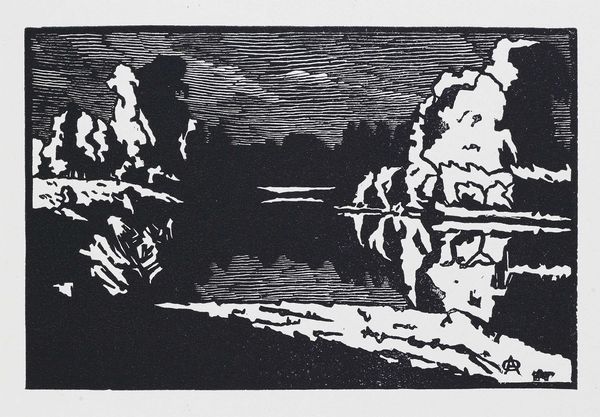
Untitled (Windmill)


Listen to curator's interpretation
Curatorial notes
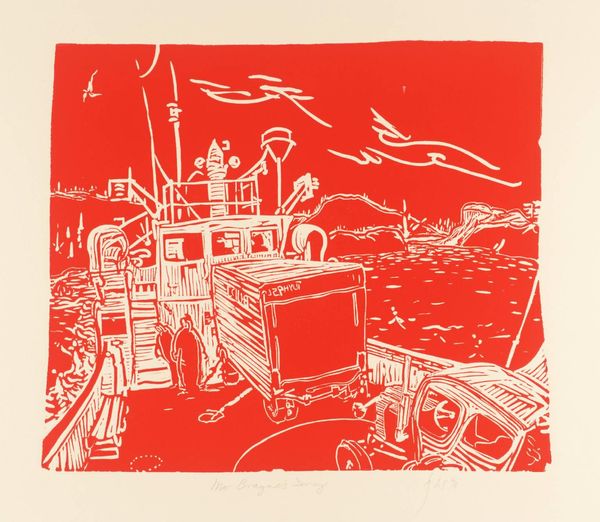
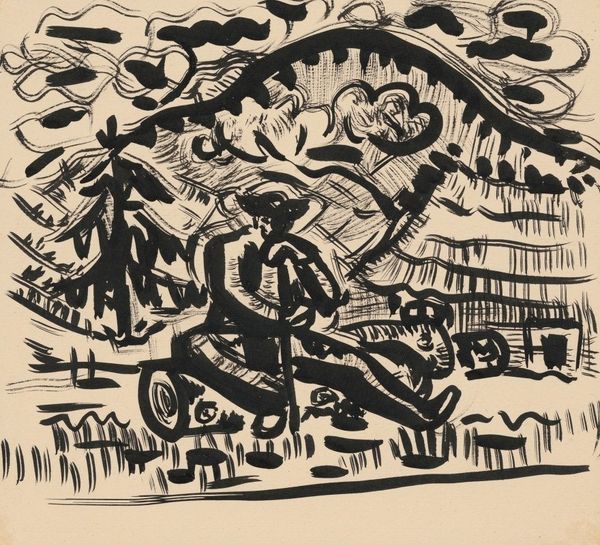
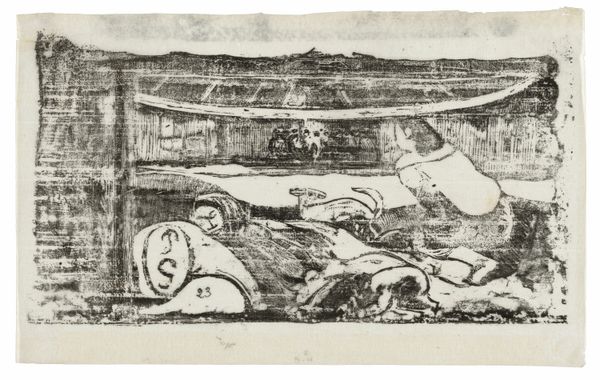
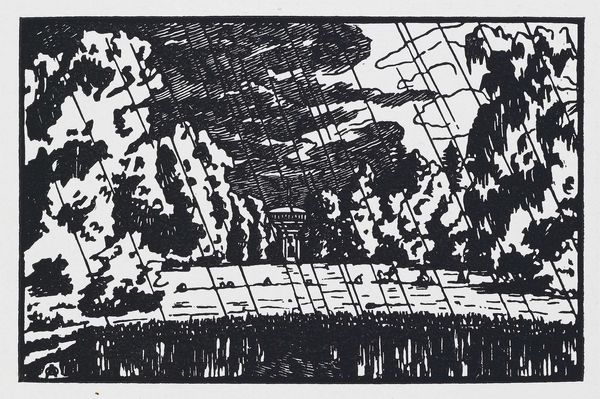
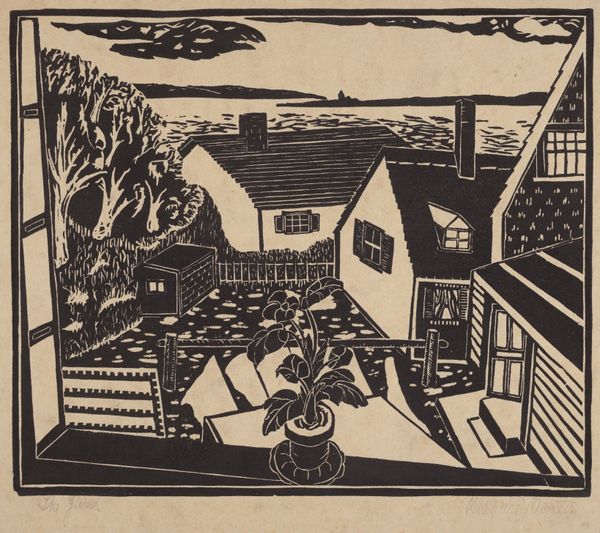
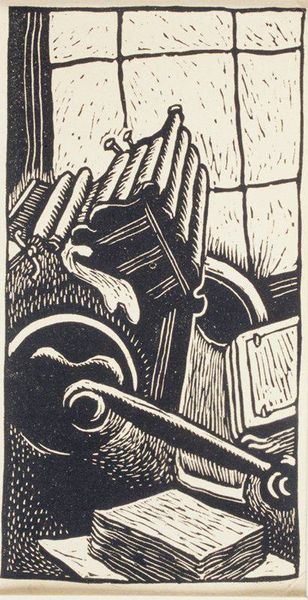
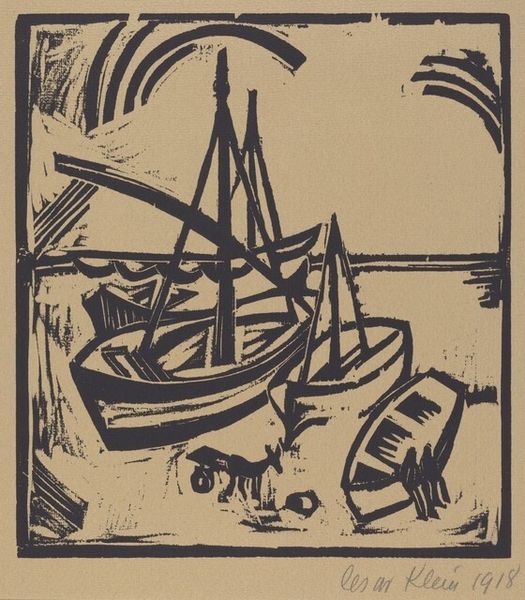
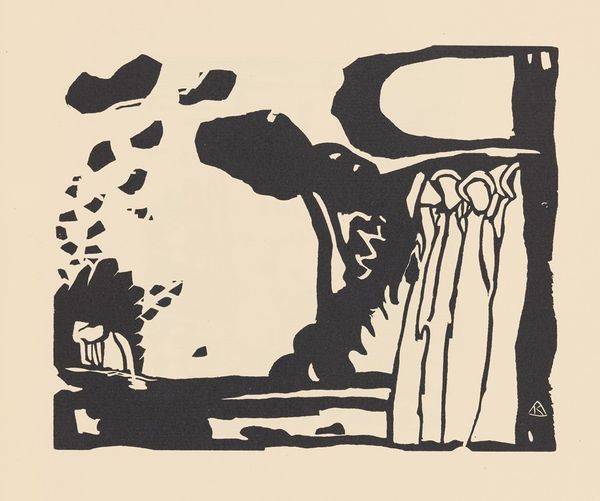
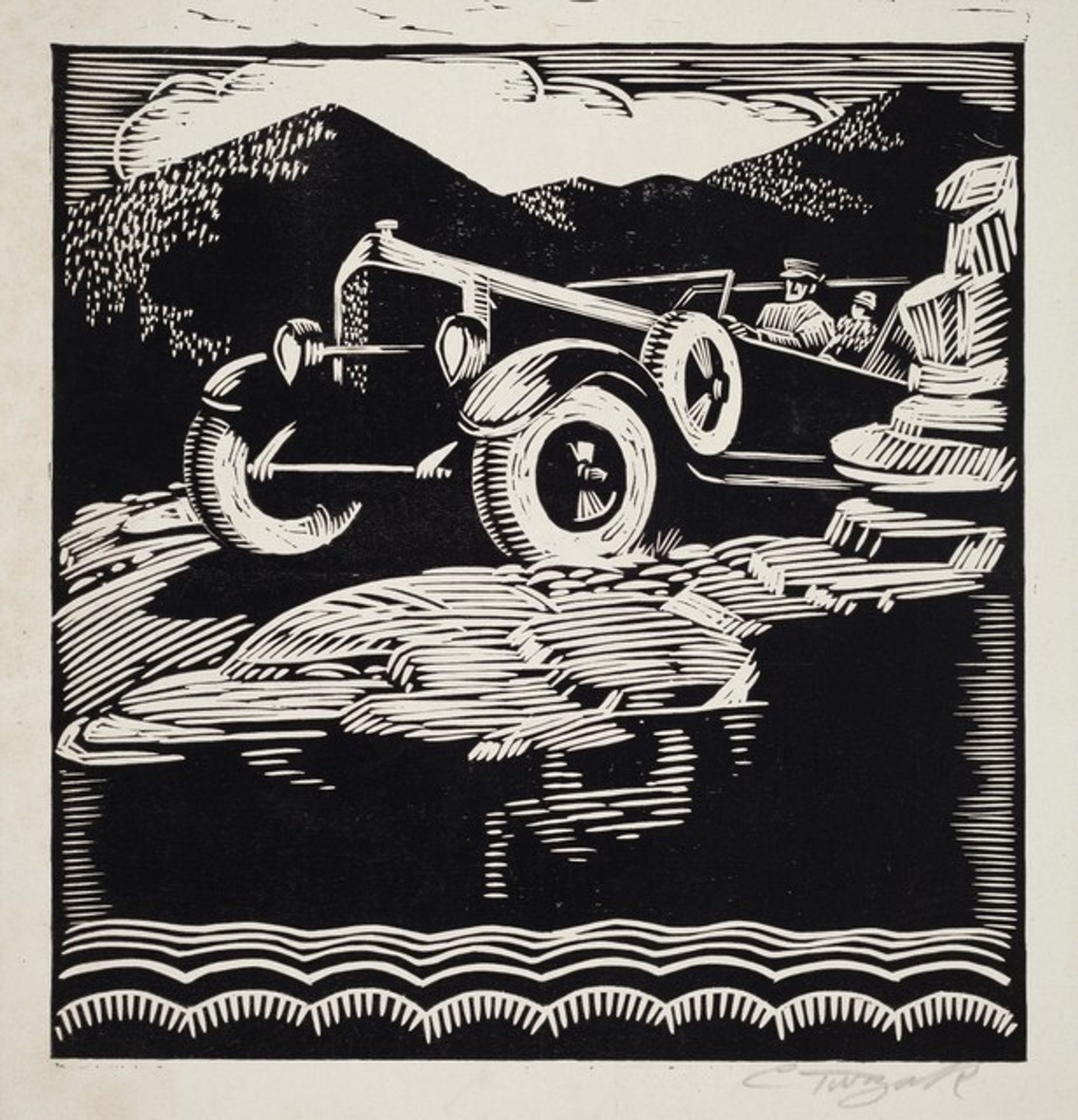
Editor: So, here we have Charles Turzak’s woodcut print from around 1920 to 1926, called "Untitled (Windmill)", though I don't actually see any windmills. It’s a striking black and white image; almost like a graphic novel panel. It reminds me of adventure stories I read as a kid. What do you see in it? Curator: It whispers stories of the roaring twenties! Look at the stylized car juxtaposed with what might be mountains in the background. I imagine the car as a symbol of progress, hurtling towards a somewhat vague, natural destination. The artist isn't concerned with photographic reality; it's more about the feeling of a rapidly changing world, don't you think? And have you considered why they called it "Untitled (Windmill)"? Editor: That’s really interesting; the idea of progress versus nature. And about the name… Maybe it's a red herring, meant to throw us off? Perhaps Turzak was poking fun at artistic conventions, or maybe, maybe that jagged structure on the right is a really abstract windmill! Curator: Ha! I love that idea! Or perhaps Turzak intentionally omitted the windmill to create a sense of yearning – that tension that keeps us engaged. Do you find yourself wondering about what lies beyond the image, beyond the implied promise of that jaunty automobile? Editor: Absolutely! Now I am seeing all sorts of hidden layers within this apparently simple picture. The choppy lines that form the water add to the idea of a journey or some adventure in the offing! Curator: Indeed! It's almost as if the medium, the very grain of the woodcut, echoes that sense of constant, slightly chaotic motion! I’ll never look at this piece the same way. Thanks!