About this artwork
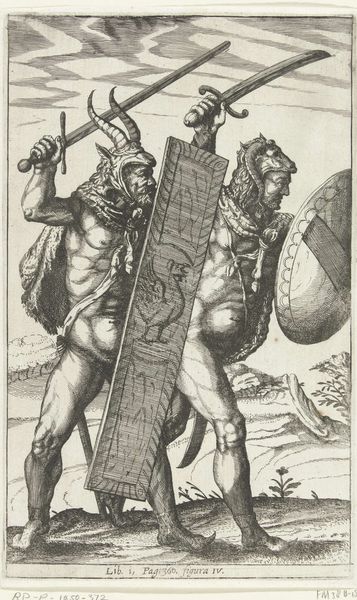
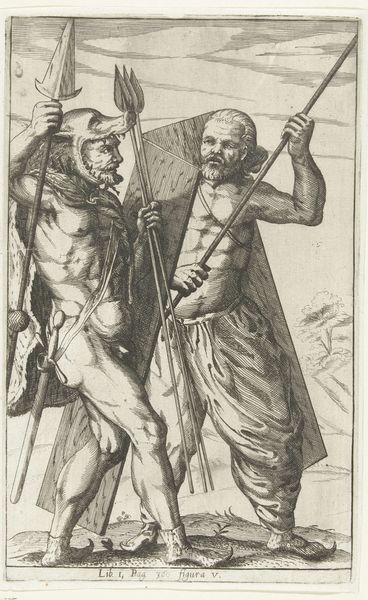
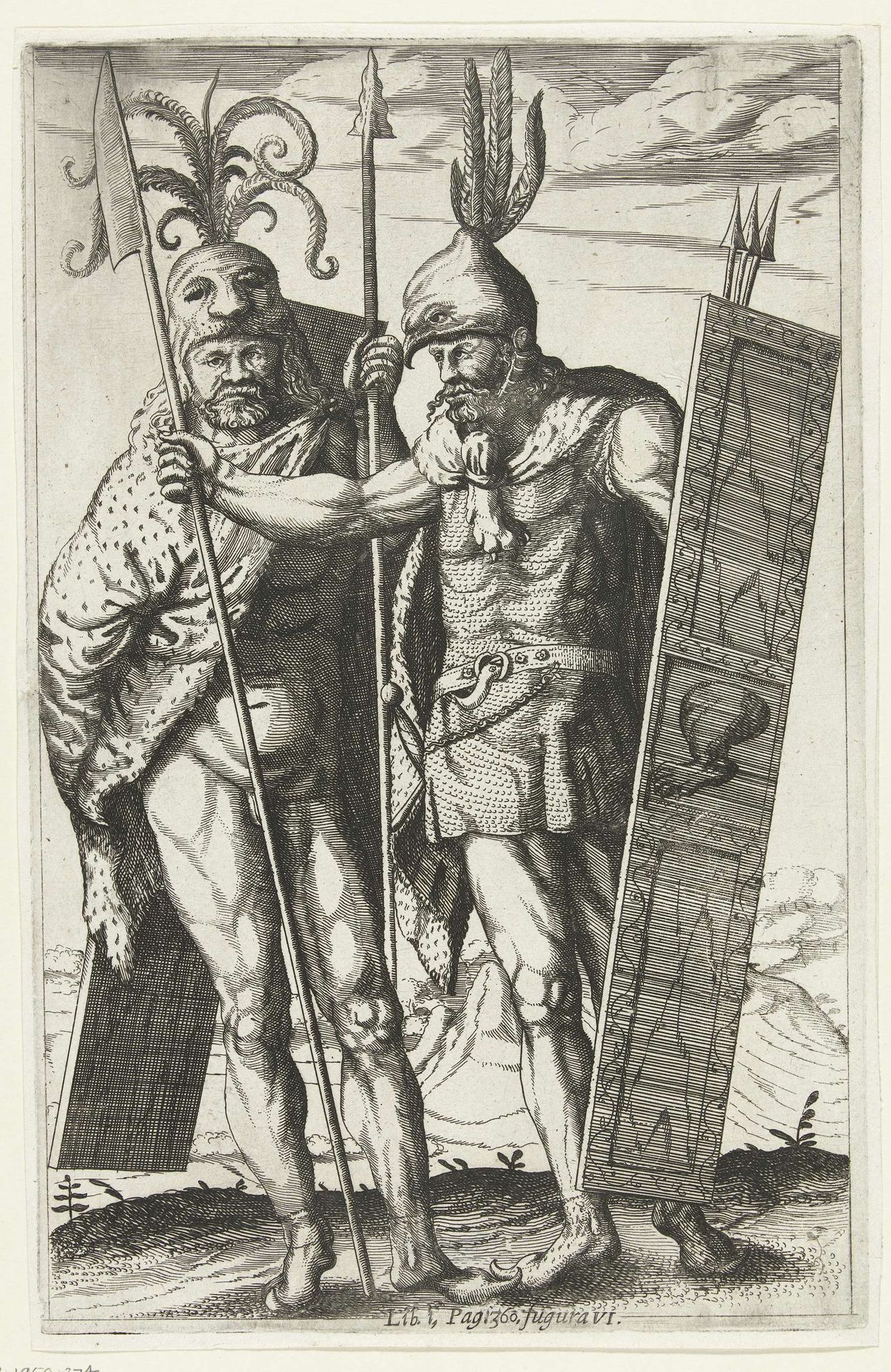
This print, "Two Germanic Warriors," was created by Nicolaes van Geelkercken, probably in the early to mid-17th century. The artist has rendered the figures through the lens of classical antiquity, presenting them as noble, muscular figures equipped with spears, shields, and elaborate helmets. The print’s visual codes and cultural references speak to the broader context of the Dutch Republic during its Golden Age. As the Dutch asserted their independence from Spanish rule, there was a growing interest in connecting with a heroic past. By depicting Germanic warriors, van Geelkercken taps into a historical narrative that sought to legitimize the Dutch Republic's own aspirations for freedom and self-determination. This print should be seen as a contribution to nation-building through historical revisionism. To fully understand an artwork like this, the historian must examine prints and other visual materials alongside broader political and cultural contexts, offering a more complex picture of the past.
Twee Germaanse krijgers, figura VI
1614 - 1616

Nicolaes van Geelkercken
1586 - 1656Location
RijksmuseumArtwork details
- Medium
- print, engraving
- Dimensions
- height 257 mm, width 165 mm
- Location
- Rijksmuseum
- Copyright
- Rijks Museum: Open Domain
Tags
Comments
Share your thoughts
About this artwork
This print, "Two Germanic Warriors," was created by Nicolaes van Geelkercken, probably in the early to mid-17th century. The artist has rendered the figures through the lens of classical antiquity, presenting them as noble, muscular figures equipped with spears, shields, and elaborate helmets. The print’s visual codes and cultural references speak to the broader context of the Dutch Republic during its Golden Age. As the Dutch asserted their independence from Spanish rule, there was a growing interest in connecting with a heroic past. By depicting Germanic warriors, van Geelkercken taps into a historical narrative that sought to legitimize the Dutch Republic's own aspirations for freedom and self-determination. This print should be seen as a contribution to nation-building through historical revisionism. To fully understand an artwork like this, the historian must examine prints and other visual materials alongside broader political and cultural contexts, offering a more complex picture of the past.
Comments
Share your thoughts