1854 - 1927
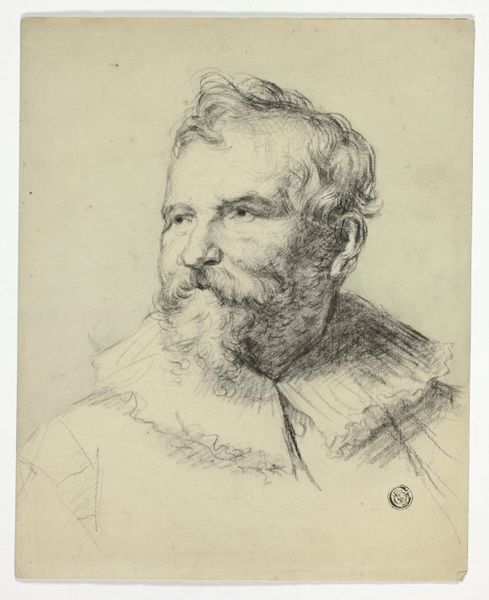
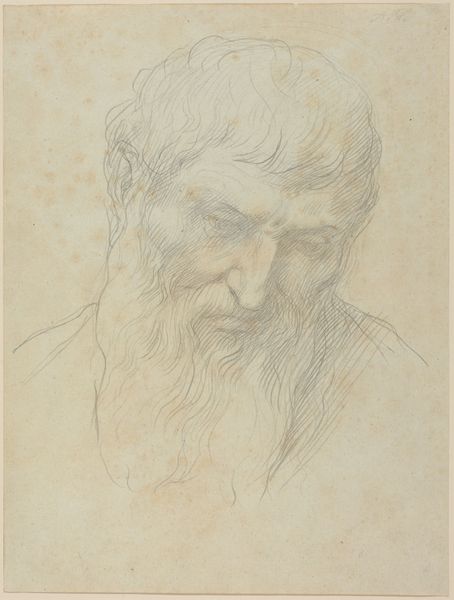
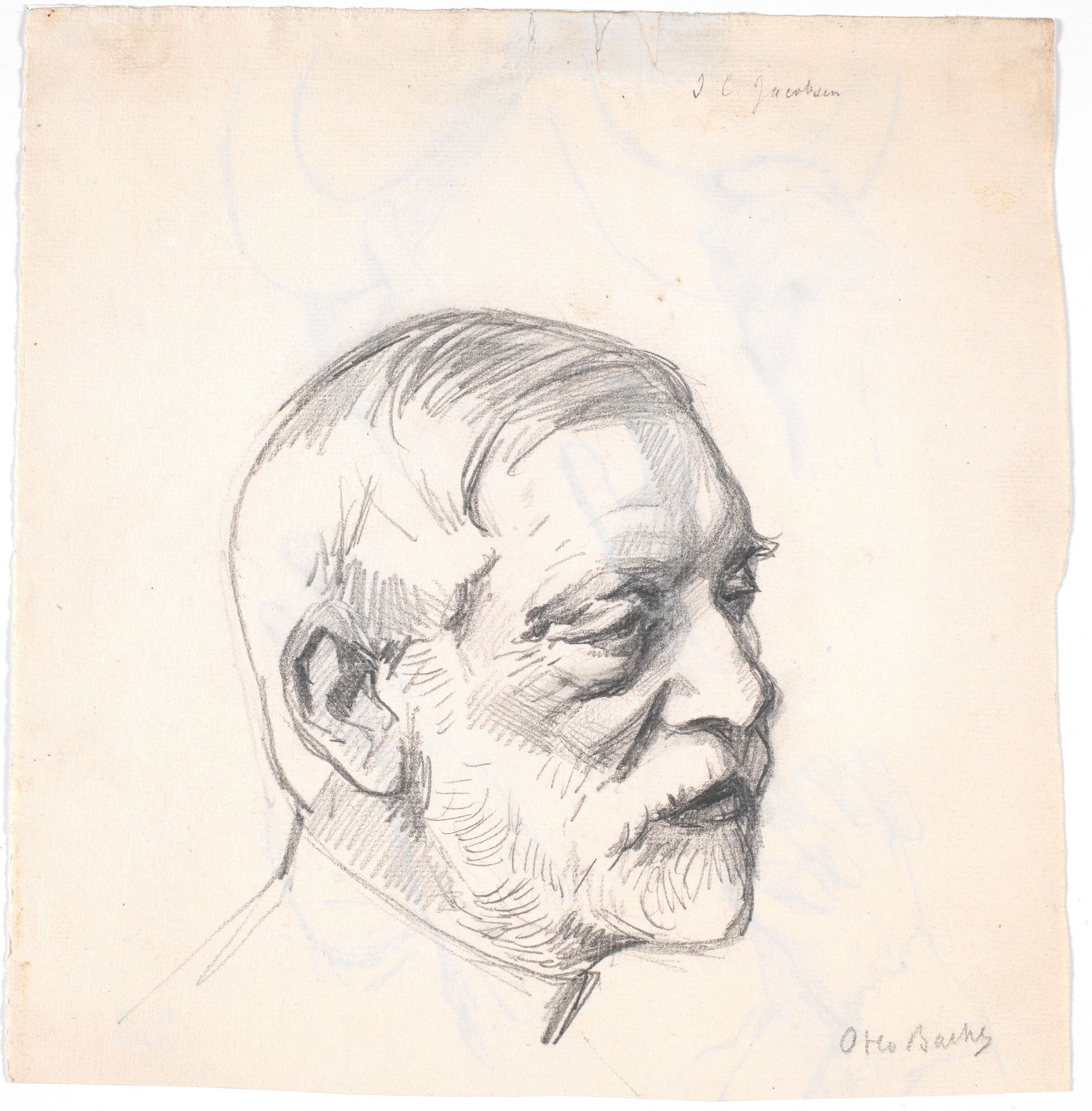
Brygger J.C. Jacobsens hoved


Listen to curator's interpretation
Curatorial notes
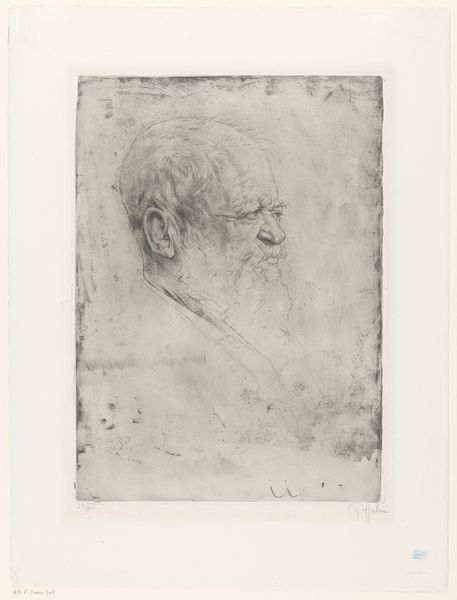
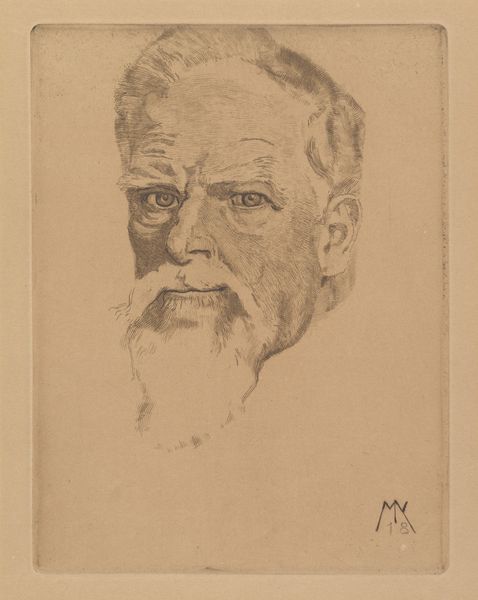
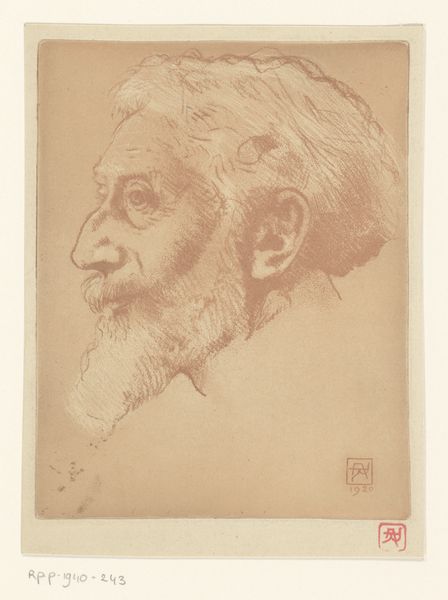
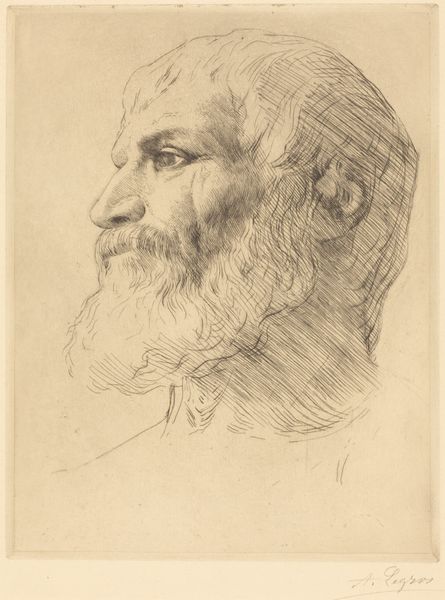
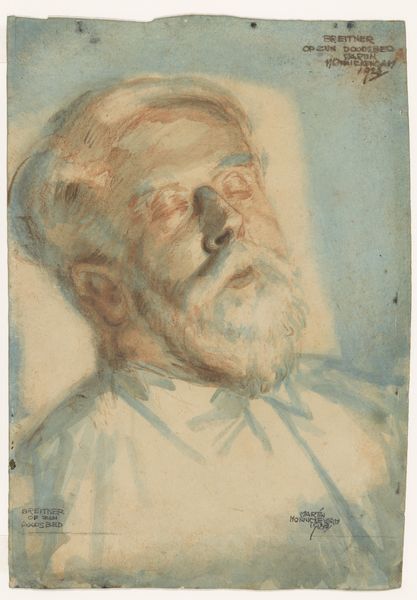
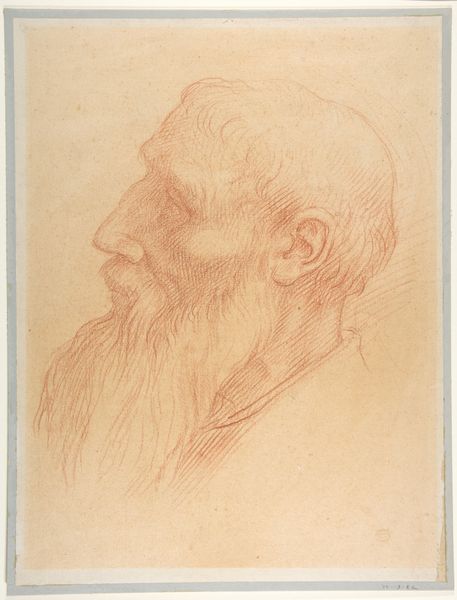
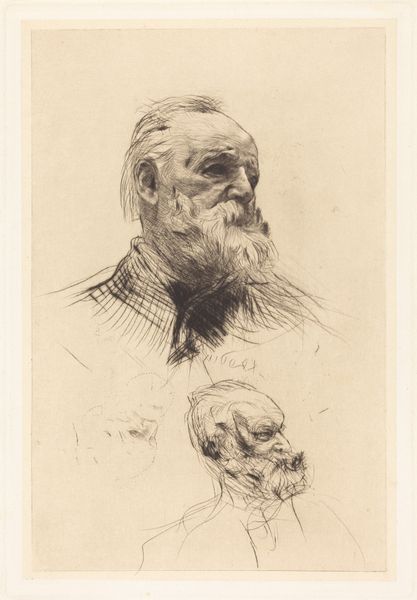
Curator: Here we have Otto Bache's portrait of Brygger J.C. Jacobsen, rendered in pencil some time between 1854 and 1927. What’s your first impression? Editor: Immediately, I’m drawn to the rawness of the sketch. It’s clearly not a finished piece, but this reveals something interesting about process – the artist’s hand, the building-up of form through simple, visible marks. Curator: Indeed. And knowing Jacobsen's influential role as the founder of Carlsberg, a discussion on the portrait leads into an inquiry on labour, consumer culture and the material implications of mass production. Editor: Precisely. Look at the tentative lines – there's a humility there. It challenges the idealized image of a titan of industry. It gives insights into the labour, but also into his image and consumption. The paper itself tells a story of use and experimentation. Curator: And consider the portrait's position within the museum. It’s a portrait, but also so much more – a study of power dynamics, an intimate rendering, and perhaps an exploration of masculine identity through the lens of societal contribution. Editor: And how those contributions ripple outwards – influencing everything from beer production, art funding, material sciences, workers, trade, resources, technologies - all those connections emanating from a single figure! The sketch lays bare that starting point in production, if you will. Curator: This work offers a nuanced look at how a man's vision, built on raw materials and production, shaped an era. We're confronted not just with his likeness, but with questions about the cultural weight such figures carried. Editor: For me, it underlines the importance of process. The labor behind every finished product – every building, every beer, every cultural institution – all those individual pencil strokes eventually leading to larger material impact on societies and our lives. Curator: Absolutely, understanding these narratives allows us to critically engage with the legacies of individuals like Jacobsen and broader structures of society. Editor: And to see, even in an unfinished sketch, the foundations upon which those legacies were built.