drawing, pencil
#
portrait
#
drawing
#
pencil
#
academic-art
#
realism
Copyright: Public Domain: Artvee
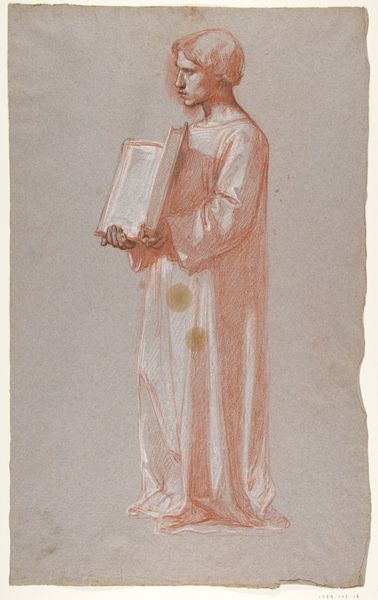
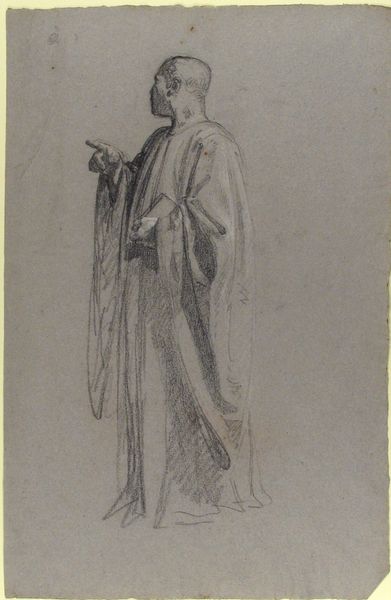
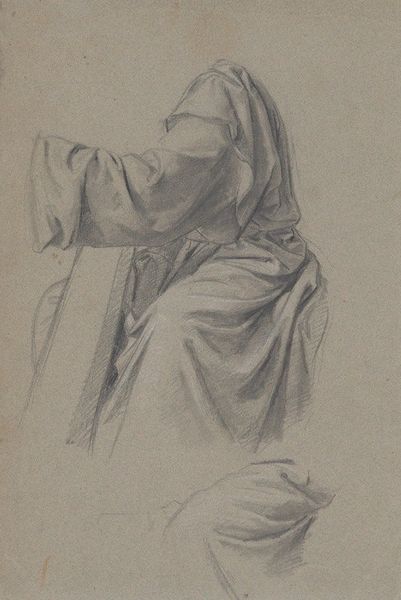
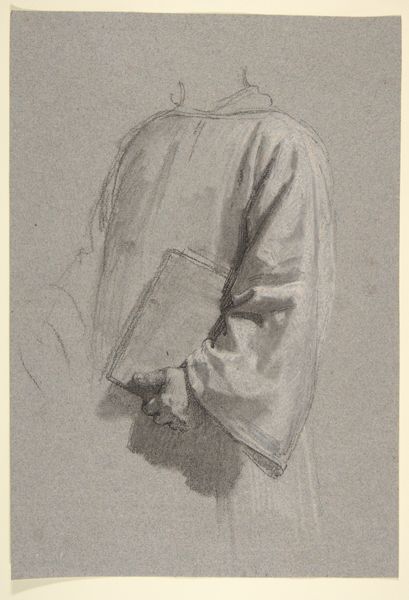
Editor: This is Isidore Pils’s “Acolyte with Open Book,” a pencil drawing from the 19th century. I’m struck by its simplicity and quietness; the figure seems lost in contemplation. What do you see in this piece? Curator: The acolyte, bathed in soft light, presents a figure deeply intertwined with the history of knowledge and ritual. The book itself is a powerful symbol. What do you think it represents here, beyond just being a text? Editor: Maybe it's about the weight of tradition, or perhaps the journey of learning and understanding sacred knowledge. Curator: Exactly. Think about the gesture, the way the figure is holding the book. It’s not just reading; it's a presentation, an offering almost. Consider also the robes; their simplicity speaks volumes about the renunciation of worldly vanity. How does this symbol resonate with our understanding of devotion across different faiths or belief systems? Editor: I guess devotion isn’t really linked to any particular time. But I am not sure how I would relate it to contemporary symbols. Curator: Cultural memory often works through a palimpsest of images; each era layers its meanings on previous ones. The very act of studying the text echoes similar visual narratives found even today - a student with their textbooks. These are updated and reiterated but their essence still captures themes of reflection, reverence and education. Editor: That's fascinating - I never really considered how timeless those themes can be! Curator: Art allows us to perceive such through lines, and to witness our continual return to central points of contemplation across different eras and cultural manifestations.
Comments
No comments
Be the first to comment and join the conversation on the ultimate creative platform.
 Collect
 React
React Comment
More like this