Possibly 1825 - 1874
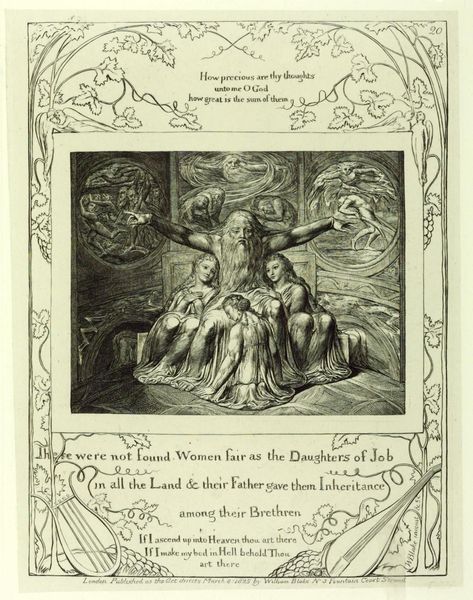
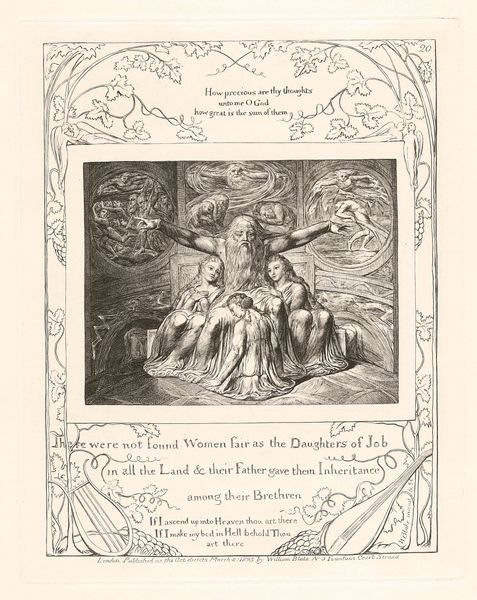
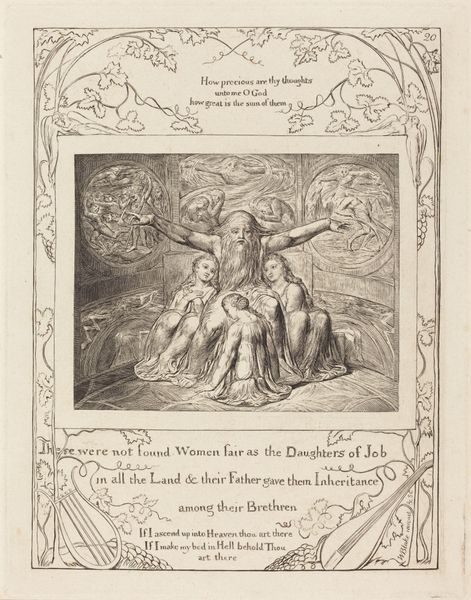
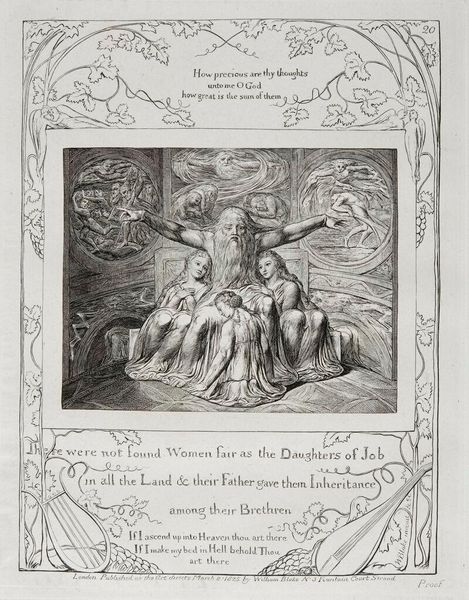
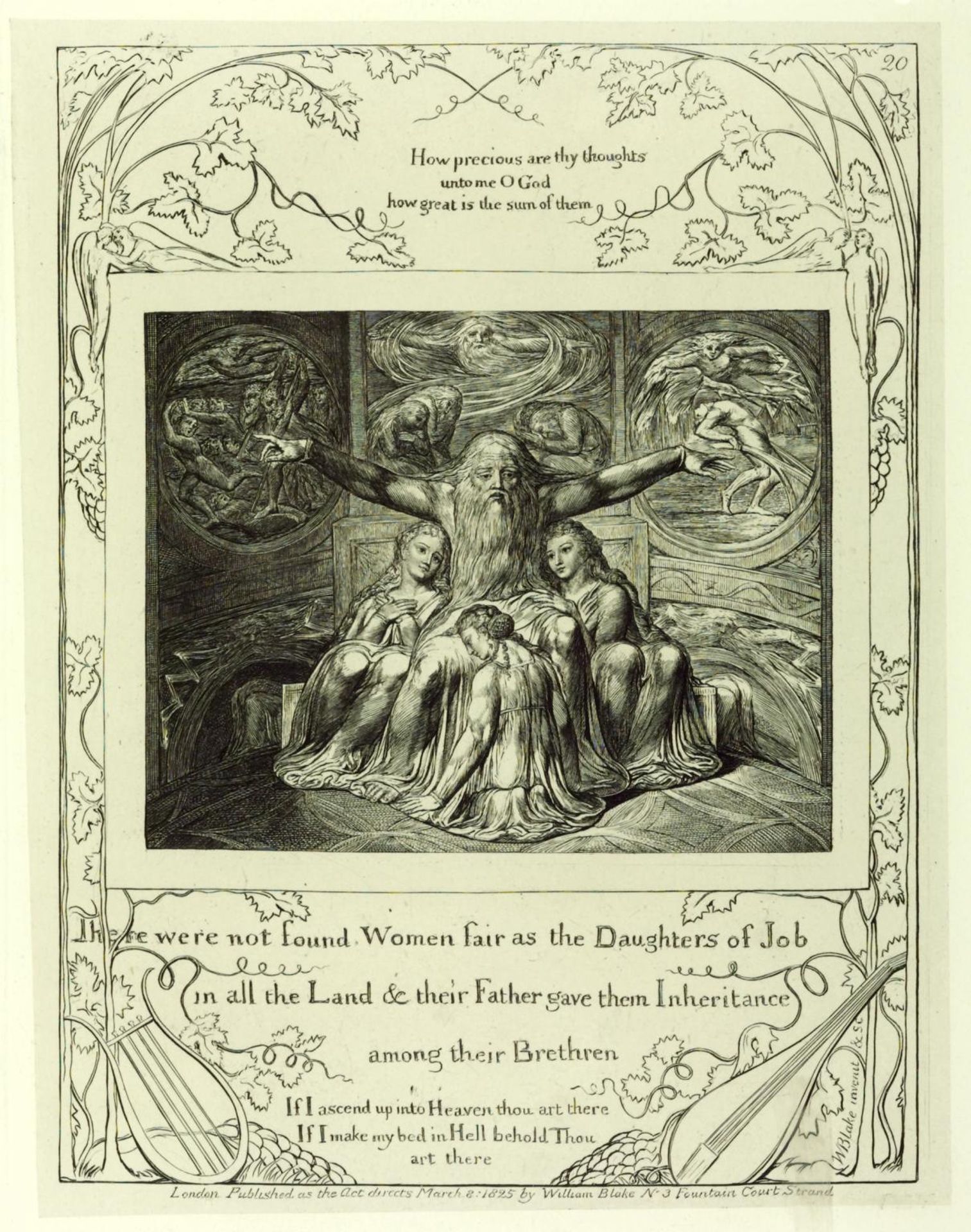
Job and his Daughters


Listen to curator's interpretation
Curatorial notes
Curator: Look at this engraving, "Job and his Daughters," by William Blake. Editor: There's an undeniable sense of tenderness amidst the harsh lines of the engraving, isn't there? The figures seem both vulnerable and strong. Curator: Yes, Blake's process of etching lines creates such a unique texture. Notice the biblical context; his daughters are described to be "fair" and they inherited among their brethren. This was a patriarchal context in which Blake questioned societal norms. Editor: Absolutely, and one cannot ignore the medium of print, specifically its role in circulating such radical ideas at the time. Were it a painting, it would not have the same ability to distribute these notions about society to a wider audience. Curator: Precisely, its accessibility allowed the piece to be disseminated beyond the traditional art world. It reflects the political and social climate of the time. Editor: Blake's ability to question hierarchies, both social and artistic, through the humble medium of engraving is truly powerful. Curator: It certainly makes you think about the relationship between the material and the message, doesn't it?