About this artwork
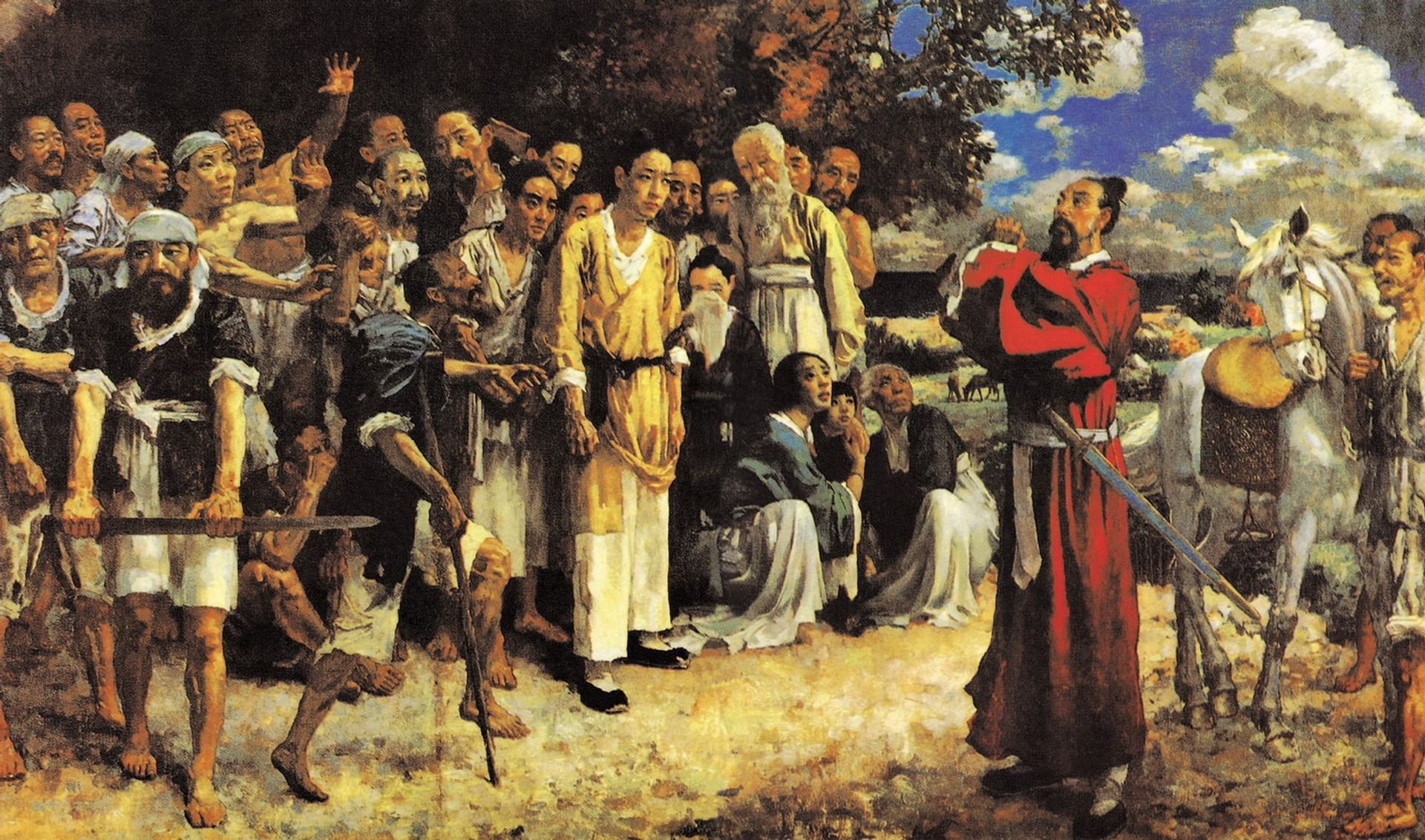
Xu Beihong painted "Tianheng's Five Hundred Heroes" to depict a historical event, resonating with the spirit of resistance during a time of national crisis. Painted in the mid-20th century, this work revives a story from ancient China, where Tian Heng, a defeated king, and his loyal followers chose death over surrender. The painting uses a blend of Western realism and traditional Chinese ink techniques to create a scene of solemn farewell. Consider the context: China was facing invasion and occupation. Xu Beihong, as an artist and intellectual, used historical narratives to inspire patriotism and resistance against foreign aggression. The image of collective sacrifice and loyalty to a cause served as a powerful call to action. To fully understand this painting, we must consider the history of Chinese nationalism and resistance literature, as well as the role of art institutions in promoting national identity. By studying these sources, we can grasp the painting’s complex interplay of art, history, and politics.

Artwork details
- Medium
- painting, oil-paint
- Copyright
- Public domain China
Tags
portrait
painting
oil-paint
painted
figuration
oil painting
group-portraits
genre-painting
history-painting
modernism
realism
Comments
No comments
About this artwork
Xu Beihong painted "Tianheng's Five Hundred Heroes" to depict a historical event, resonating with the spirit of resistance during a time of national crisis. Painted in the mid-20th century, this work revives a story from ancient China, where Tian Heng, a defeated king, and his loyal followers chose death over surrender. The painting uses a blend of Western realism and traditional Chinese ink techniques to create a scene of solemn farewell. Consider the context: China was facing invasion and occupation. Xu Beihong, as an artist and intellectual, used historical narratives to inspire patriotism and resistance against foreign aggression. The image of collective sacrifice and loyalty to a cause served as a powerful call to action. To fully understand this painting, we must consider the history of Chinese nationalism and resistance literature, as well as the role of art institutions in promoting national identity. By studying these sources, we can grasp the painting’s complex interplay of art, history, and politics.
Comments
No comments