1567
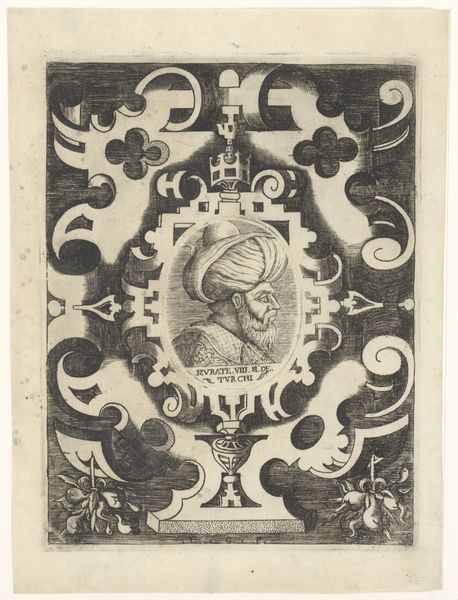
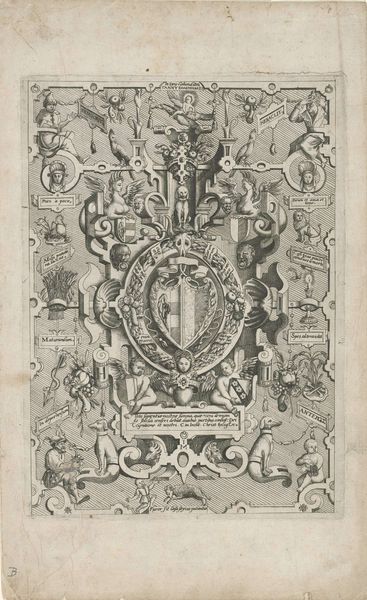
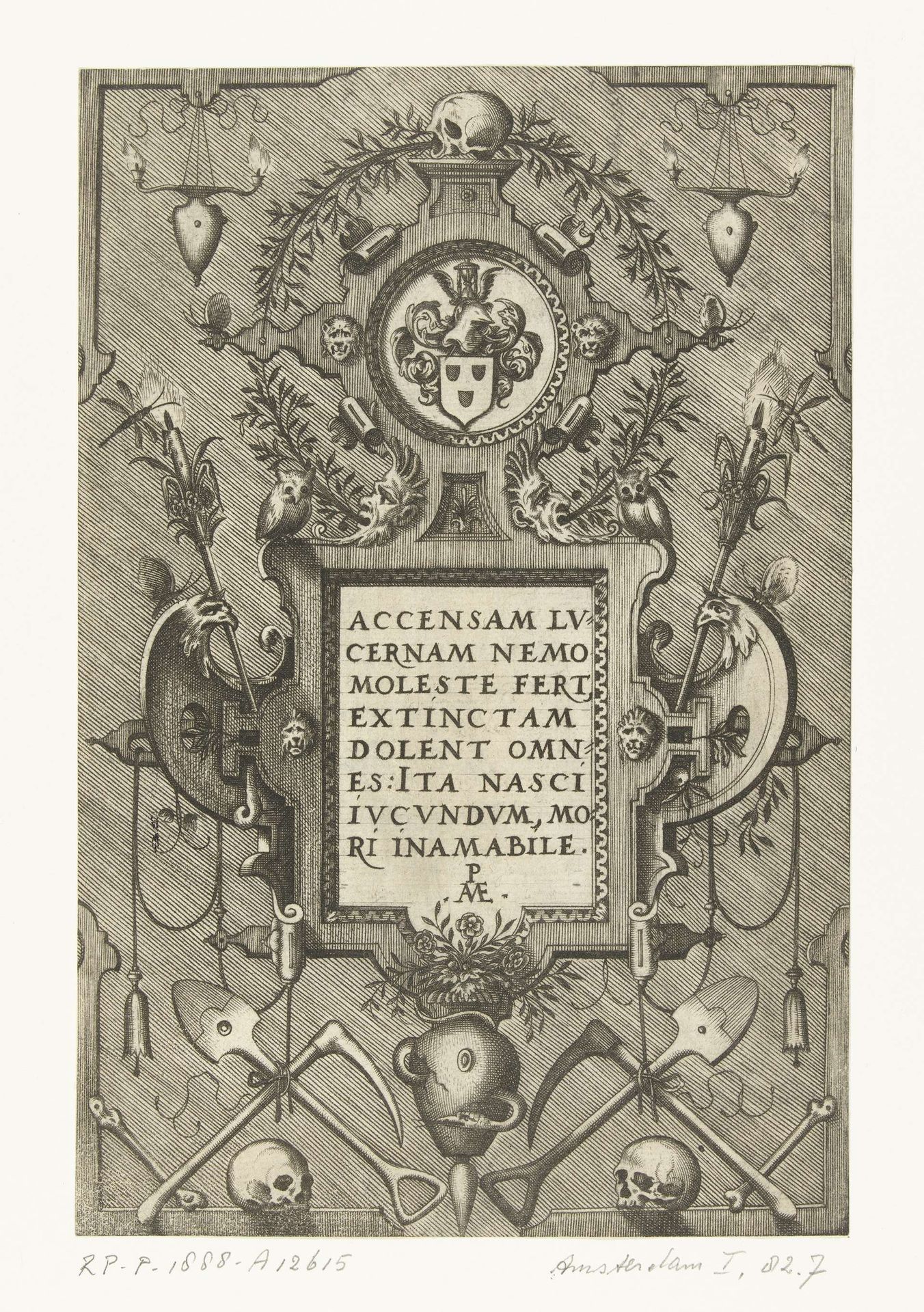
Dubbele cartouche, in de bovenste cartouche bevindt zich een wapen

Pieter van der Heyden
1525 - 1569Location
RijksmuseumListen to curator's interpretation
Curatorial notes
This print, etched by Pieter van der Heyden, presents a double cartouche dominated by symbols of mortality and nobility. At the top, a heraldic shield signifies lineage, a marker of earthly status, but it’s encircled by a wreath interwoven with skulls, a memento mori. This stark juxtaposition reminds us of life’s fleeting nature and the levelling power of death. Below, crossed shovels and picks lie beside skulls, tools that remind us of the grave, of earthly ends. But notice how such morbid symbols have recurred throughout history. The skull, for instance, appears in ancient Roman art, often as a reminder of mortality, a theme echoed in countless later works. It persists in varied forms: from vanitas paintings of the Dutch Golden Age to contemporary art installations, each time speaking to our collective subconscious fear of oblivion. This image, like others throughout time, prompts a deep, existential contemplation, engaging viewers with a potent awareness of life's transient beauty and inevitable end. It is a reminder that symbols evolve, yet their core emotional resonance endures across centuries.