About this artwork
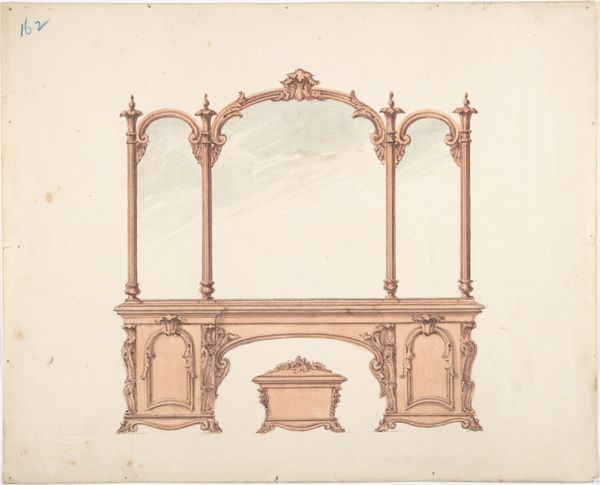
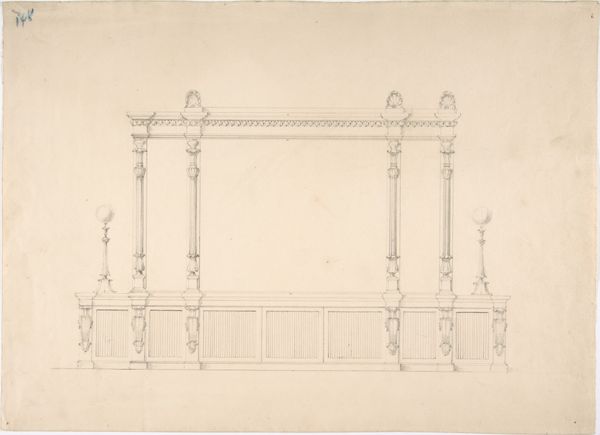
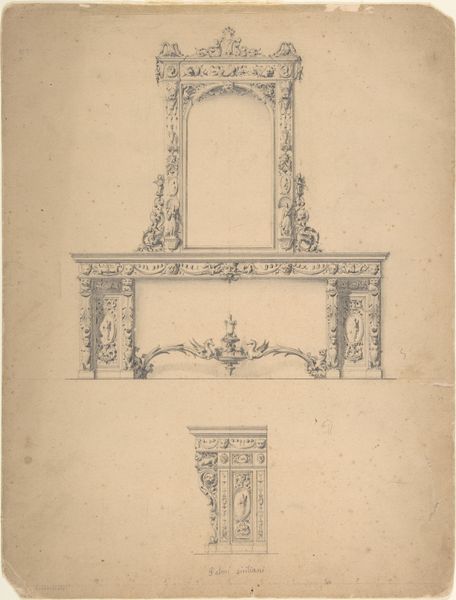
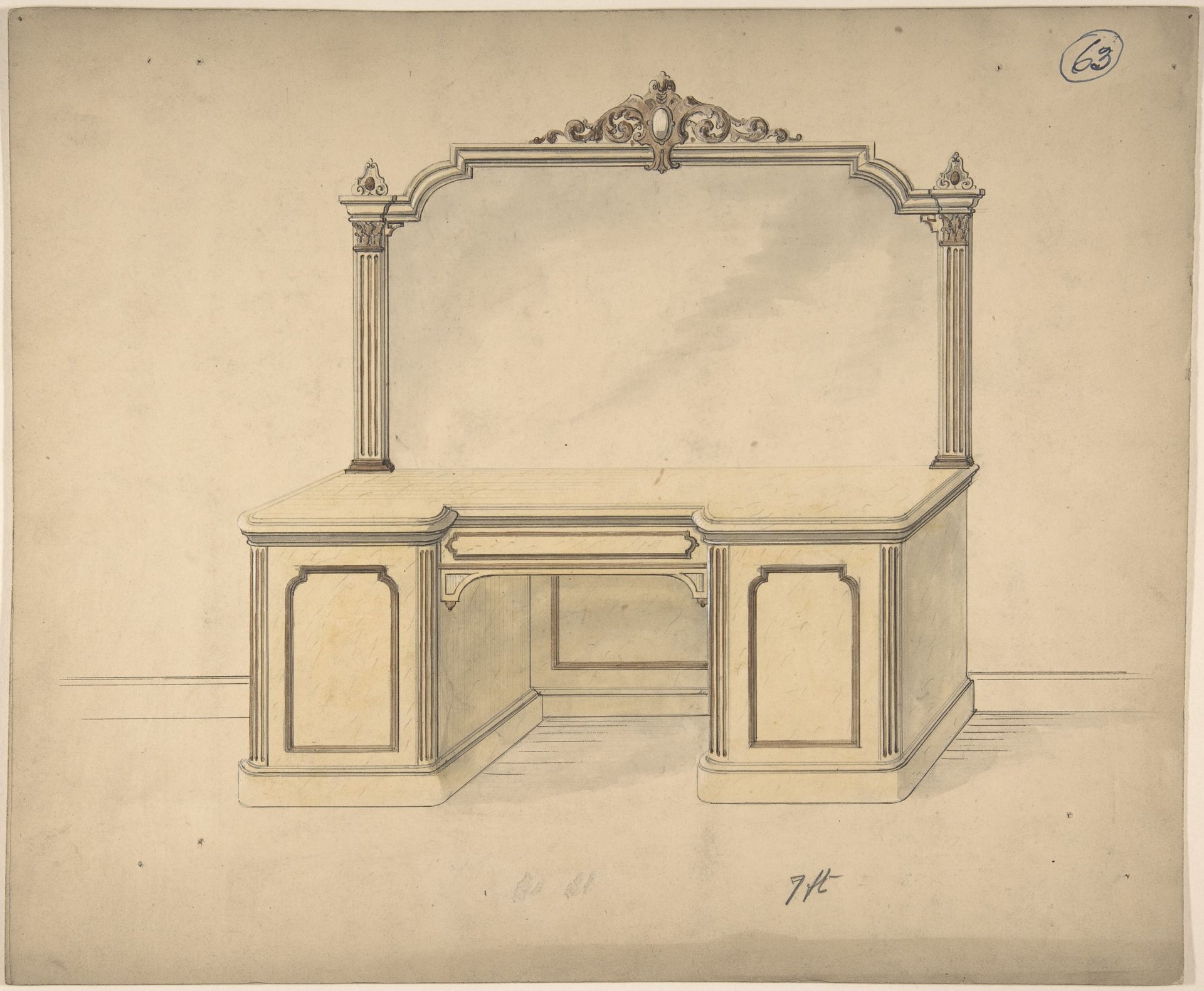
Editor: So this is “Design for a Desk with Mirror,” made by Charles Hindley and Sons sometime between 1841 and 1884. It’s a pencil and print drawing on paper. It feels so formal and architectural. What strikes you about this piece? Curator: For me, it's the sheer labor embedded in the *idea* of this desk. This isn't just about aesthetic pleasure, it's about envisioning the whole system of production and consumption. Someone had to design this, source the materials – likely luxurious hardwoods – and then, countless hours of skilled labor would be needed for its actual construction and ornamentation. Look at the details – each carved element implies an investment of human effort. What kind of person or factory might have produced the ornamentation at the top? Editor: Right, I see it now. Thinking about it just as a sketch hides all of that potential material history. How do we see the maker's hand when the artwork itself is only a proposal for future labor and industry? Curator: Well, in a way, this drawing *is* the product of their labor, and it offers a critical look into the aspirations and consumption patterns of the era. We might ask, who was this desk *for*? What status did it project? How might the production and eventual ownership affect labor or access? Editor: That’s a fascinating shift. Thinking less about "art" and more about the social life of objects. I'm thinking more about how "high design" intersects with material reality. Thank you! Curator: Indeed! Now we're considering it less as just a drawing, and more as a piece in a bigger economic puzzle. Good.
Design for a Desk with Mirror
1841 - 1884

Charles Hindley and Sons
1841 - 1917
The Metropolitan Museum of Art
Metropolitan Museum of Art, New York, NYArtwork details
- Medium
- drawing, print, paper, pencil
- Dimensions
- sheet: 10 1/4 x 12 5/16 in. (26 x 31.2 cm)
- Location
- Metropolitan Museum of Art, New York, NY
- Copyright
- Public Domain
Tags
Comments
Share your thoughts
About this artwork
Editor: So this is “Design for a Desk with Mirror,” made by Charles Hindley and Sons sometime between 1841 and 1884. It’s a pencil and print drawing on paper. It feels so formal and architectural. What strikes you about this piece? Curator: For me, it's the sheer labor embedded in the *idea* of this desk. This isn't just about aesthetic pleasure, it's about envisioning the whole system of production and consumption. Someone had to design this, source the materials – likely luxurious hardwoods – and then, countless hours of skilled labor would be needed for its actual construction and ornamentation. Look at the details – each carved element implies an investment of human effort. What kind of person or factory might have produced the ornamentation at the top? Editor: Right, I see it now. Thinking about it just as a sketch hides all of that potential material history. How do we see the maker's hand when the artwork itself is only a proposal for future labor and industry? Curator: Well, in a way, this drawing *is* the product of their labor, and it offers a critical look into the aspirations and consumption patterns of the era. We might ask, who was this desk *for*? What status did it project? How might the production and eventual ownership affect labor or access? Editor: That’s a fascinating shift. Thinking less about "art" and more about the social life of objects. I'm thinking more about how "high design" intersects with material reality. Thank you! Curator: Indeed! Now we're considering it less as just a drawing, and more as a piece in a bigger economic puzzle. Good.
Comments
Share your thoughts