before 1900
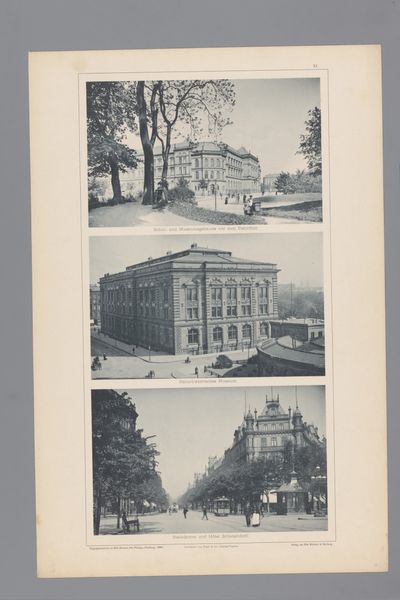
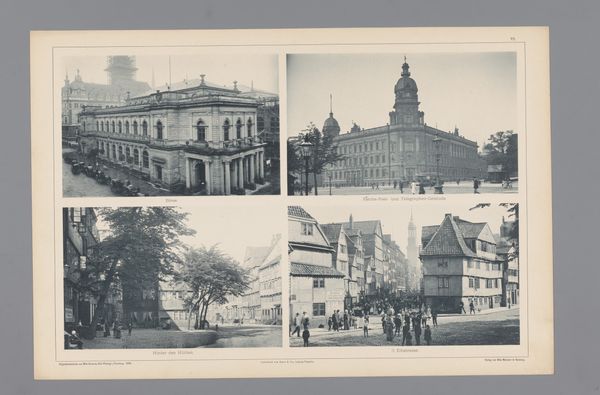
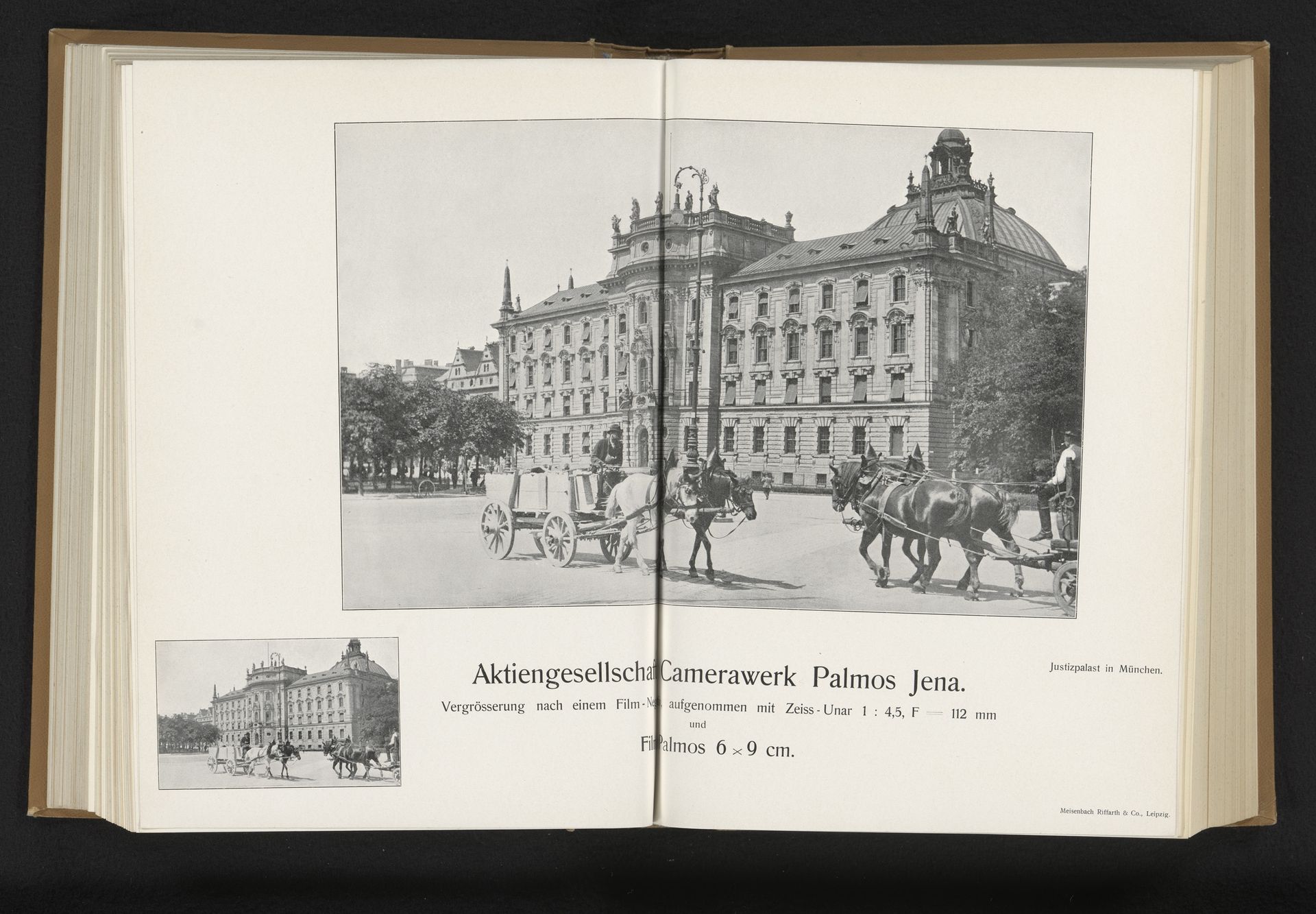
Twee gezichten op het Paleis van Justitie in München, Duitsland

Riffarth & Cie. Meisenbach
@riffarthciemeisenbachLocation
RijksmuseumListen to curator's interpretation
Curatorial notes
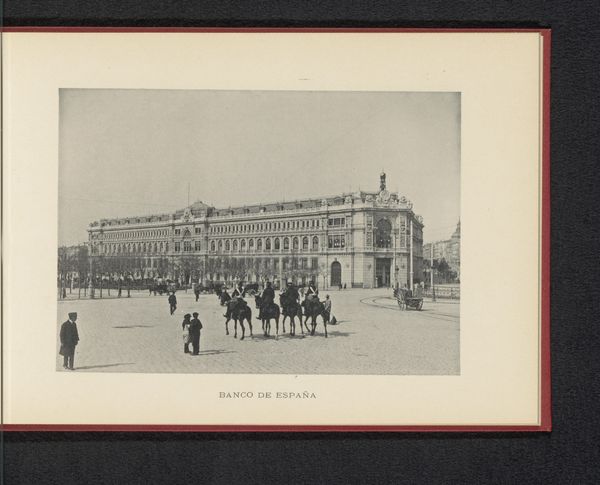
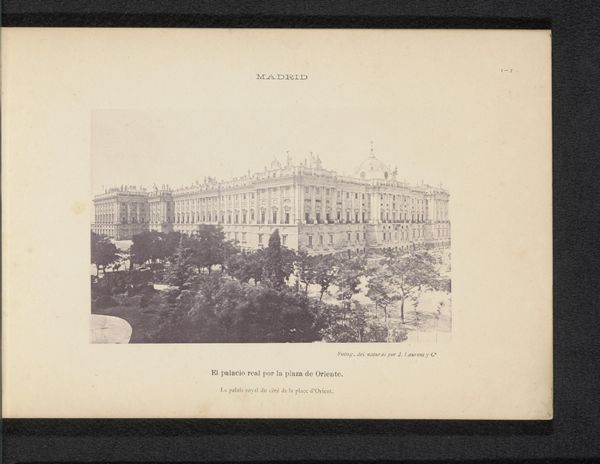
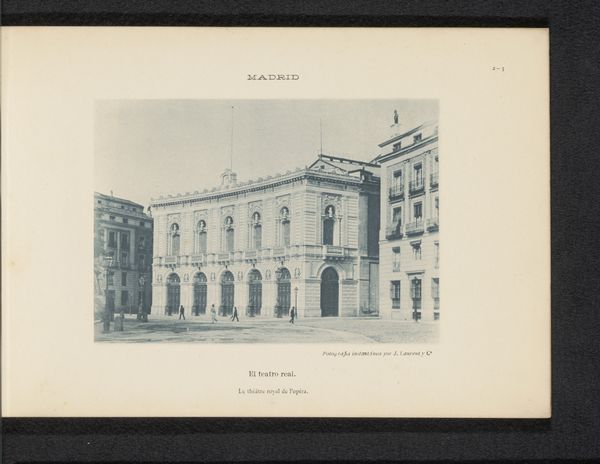
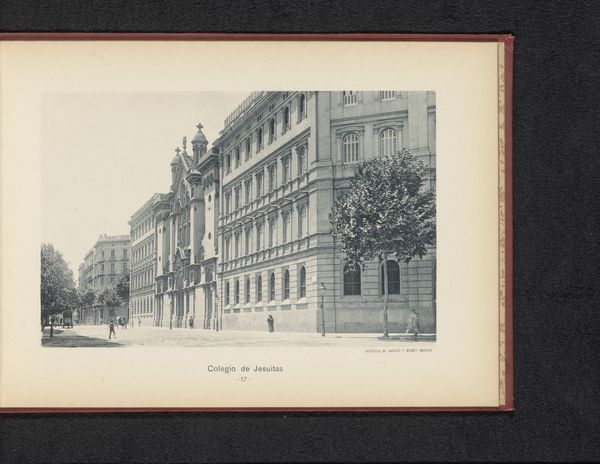
Curator: Here we have "Twee gezichten op het Paleis van Justitie in Múnchen, Duitsland," or Two Views of the Palace of Justice in Munich, Germany. This gelatin silver print was created by Riffarth & Cie. Meisenbach before 1900. It's currently part of the Rijksmuseum collection. Editor: The sheer ordinariness of it grabs me. Not in a bad way, though. The grayscale palette, the stark lines of the building, and those horse-drawn carriages just *existing*—it feels very matter-of-fact. Like looking at a captured moment devoid of romanticism. Curator: That directness is probably down to the gelatin silver printing process. Mass production was increasingly easier, shifting photographic prints away from the realm of precious objects towards something more commonplace. Consider too the social context: photography in service of documentation, archiving, reflecting, and reporting. Editor: Absolutely. There's labor involved too: the horse-drawn carriages feel significant. How dependent the whole city once was on animal power—all that organic infrastructure powering this monument to law. And there it is: "Justice," housed in this solid, imposing structure built by… whom? And for whom? I guess that’s where those views come in. There’s more than one way of looking at justice, right? Curator: Precisely! And beyond that, consider what the technology represents. We see the material, the architecture, and the subjects, but the technological leaps that facilitated its production changed the field entirely. A single entity producing what could only be captured or manually replicated by individuals. Editor: You know, I appreciate that interplay: the concrete and the fleeting. This solid structure, this grand symbol, rendered in a medium that allows for near-instant duplication. So many ways into and out of it, conceptually. It gets me thinking about other unseen views... the cases it handled, the trials, the lives impacted. It echoes with a history it can’t speak.