About this artwork
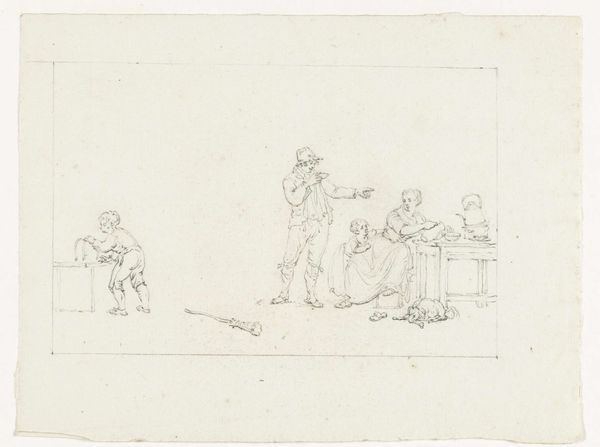
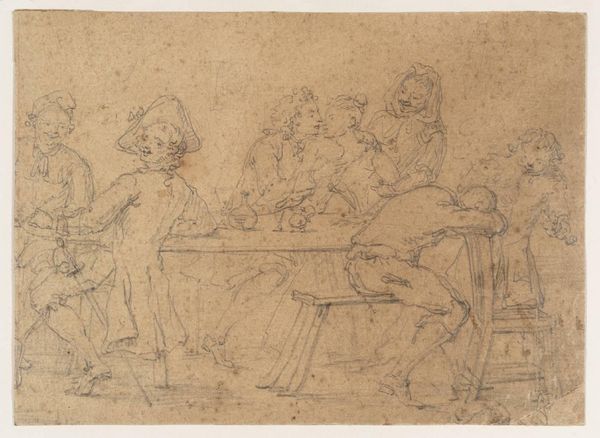
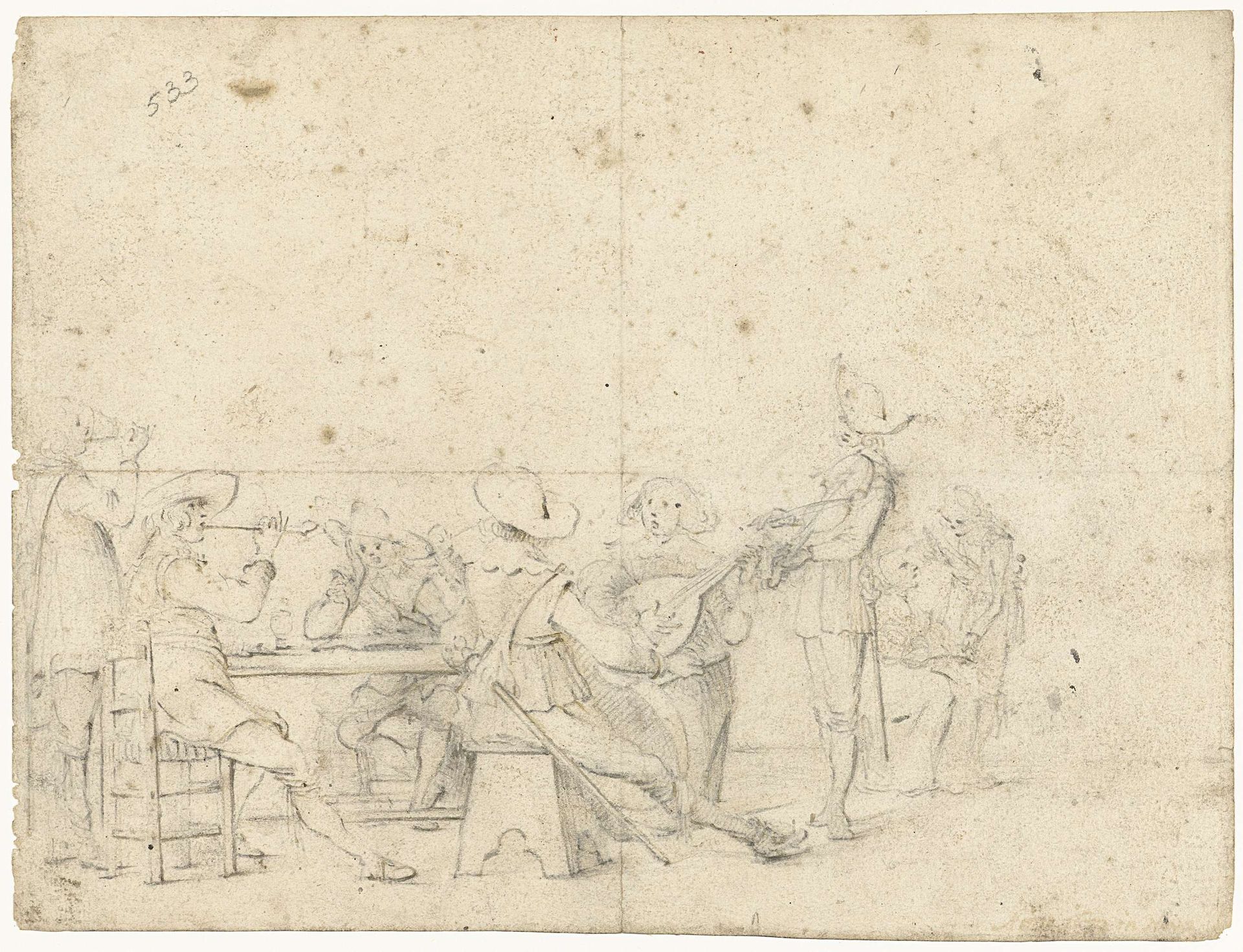
Gerard ter Borch sketched this gathering of young people drinking, smoking, and making music with pen and brown ink. The act of communal music-making is a powerful symbol, uniting individuals in harmony. This echoes the ancient Greek concept of the "harmony of the spheres," where music was seen as a reflection of cosmic order, influencing not only the emotions but also the social bonds of those participating. Consider how the musical gathering motif resurfaces in Renaissance paintings of the "Allegory of Music," or even in depictions of the Last Supper, where the shared meal and conversation evoke a sense of unity and spiritual communion. In a psychoanalytic light, such scenes tap into our collective unconscious, stirring feelings of belonging and the desire for shared experiences, evoking the timeless human need for connection and catharsis through art. It's a testament to art’s capacity to engage viewers on a subconscious level, reminding us of the enduring power of shared joy and human connection.
Gezelschap van drinkende, rokende en musicerende jongelui rond een tafel
1632

Gerard ter (II) Borch
1617 - 1681Location
RijksmuseumArtwork details
- Medium
- drawing, paper, pencil
- Dimensions
- height 161 mm, width 230 mm
- Location
- Rijksmuseum
- Copyright
- Rijks Museum: Open Domain
Tags
Comments
Share your thoughts
About this artwork
Gerard ter Borch sketched this gathering of young people drinking, smoking, and making music with pen and brown ink. The act of communal music-making is a powerful symbol, uniting individuals in harmony. This echoes the ancient Greek concept of the "harmony of the spheres," where music was seen as a reflection of cosmic order, influencing not only the emotions but also the social bonds of those participating. Consider how the musical gathering motif resurfaces in Renaissance paintings of the "Allegory of Music," or even in depictions of the Last Supper, where the shared meal and conversation evoke a sense of unity and spiritual communion. In a psychoanalytic light, such scenes tap into our collective unconscious, stirring feelings of belonging and the desire for shared experiences, evoking the timeless human need for connection and catharsis through art. It's a testament to art’s capacity to engage viewers on a subconscious level, reminding us of the enduring power of shared joy and human connection.
Comments
Share your thoughts