painting, plein-air, oil-paint
#
rural-area
#
painting
#
impressionism
#
plein-air
#
oil-paint
#
landscape
#
impressionist landscape
#
oil painting
#
naturalistic tone
Copyright: Public domain
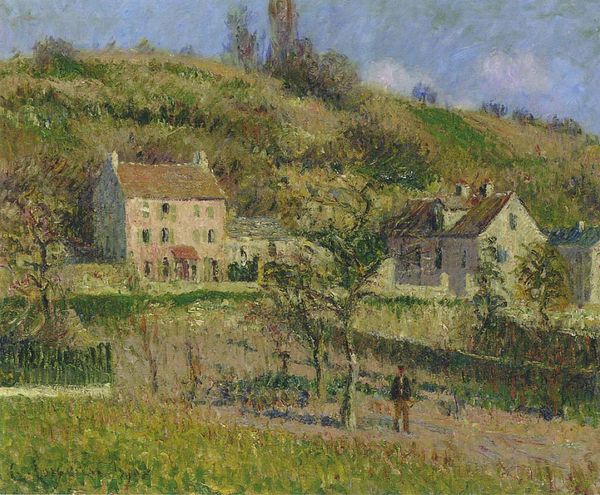
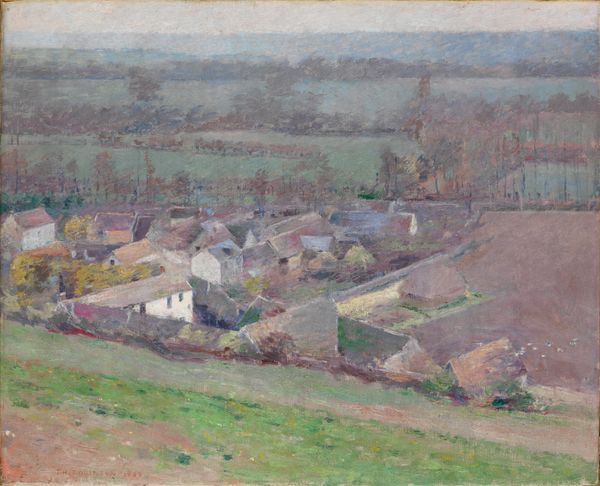
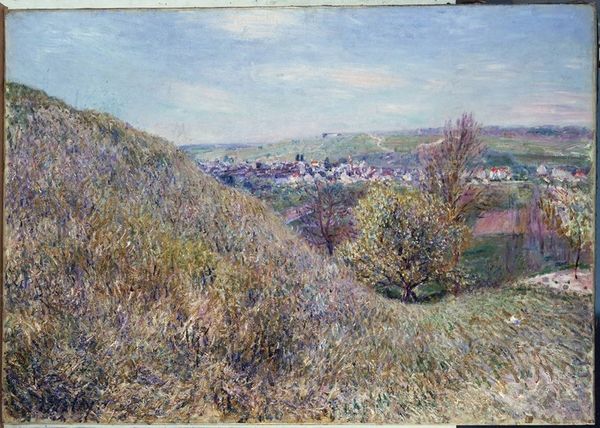
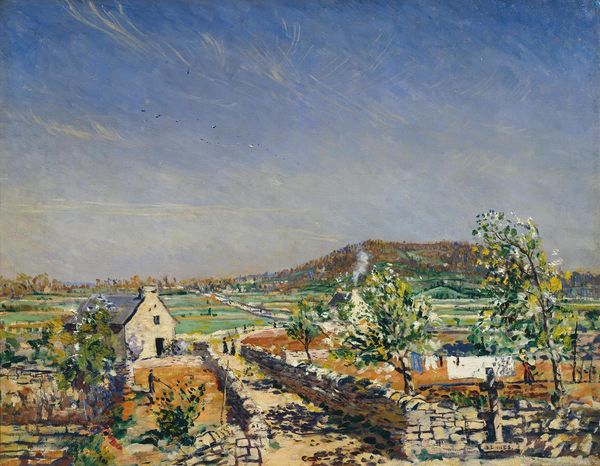
Curator: Before us is Claude Monet's "The Mount Riboudet in Rouen at Spring," painted in 1872 using oil on canvas. Editor: It has this soft, idyllic feeling. Like looking into a peaceful dream, very gently layered. I immediately think of rural labor and food. Curator: Indeed, consider how this painting exists at a fascinating nexus of rapid industrialization and agrarian traditions. Monet is not simply capturing a landscape; he is documenting a specific cultural and economic moment where rural life is increasingly mediated by the demands of an emerging industrial society. Editor: And we can really see that connection in the material reality represented. The textures, the very substance of paint, evokes the feel of cultivated land, freshly turned soil. The mark-making implies cultivation. Curator: Absolutely. How might this depiction reflect or perhaps critique the displacement of rural communities and agricultural labor during the era’s urban growth? There is perhaps, an unstated commentary about who benefits and who suffers in the wake of progress. Editor: I agree, the layers of paint remind us of the many layers of the economy, and human labor. You can almost smell the rich earth and sense the activity it produces and suggests the value creation that it all brings forth, if you’re allowed to appreciate it in situ. It’s an exercise of impression to make the land generate value that cannot always be measured, yet all consume. Curator: Precisely, it’s this layering, as you say, of societal values and economic pressures into the rural setting. These tensions are visualized through his choice of subject and technique of impressionistic paint handling. It presents an intersectional viewpoint. Editor: And those tensions highlight both the social disruption and production represented, Monet, through process and place invites reflection on our material engagements with the land, which at the time held true classist dynamics. Curator: A deeply evocative, complex portrait that transcends landscape depiction through its layered readings of both land and societal production. Editor: I think it reminds me to remember the simple, tactile labor of those times in contrast with how our consumer economy continues today in the future.
Comments
No comments
Be the first to comment and join the conversation on the ultimate creative platform.
 Collect
 React
React Comment
More like this