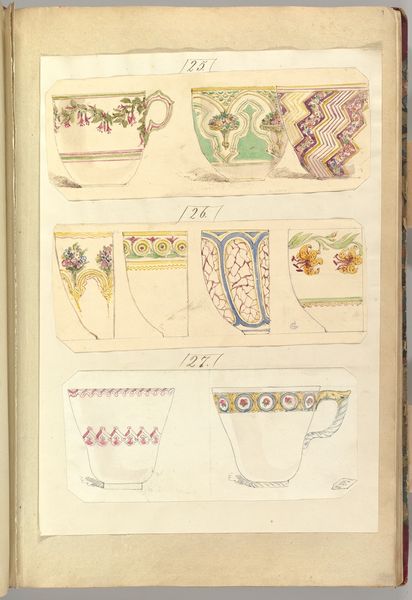
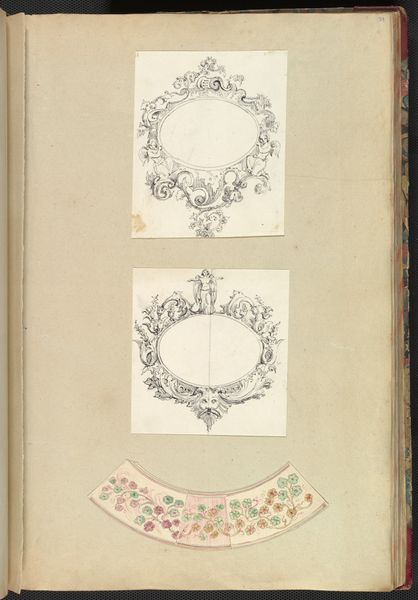
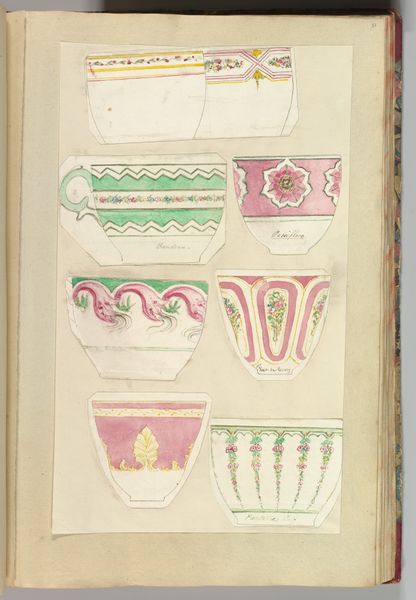
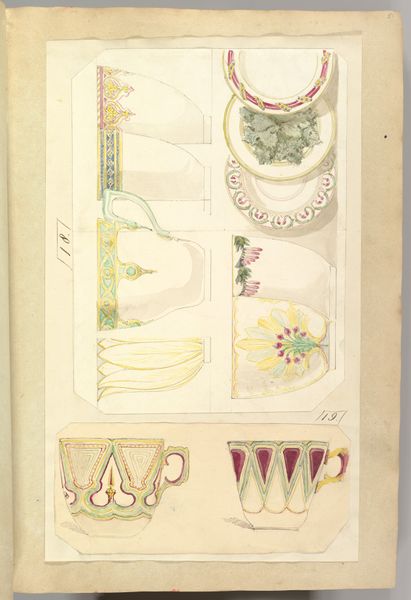
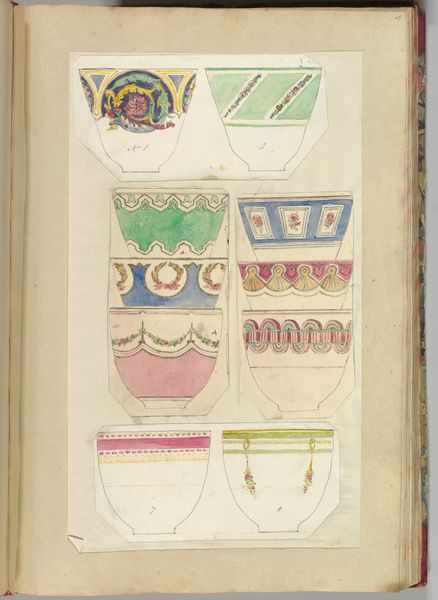
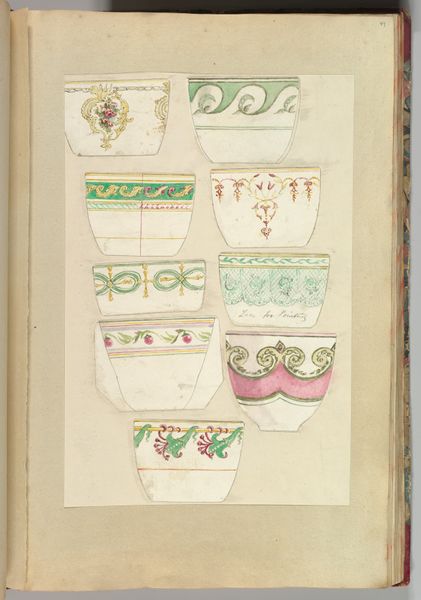
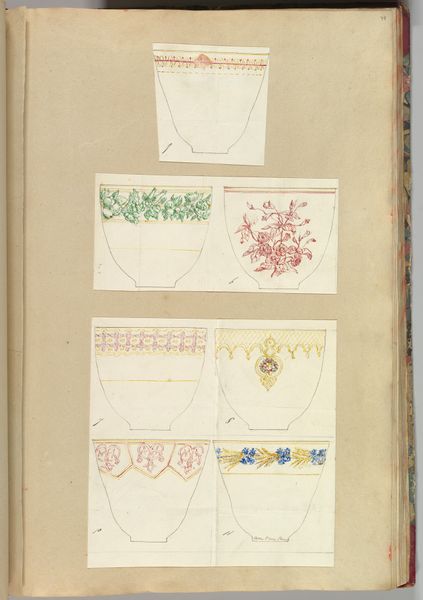
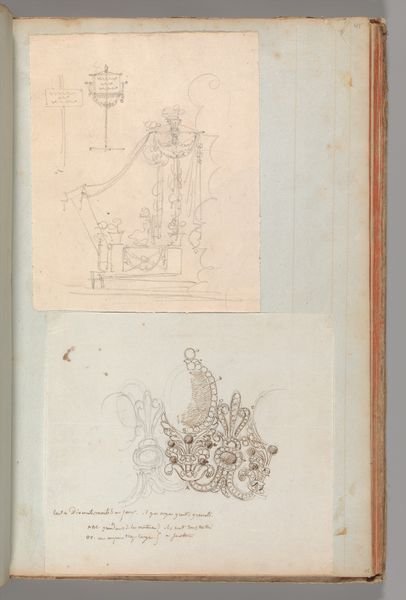
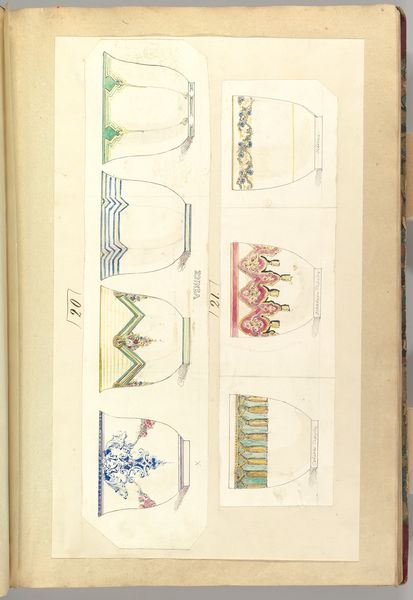
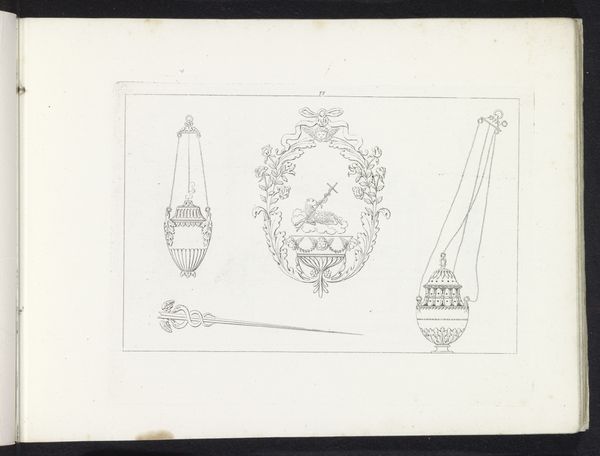
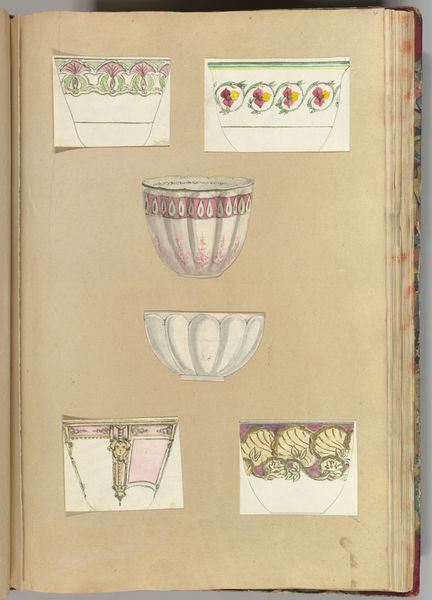
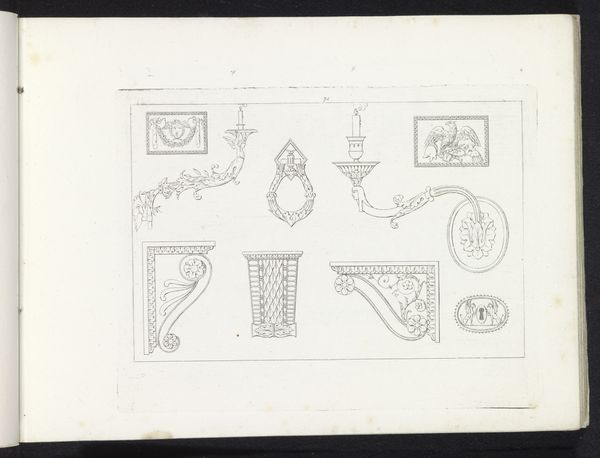
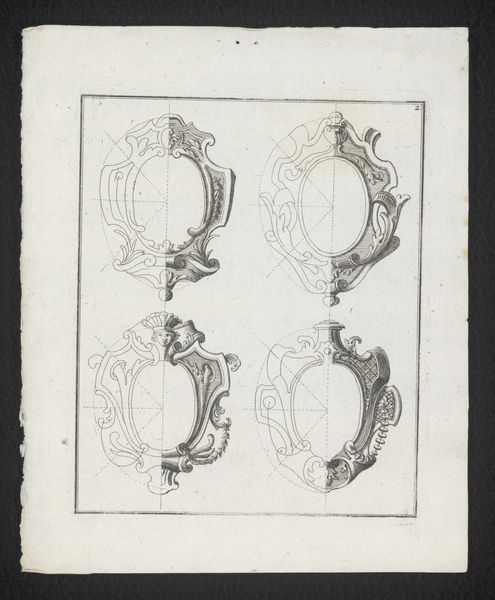
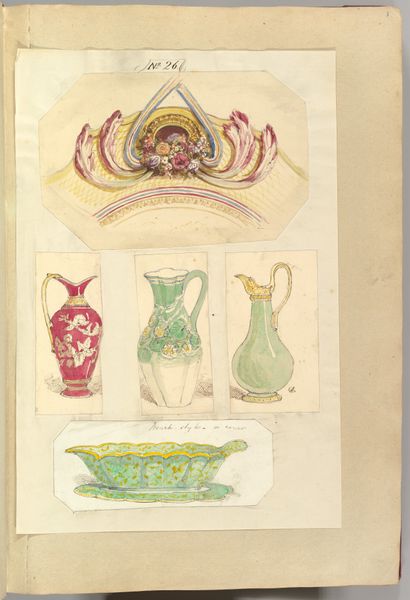
Designs for Four Mirrors and a Two Handled Vase 1845 - 1855
0:00
0:00


drawing, print, paper, watercolor
#
drawing
# print
#
vase
#
paper
#
watercolor
#
coloured pencil
Dimensions: sheet: 16 3/4 x 11 7/16 in. (42.5 x 29 cm)
Copyright: Public Domain
Editor: This is "Designs for Four Mirrors and a Two Handled Vase," dating from around 1845-1855 by Alfred Henry Forrester. It's a drawing and print made with watercolor and coloured pencil on paper. The designs feel quite ornate and somewhat playful. What strikes you about this piece? Curator: I see a record of aspirational design labor here. Forrester wasn't just creating "art," but blueprints for commodities. Consider the material implications: where would these mirrors be produced? By whom? Were the intended consumers part of the emerging middle class eager for affordable luxury? The design itself incorporates cherubic figures; we might ask, how did such classical motifs serve the commercial interests of Victorian society? Editor: So you're focusing on the intended functionality and production. I hadn't considered the social context so deeply. Curator: Precisely. These designs represent not just aesthetic preferences, but economic forces at play. The choice of materials - watercolour on paper - points to a relatively inexpensive method for mass production of these design ideas. Are these materials intended to evoke the qualities of glass or metal, and what socio-economic class did that evoke at that time? Editor: Interesting, the watercolor gives the vase a glassy sheen that would likely have been difficult for middle-class people to attain, adding to its desirability, I imagine. Curator: Indeed. And look at the precision in the drawings, necessary for the artisan who would execute the designs. Forrester is mediating between artistic invention and material production. Editor: That makes me look at the whole design quite differently; from aesthetics to labor implications and potential class tensions inherent in decorative objects of the time. Curator: Exactly. By interrogating the material aspects of this artwork, we begin to uncover layers of social and economic meaning embedded within seemingly simple designs.
Comments
No comments
Be the first to comment and join the conversation on the ultimate creative platform.
 Collect
 React
React Comment
More like this