1577
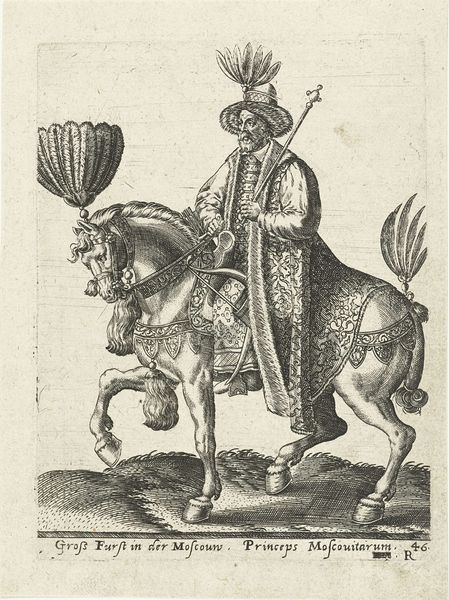
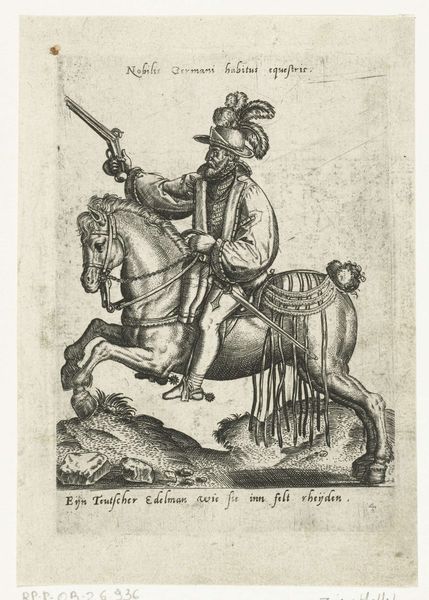
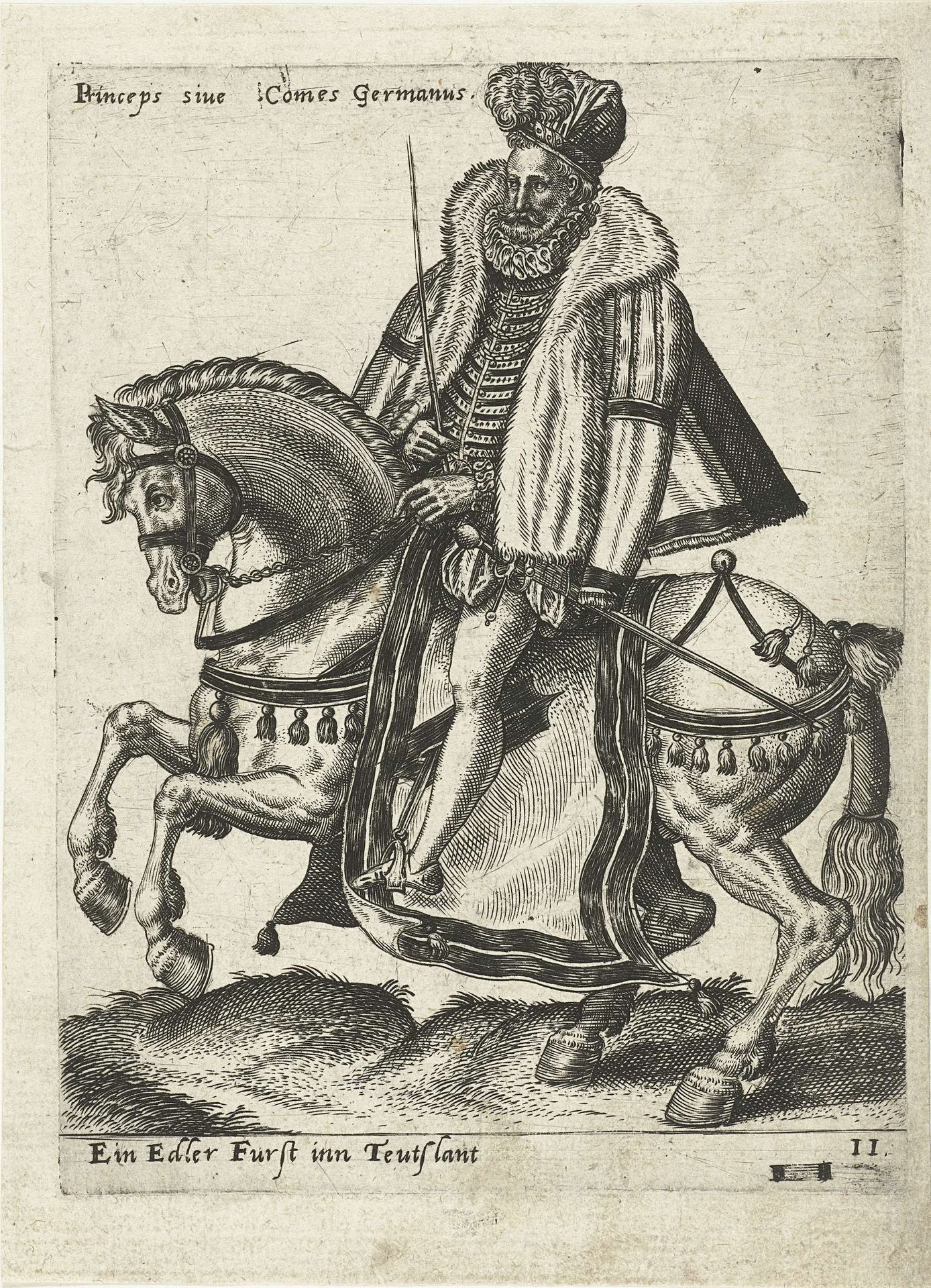
Duitse heerser te paard

Abraham de Bruyn
1540 - 1587Location
RijksmuseumListen to curator's interpretation
Curatorial notes
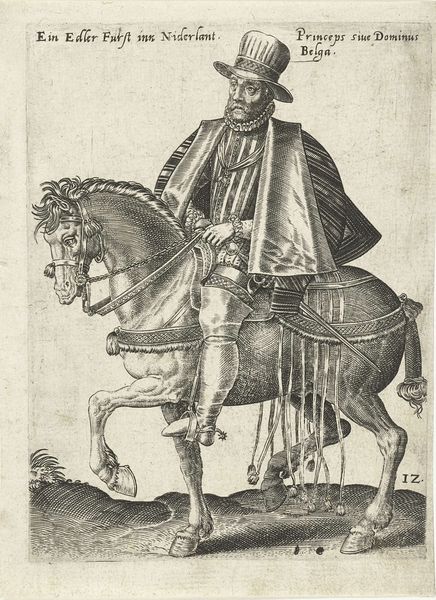
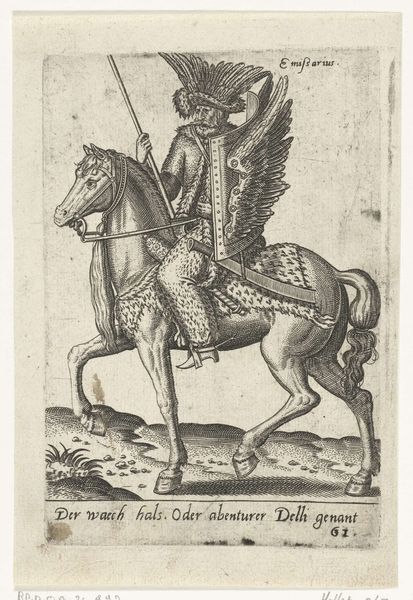
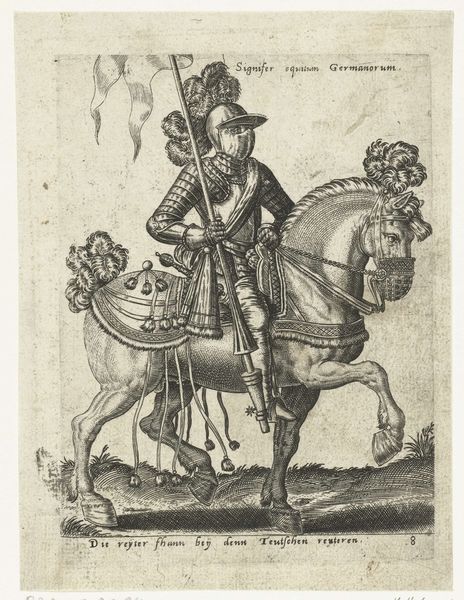
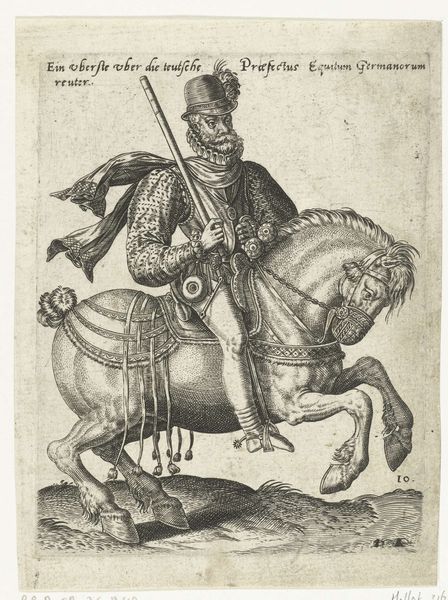
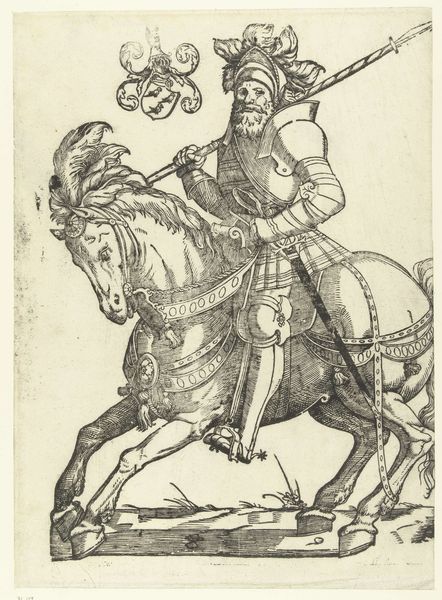
This engraving by Abraham de Bruyn presents a German ruler on horseback. Note the prominent display of fur, adorning both the ruler's attire and the horse's trappings. Fur, throughout history, has been a potent symbol of status and power, deeply connected to primal notions of survival and dominance. Consider the equestrian statues of Roman emperors, where the horse elevates the ruler, symbolizing control and command. The motif of the horse carries echoes from antiquity, reappearing in Renaissance art, where it embodies not only power but also nobility and grace. This recalls the psychological impact of such imagery. The horse, a magnificent beast tamed, serves as a visceral metaphor for the ruler's ability to govern both himself and his realm. The symbol of fur as status has changed over time, but it has always denoted wealth and power. This engraving, therefore, is not merely a portrait but an echo of enduring symbols, each resonating with layers of meaning that transcend time.