About this artwork
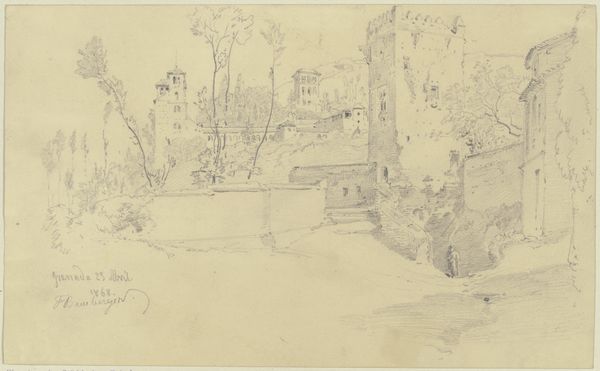
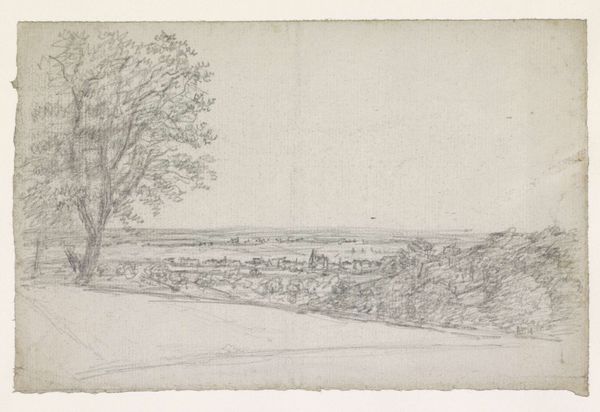
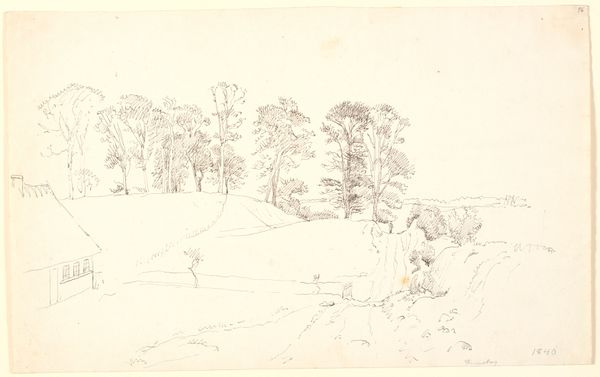
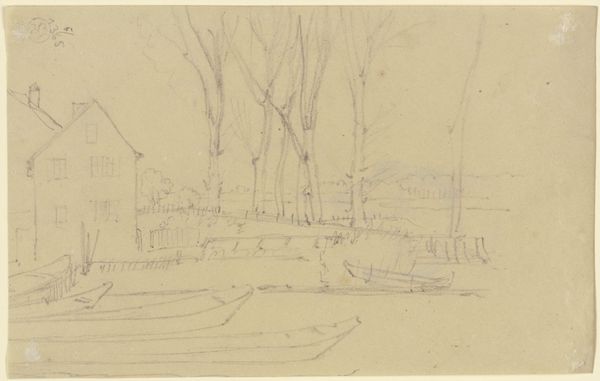
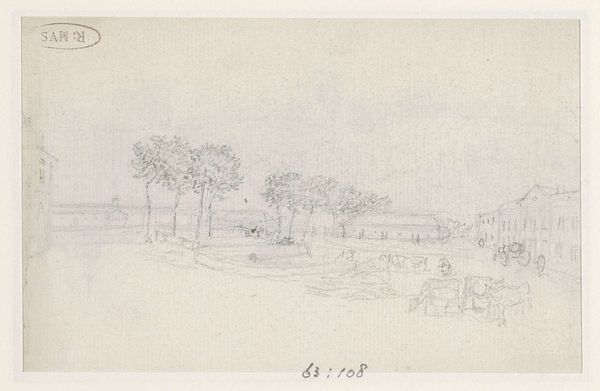
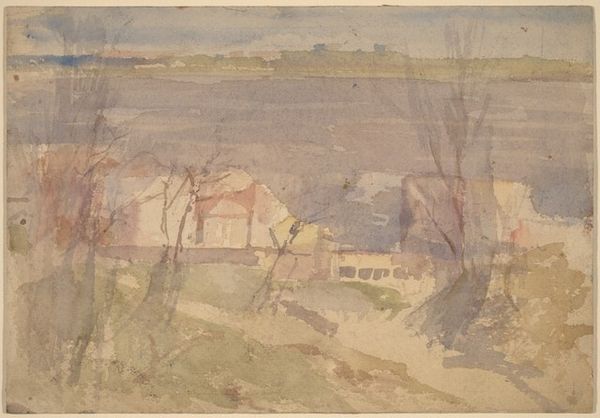
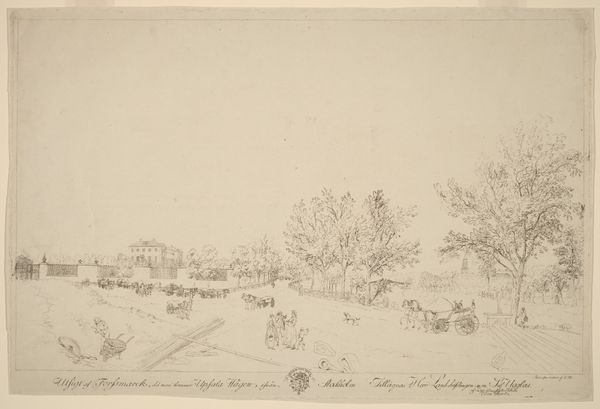
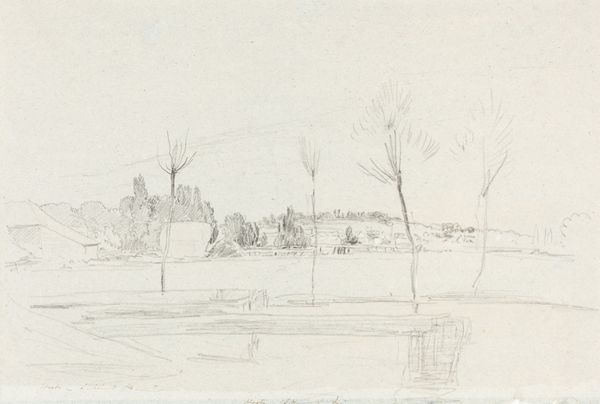
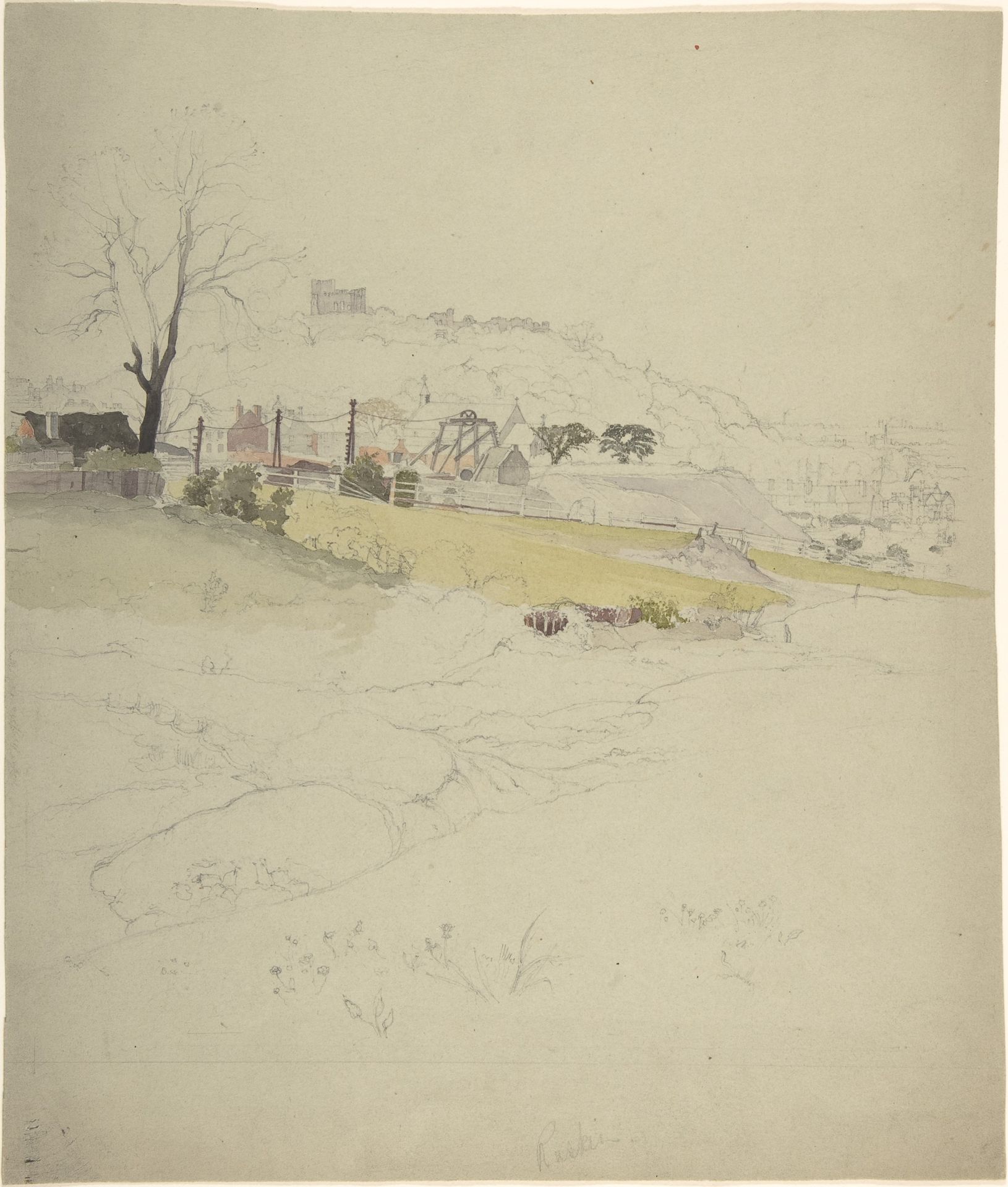
John Ruskin made this watercolor and graphite drawing of a colliery, or coal mine, at the edge of a town. Ruskin was fascinated by the relationships between materials, labor, and the natural world, and here we see him grappling with the impact of industrialization. The pencil under-drawing gives the scene an unfinished, tentative quality, as if the artist is searching for a way to reconcile the beauty of the landscape with the stark reality of the coal mine. The muted palette, dominated by grays and greens, creates a somber atmosphere, reflecting the environmental and social costs of industrial progress. Ruskin's choice of humble materials – paper, graphite, and watercolor – contrasts with the monumental scale of the industrial landscape, emphasizing the human dimension of this scene. By focusing on the everyday, Ruskin challenges traditional notions of artistic subject matter and elevates the status of both the working class and the landscapes they inhabit. This is not just a topographical study, but a social commentary, making us consider the human and environmental costs of progress.
View of a Colliery at the Edge of a Town
1840s


Artwork details
- Medium
- drawing, watercolor, pencil
- Dimensions
- sheet: 11 15/16 x 10 3/16 in. (30.4 x 25.8 cm)
- Location
- Metropolitan Museum of Art, New York, NY
- Copyright
- Public Domain
Tags
Comments
Share your thoughts
About this artwork
John Ruskin made this watercolor and graphite drawing of a colliery, or coal mine, at the edge of a town. Ruskin was fascinated by the relationships between materials, labor, and the natural world, and here we see him grappling with the impact of industrialization. The pencil under-drawing gives the scene an unfinished, tentative quality, as if the artist is searching for a way to reconcile the beauty of the landscape with the stark reality of the coal mine. The muted palette, dominated by grays and greens, creates a somber atmosphere, reflecting the environmental and social costs of industrial progress. Ruskin's choice of humble materials – paper, graphite, and watercolor – contrasts with the monumental scale of the industrial landscape, emphasizing the human dimension of this scene. By focusing on the everyday, Ruskin challenges traditional notions of artistic subject matter and elevates the status of both the working class and the landscapes they inhabit. This is not just a topographical study, but a social commentary, making us consider the human and environmental costs of progress.
Comments
Share your thoughts