drawing, watercolor
#
drawing
#
charcoal drawing
#
oil painting
#
watercolor
#
watercolor
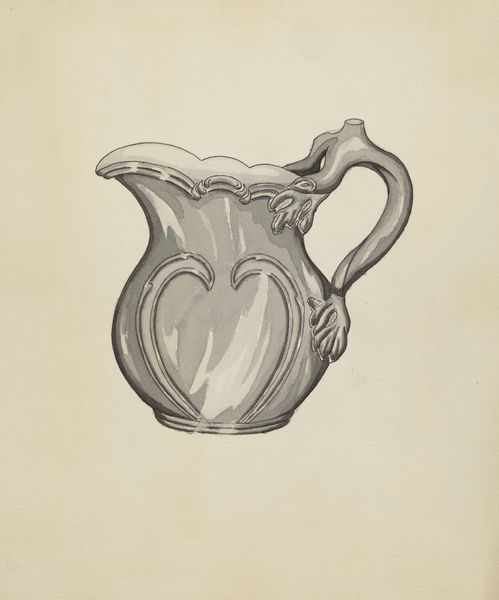
Dimensions: overall: 25.9 x 23 cm (10 3/16 x 9 1/16 in.) Original IAD Object: Pitcher drawn exact size.
Copyright: National Gallery of Art: CC0 1.0
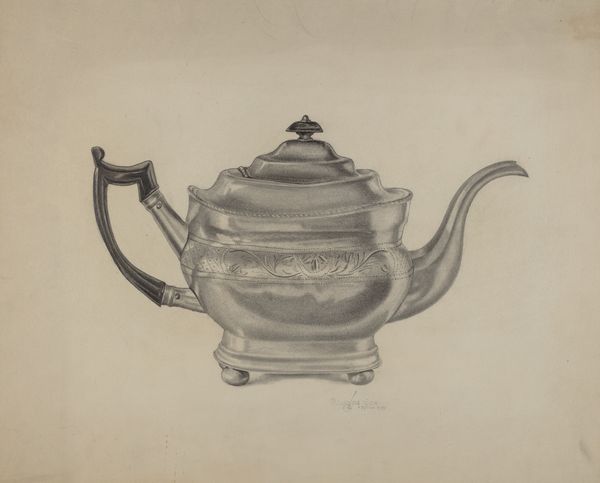
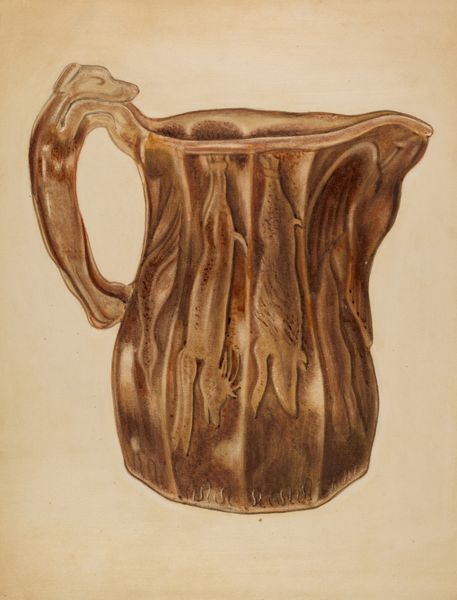
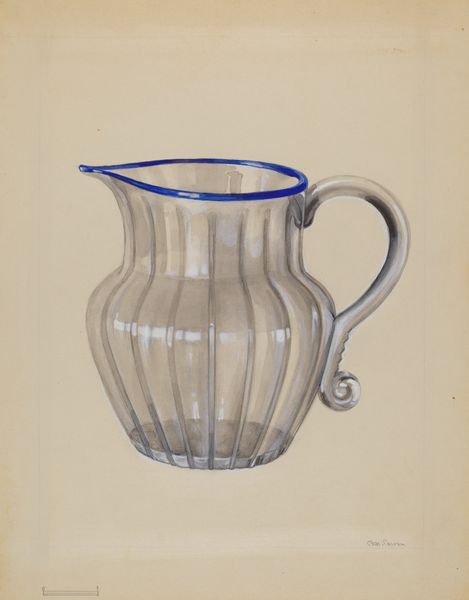
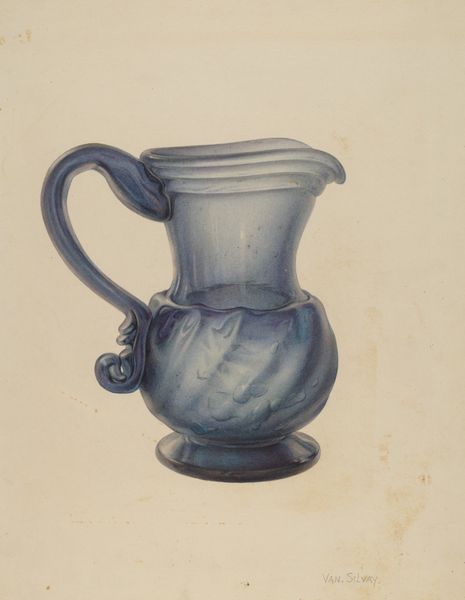
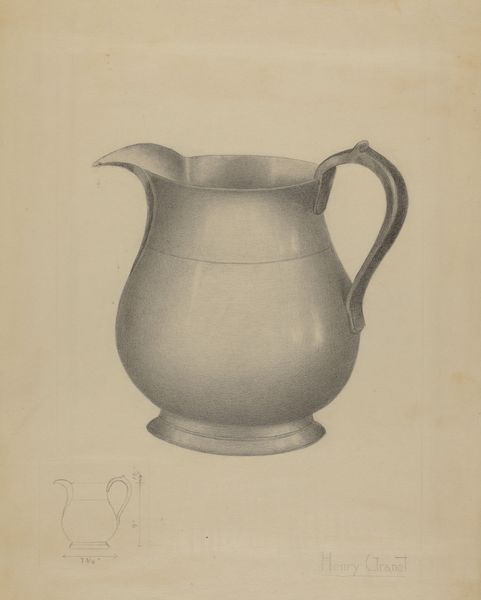
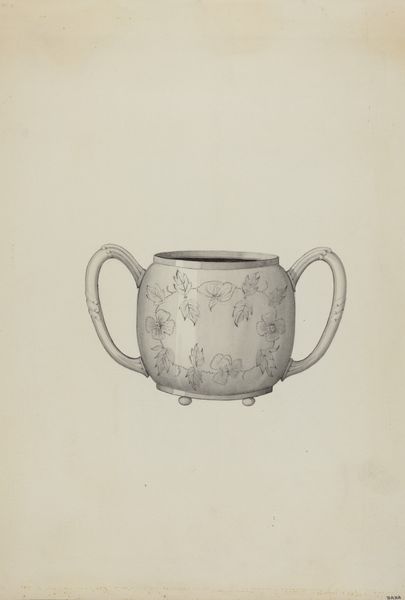
Curator: We're looking at Cleo Lovett's "Syrup Pitcher," created around 1938, rendered with a delicate hand using watercolor and drawing. Editor: My first impression is that there is an intense level of stillness—the grey washes drain the scene, imbuing a rather quaint and domestic subject with a heavy silence. Curator: Note how Lovett renders form. It's as much about absence as presence, exploiting negative space. See how the faint details create the curvature of the object? Lovett subtly constructs this pitcher by suggesting contours, not delineating them firmly. Editor: The monochrome palette amplifies its symbolic resonance for me, calling forth echoes of antique engravings and vintage photographs. The pitcher isn't just an object, it's a container of stories, hinting at hearth and home but in this flattened field also potentially lost intimacy or broken tradition. I am getting some complex historical signs. Curator: Interesting reading! Let’s address the etched surface, a collection of figurative scenes. What do you make of them, particularly as contained and framed by the vessel? Editor: The bas-reliefs around the body certainly look Biblical. This would not be uncommon on objects intended for a wholesome family or as decorative or sentimental gestures. Given its form as a pitcher, one might suspect some hidden or secondary iconography connected to communal gatherings, the offering of gifts or religious sacraments. Curator: Perhaps, or are those elements merely there to enrich the pitcher’s design, constructing this item to be pleasing to its owner? I wonder whether it needs the complex symbols in order to work effectively. After all, form serves function. Editor: Maybe you are right, but if we step back to consider, beyond Lovett’s careful composition and restrained color, one finds symbols persist to offer the cultural weight and value judgments, be it secular or sacral. The eye never quite sheds history and memory. Curator: A beautifully persuasive note to end on! It makes one truly think about the image that persists for viewers today. Editor: Agreed. And reminds me that there is always some historical context for these renderings regardless of intentions.
Comments
No comments
Be the first to comment and join the conversation on the ultimate creative platform.
 Collect
 React
React Comment
More like this