About this artwork
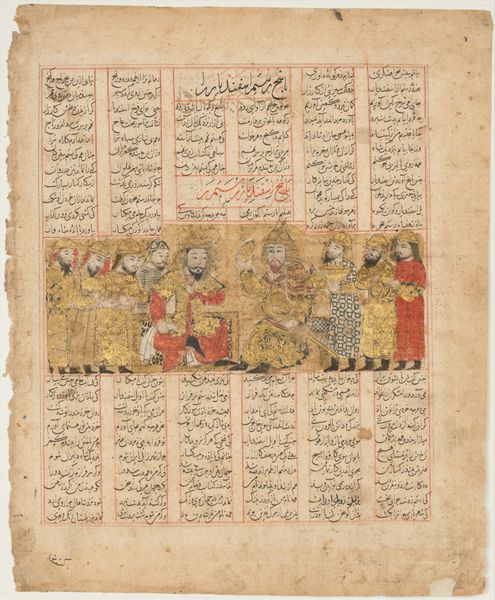
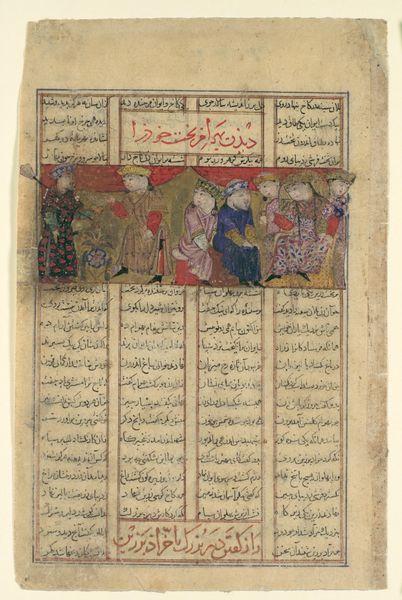
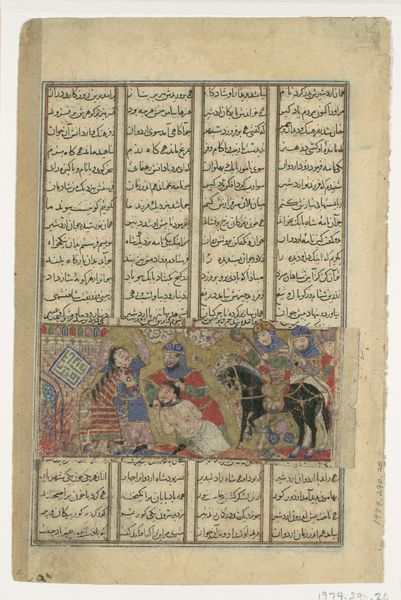
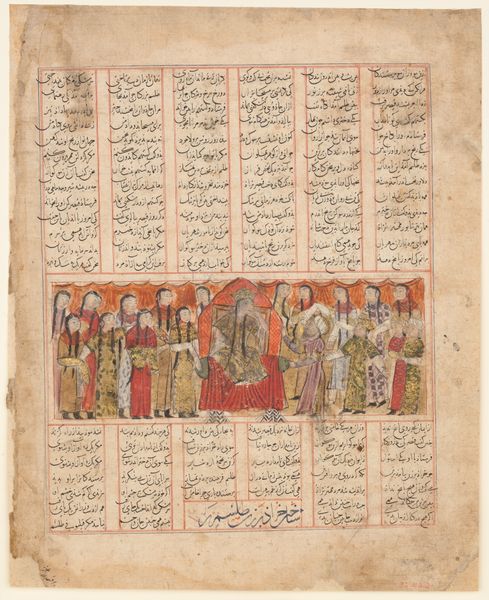
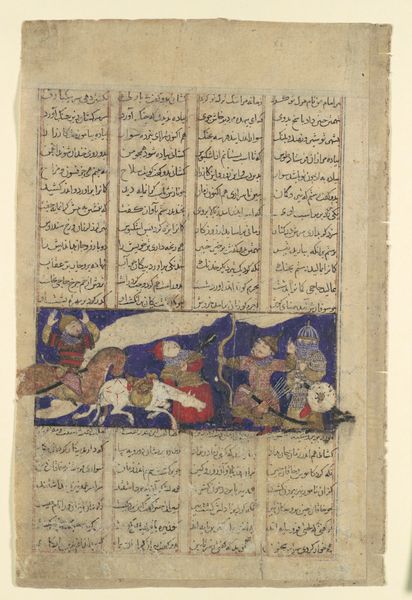
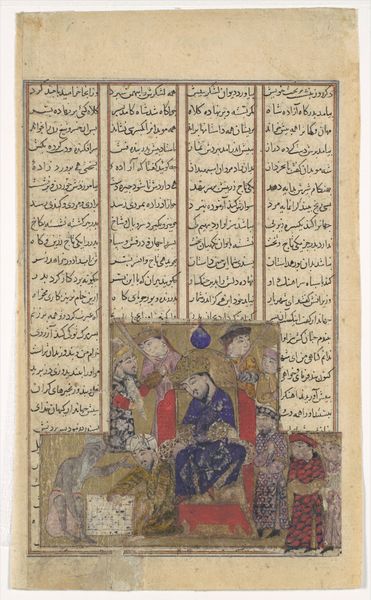
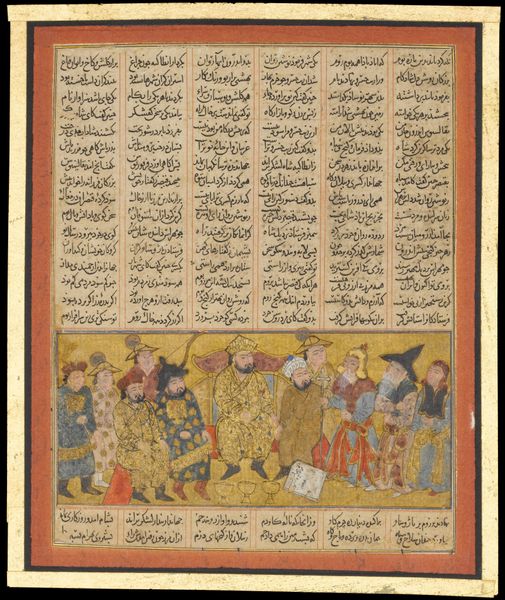
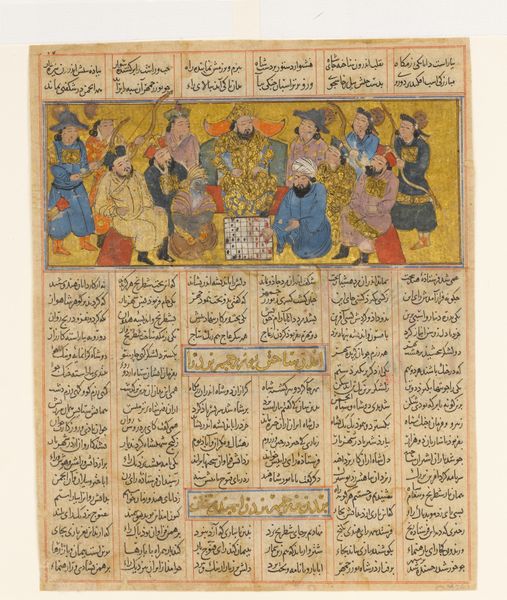
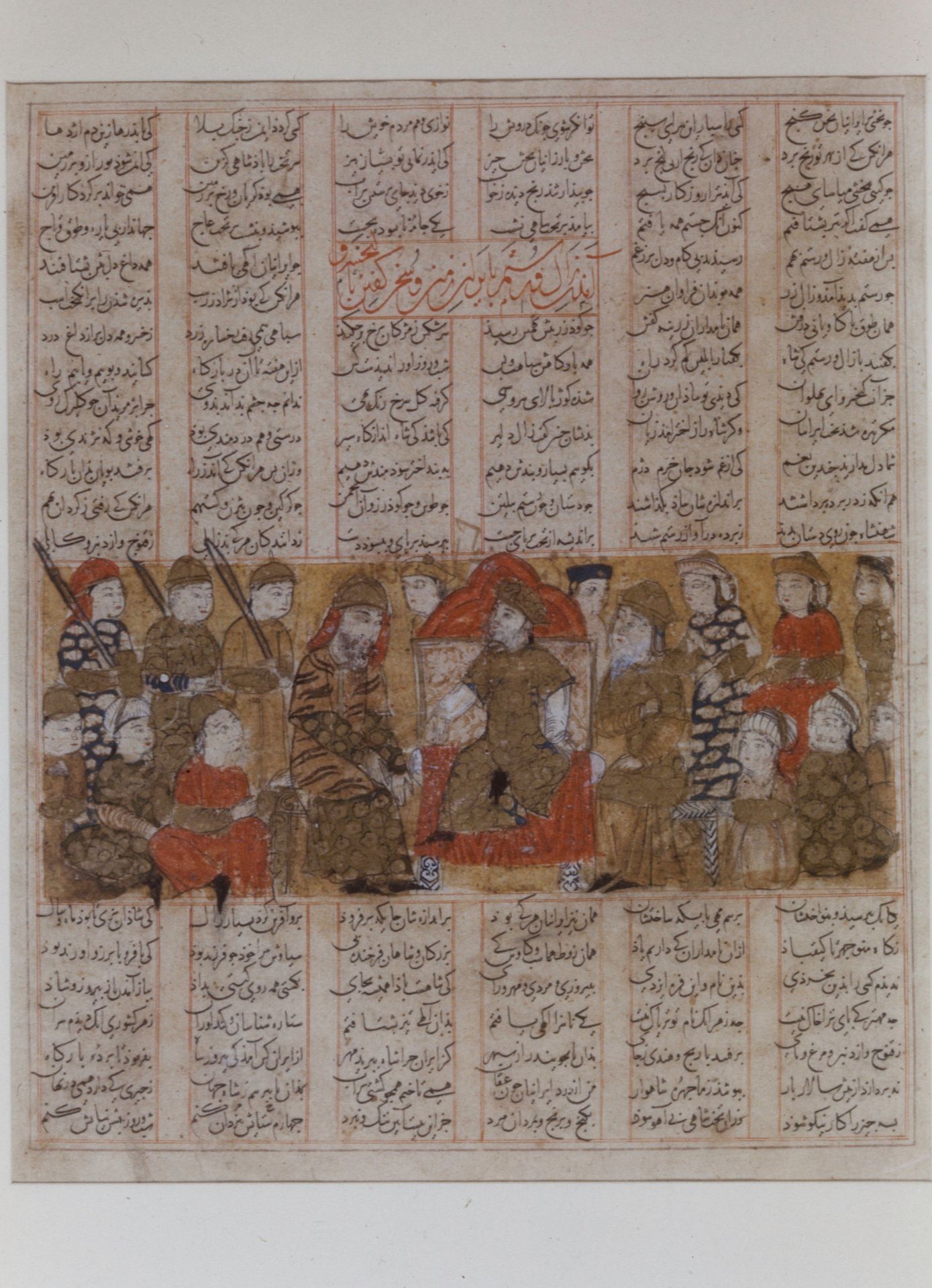
Editor: So, here we have "Rustam before Kay Kavous," created in 1341 by Hasan ibn Muhammad ibn `Ali ibn Husaini. It's a mixed media piece, including painting, ink, and watercolor on paper, currently housed at the Minneapolis Institute of Art. It feels both incredibly detailed and somehow distant, like I’m peering into another world. How do you interpret this work? Curator: Ah, yes, this miniature is a wonderful example of narrative painting within Islamic art. Think of it less as a portrait in our modern sense and more like a captured scene from the Shahnameh, the Persian Book of Kings. The positioning of Rustam, a hero, before Kay Kavous, the king, isn't just about representation; it's loaded with symbolism about power, loyalty, and maybe even a little tension, wouldn’t you say? Editor: Tension definitely. The king seems less than thrilled! The detail in their clothing is striking, especially considering its size. Curator: Absolutely. And look closely at the text surrounding the image – it’s not just decorative. These are verses from the Shahnameh, adding another layer of narrative depth. They're essentially captions that illuminate what we are seeing and experiencing. Does knowing that change your perspective? Editor: It does. It’s not just a pretty picture; it’s part of a much bigger story. I guess I was so focused on the figures themselves, I almost missed the written elements as vital parts of the overall composition. Curator: Precisely. The integration of text and image is critical in Persian miniature painting. It encourages the viewer to actively engage with the story, to become a participant in the visual narrative, if you will. So what's your impression now? Editor: It’s much richer, and less distant. I see it as more than just an illustration. It’s a carefully constructed argument about power and storytelling. Curator: Indeed! And that’s what makes it so compelling, even centuries later. We can glean the values, struggles, and cultural identity embedded within these ancient stories and artistic traditions.
Rustam before Kay Kavous
1341

Hasan ibn Muhammad ibn `Ali ibn Husaini (known as al-Mausili)
@hasanibnmuhammadibnaliibnhusainiknownasalmausili
Minneapolis Institute of Art
Minneapolis Institute of ArtArtwork details
- Medium
- mixed-media, painting, paper, ink
- Location
- Minneapolis Institute of Art
- Copyright
- Public Domain
Tags
Comments

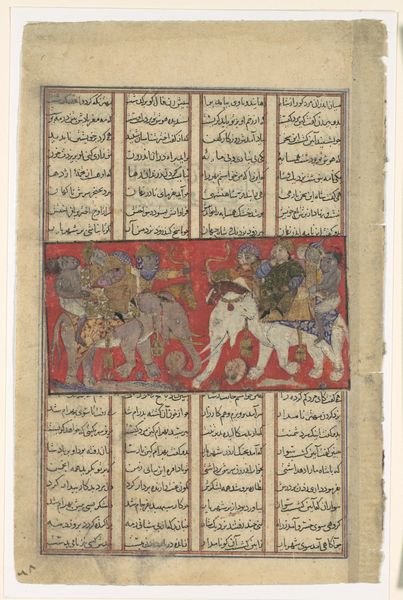
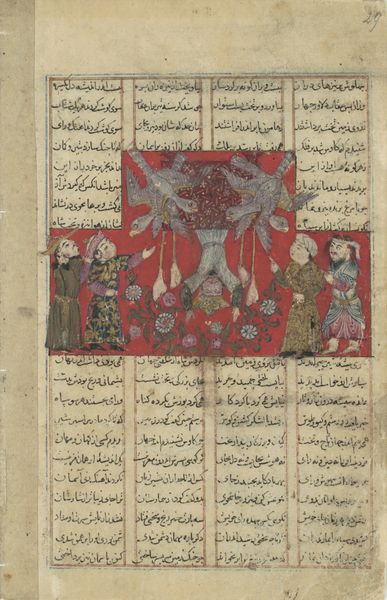
This illustration was commissioned by al-Hasan Qivam al-Din w’al-Daula, an adviser to the Inju rulers (c. 1325–56) who briefly ruled the Iranian province of Fars, considered the ancient homeland of the Persian people. Here, the legendary warrior Rustam (in characteristic tiger robe) is seen with his retinue, greeting King Kay Kavous to report a victory. The flat, red background, textiles with Chinese-inspired lotus and peony motifs, and figures with cursory yet animated outlines—the spears literally pierce the surrounding text—characterize these rare paintings from the provincial Inju school.
About this artwork
Editor: So, here we have "Rustam before Kay Kavous," created in 1341 by Hasan ibn Muhammad ibn `Ali ibn Husaini. It's a mixed media piece, including painting, ink, and watercolor on paper, currently housed at the Minneapolis Institute of Art. It feels both incredibly detailed and somehow distant, like I’m peering into another world. How do you interpret this work? Curator: Ah, yes, this miniature is a wonderful example of narrative painting within Islamic art. Think of it less as a portrait in our modern sense and more like a captured scene from the Shahnameh, the Persian Book of Kings. The positioning of Rustam, a hero, before Kay Kavous, the king, isn't just about representation; it's loaded with symbolism about power, loyalty, and maybe even a little tension, wouldn’t you say? Editor: Tension definitely. The king seems less than thrilled! The detail in their clothing is striking, especially considering its size. Curator: Absolutely. And look closely at the text surrounding the image – it’s not just decorative. These are verses from the Shahnameh, adding another layer of narrative depth. They're essentially captions that illuminate what we are seeing and experiencing. Does knowing that change your perspective? Editor: It does. It’s not just a pretty picture; it’s part of a much bigger story. I guess I was so focused on the figures themselves, I almost missed the written elements as vital parts of the overall composition. Curator: Precisely. The integration of text and image is critical in Persian miniature painting. It encourages the viewer to actively engage with the story, to become a participant in the visual narrative, if you will. So what's your impression now? Editor: It’s much richer, and less distant. I see it as more than just an illustration. It’s a carefully constructed argument about power and storytelling. Curator: Indeed! And that’s what makes it so compelling, even centuries later. We can glean the values, struggles, and cultural identity embedded within these ancient stories and artistic traditions.
Comments
This illustration was commissioned by al-Hasan Qivam al-Din w’al-Daula, an adviser to the Inju rulers (c. 1325–56) who briefly ruled the Iranian province of Fars, considered the ancient homeland of the Persian people. Here, the legendary warrior Rustam (in characteristic tiger robe) is seen with his retinue, greeting King Kay Kavous to report a victory. The flat, red background, textiles with Chinese-inspired lotus and peony motifs, and figures with cursory yet animated outlines—the spears literally pierce the surrounding text—characterize these rare paintings from the provincial Inju school.