About this artwork
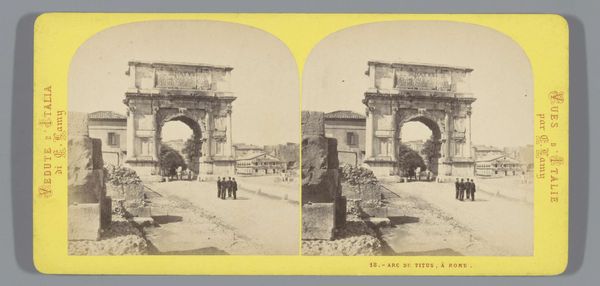
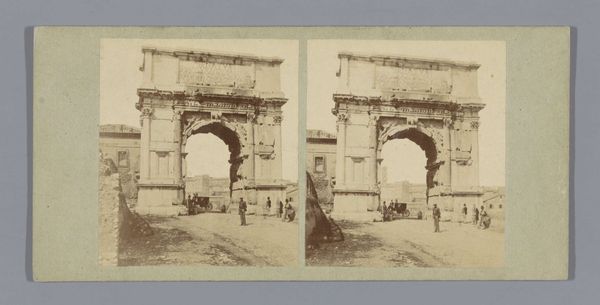
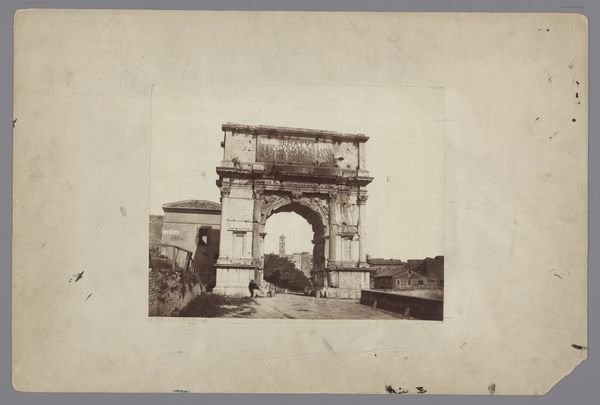
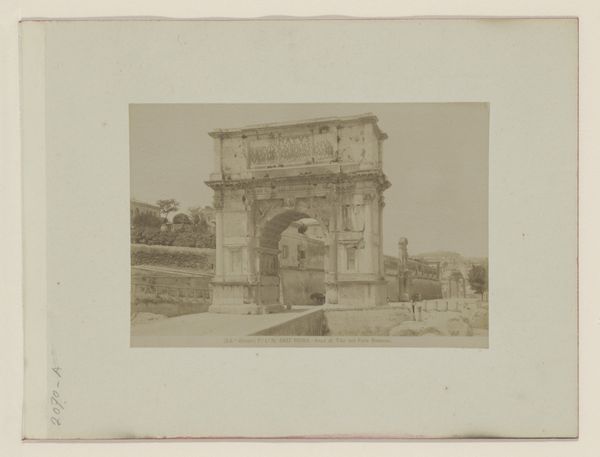
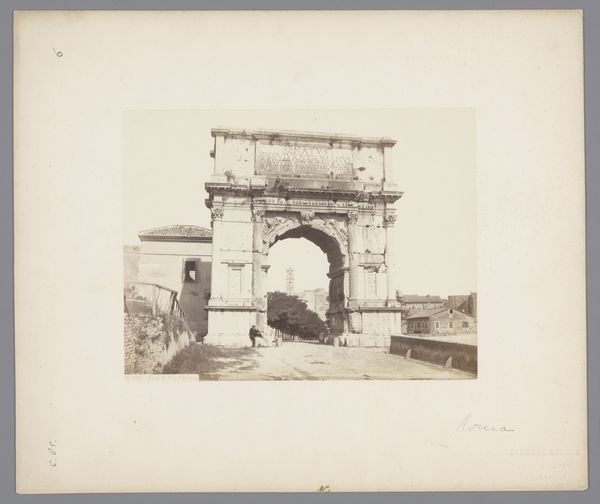
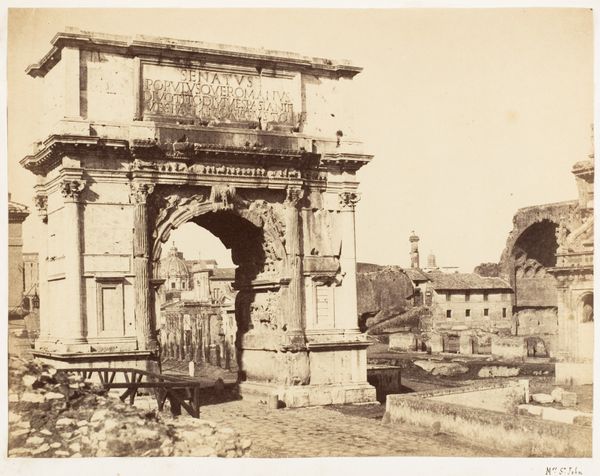
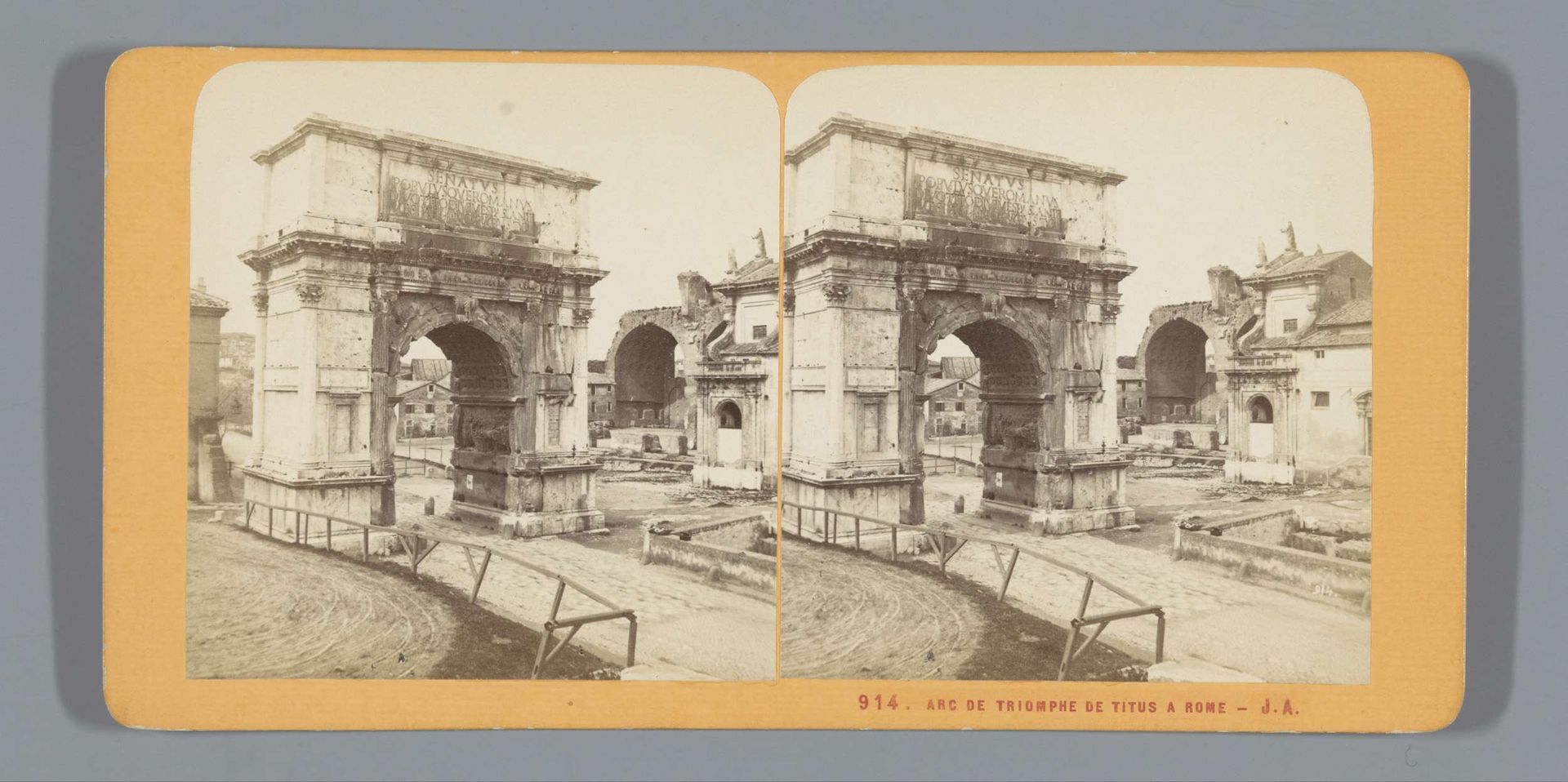
Editor: So, here we have Jean Andrieu's "Gezicht op de Boog van Titus," a collotype dating from somewhere between 1862 and 1876. There's a certain stillness to the image, despite it depicting this massive architectural monument. I'm curious, what historical context helps illuminate our understanding of it? Curator: Well, the proliferation of images like this one in the mid-19th century really speaks to the rise of tourism and a burgeoning visual culture. Consider that photography was still relatively new. What would it mean for the masses to suddenly have access to scenes from distant lands? Editor: So, it's about accessibility and dissemination? Like a postcard, almost? Curator: Precisely! Think about how images of Rome, with its layered history of imperial power and artistic achievement, served as potent cultural symbols. This photograph wasn't just documenting a ruin; it was actively constructing a particular narrative of European history. What do you think that narrative emphasized, given the political climate of the time? Editor: Perhaps the grandeur of the past, tying into contemporary ideas of nationhood and empire? I can see how these kinds of images would legitimize claims of power. Curator: Exactly. Andrieu’s work and others’ weren’t neutral records, they were involved in the circulation of specific ideologies. These were consciously shaped to influence how the public understood the present by presenting a certain version of the past. Editor: That’s fascinating. I never thought about how a simple photograph could be such an active participant in shaping cultural identity and political discourse. Curator: It’s a reminder that even seemingly objective records are embedded within power structures. What do you make of that in relation to today's media environment? Editor: I see how crucial it is to consider not just what we see, but why and how it's being shown to us.

Artwork details
- Medium
- photography, collotype
- Dimensions
- height 88 mm, width 176 mm
- Copyright
- Rijks Museum: Open Domain
Tags
Comments
Share your thoughts
About this artwork
Editor: So, here we have Jean Andrieu's "Gezicht op de Boog van Titus," a collotype dating from somewhere between 1862 and 1876. There's a certain stillness to the image, despite it depicting this massive architectural monument. I'm curious, what historical context helps illuminate our understanding of it? Curator: Well, the proliferation of images like this one in the mid-19th century really speaks to the rise of tourism and a burgeoning visual culture. Consider that photography was still relatively new. What would it mean for the masses to suddenly have access to scenes from distant lands? Editor: So, it's about accessibility and dissemination? Like a postcard, almost? Curator: Precisely! Think about how images of Rome, with its layered history of imperial power and artistic achievement, served as potent cultural symbols. This photograph wasn't just documenting a ruin; it was actively constructing a particular narrative of European history. What do you think that narrative emphasized, given the political climate of the time? Editor: Perhaps the grandeur of the past, tying into contemporary ideas of nationhood and empire? I can see how these kinds of images would legitimize claims of power. Curator: Exactly. Andrieu’s work and others’ weren’t neutral records, they were involved in the circulation of specific ideologies. These were consciously shaped to influence how the public understood the present by presenting a certain version of the past. Editor: That’s fascinating. I never thought about how a simple photograph could be such an active participant in shaping cultural identity and political discourse. Curator: It’s a reminder that even seemingly objective records are embedded within power structures. What do you make of that in relation to today's media environment? Editor: I see how crucial it is to consider not just what we see, but why and how it's being shown to us.
Comments
Share your thoughts