About this artwork
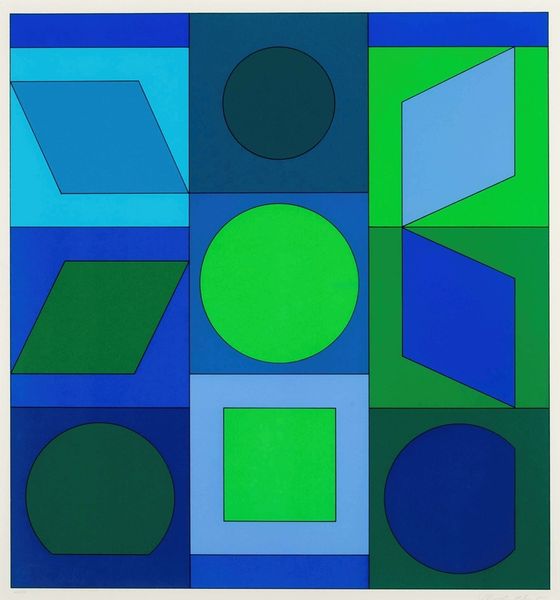
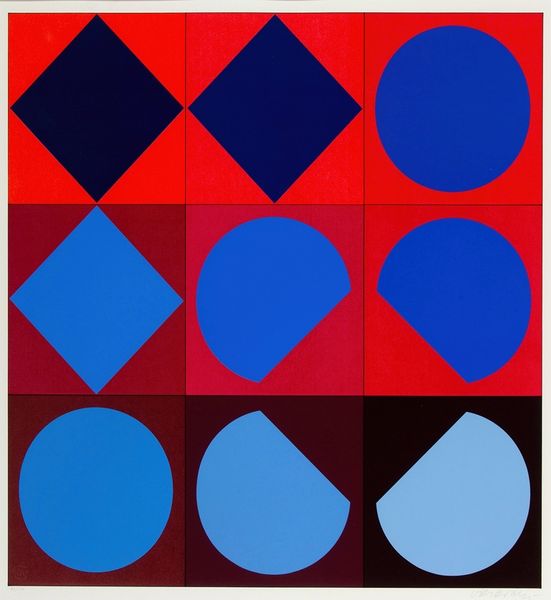
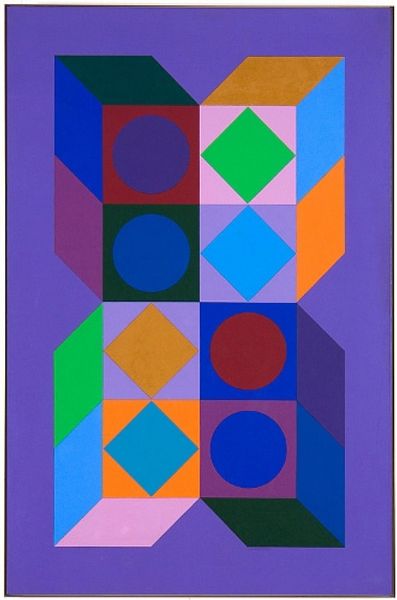
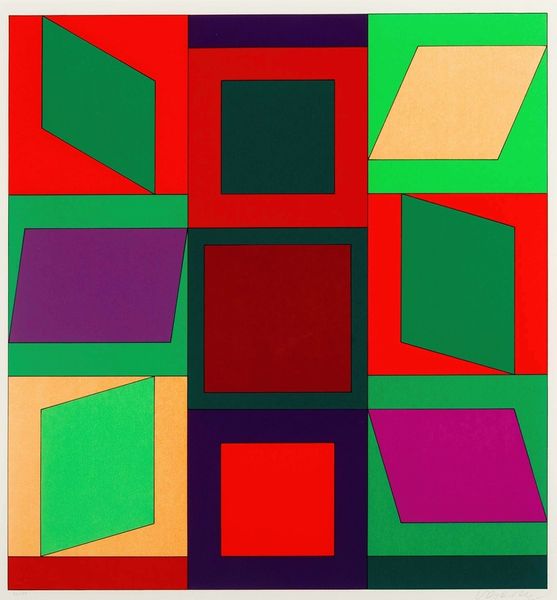
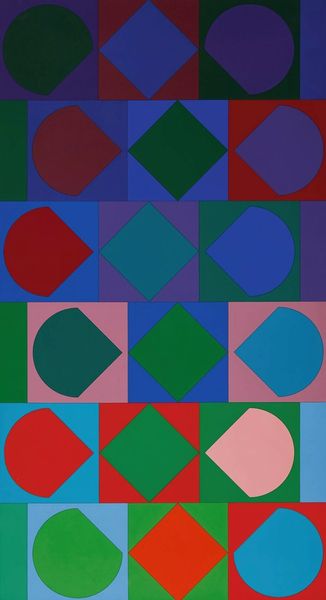
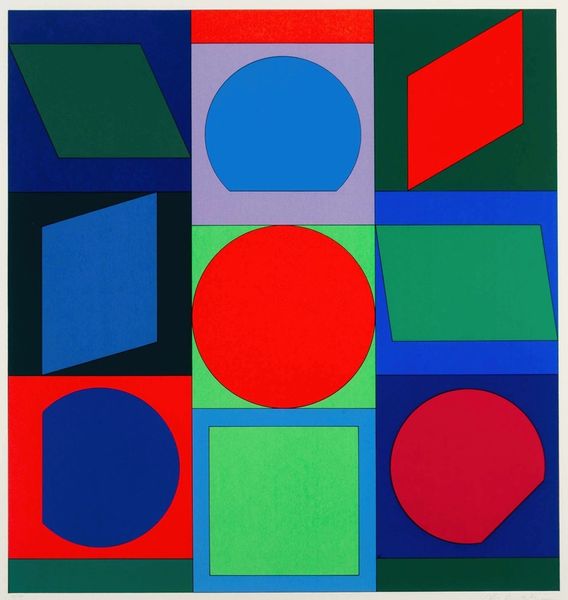
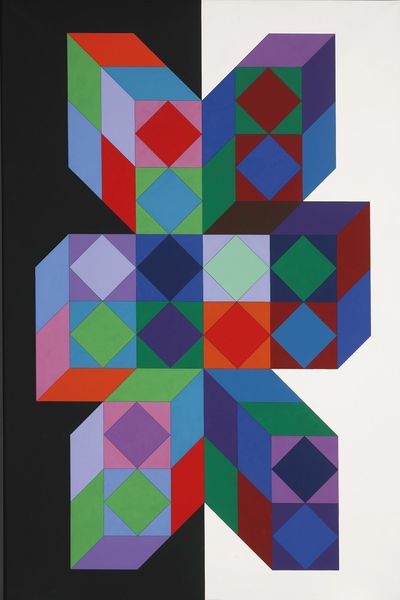
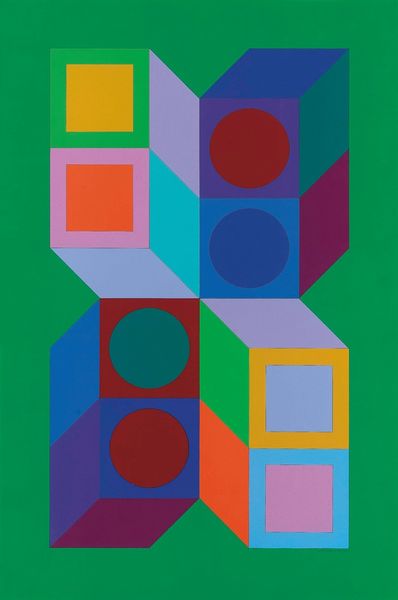
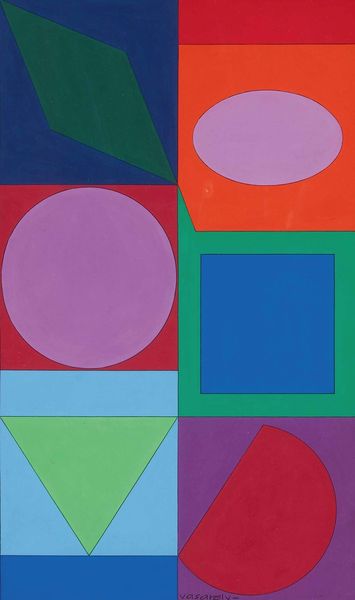
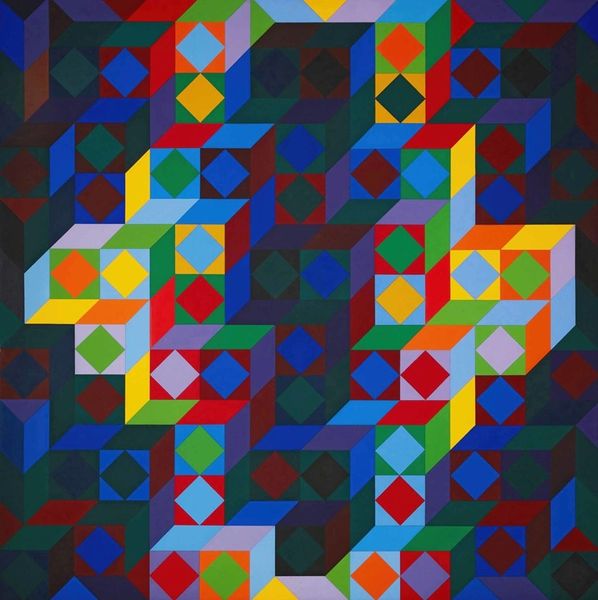
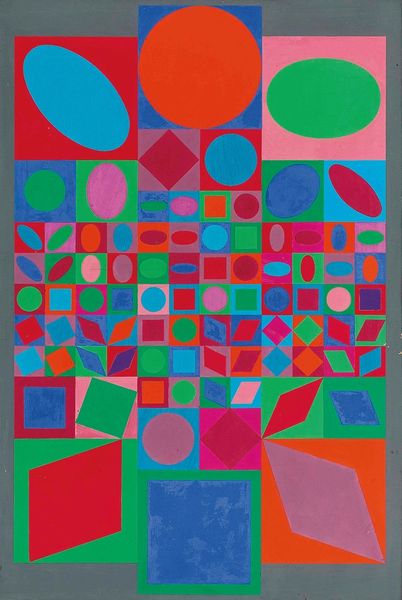
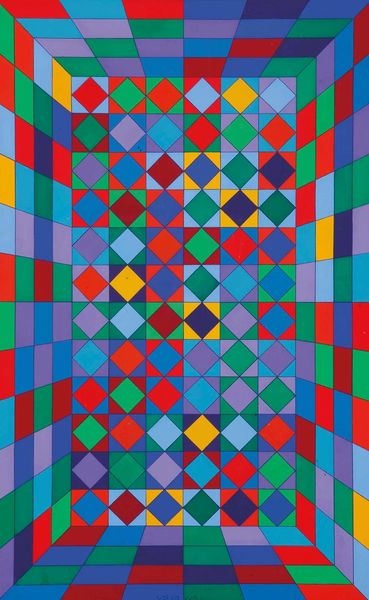
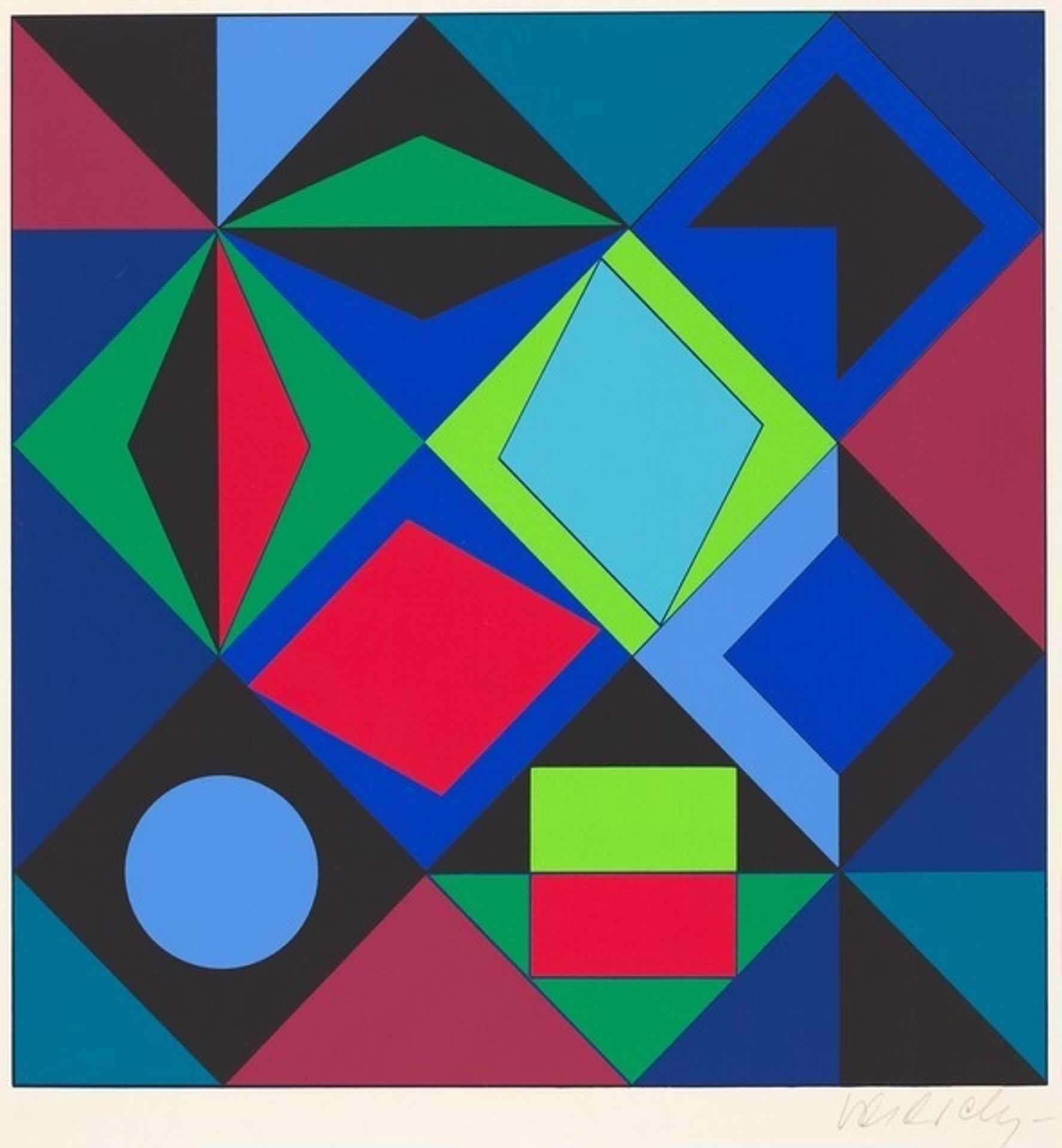
Curator: I'm immediately drawn into the composition's seemingly simple, yet surprisingly complex play of shapes. The crisp colors and sharp lines evoke a bold, almost digital aesthetic. Editor: This is "Sikra - M.C.", a print by Victor Vasarely. The Hungarian-French artist is considered the grandfather of Op Art, and his work here encapsulates that movement's visual vocabulary of geometric abstraction. Curator: Absolutely, I see that Hard-Edge painting influence so prominently. What’s so captivating is the tension created by these flat shapes that simultaneously suggest depth and flatness. It's a visual push-and-pull. Does the arrangement of geometric shapes carry specific symbolic weight? Editor: Vasarely often aimed to create a universal visual language, so the symbols themselves might be less culturally specific. The diamond shapes, particularly when layered as they are here, have a long history representing enlightenment and spiritual knowledge, but here I see them also working more purely as optical devices. He often sought to create art accessible and meaningful across different social contexts. Curator: The prevalence of triangles – symbols of stability and aspiration in many cultures – set against stark black backgrounds could evoke a sense of upward striving. Editor: Interesting interpretation! For me, those black shapes also create that hard edge, contributing to the sense of contrast but also a spatial ambiguity. You expect order, but find disruption. That might speak to the unease and tensions prevalent in mid-century societies – even if abstractly represented. Curator: Indeed, a lot of these works sought a progressive futuristic quality after reconstruction eras; this play of order and disorder may symbolize that larger shift from stable post-war into times of societal change and unrest in many European nations. Editor: It does make you wonder what artists were hoping for from this era! Considering the societal role of this type of art, its geometric construction can open a visual dialogue of cultural symbolism. I enjoyed the tension between sharp design and historic notions about each individual geometric form within it. Curator: I agree. Exploring Vasarely's blend of modern and historical symbolism sheds light on its enduring appeal and artistic relevance.


Artwork details
- Medium
- Copyright
- National Gallery of Art: CC0 1.0
Tags
op-art
geometric
geometric-abstraction
abstraction
hard-edge-painting
Comments
No comments
About this artwork
Curator: I'm immediately drawn into the composition's seemingly simple, yet surprisingly complex play of shapes. The crisp colors and sharp lines evoke a bold, almost digital aesthetic. Editor: This is "Sikra - M.C.", a print by Victor Vasarely. The Hungarian-French artist is considered the grandfather of Op Art, and his work here encapsulates that movement's visual vocabulary of geometric abstraction. Curator: Absolutely, I see that Hard-Edge painting influence so prominently. What’s so captivating is the tension created by these flat shapes that simultaneously suggest depth and flatness. It's a visual push-and-pull. Does the arrangement of geometric shapes carry specific symbolic weight? Editor: Vasarely often aimed to create a universal visual language, so the symbols themselves might be less culturally specific. The diamond shapes, particularly when layered as they are here, have a long history representing enlightenment and spiritual knowledge, but here I see them also working more purely as optical devices. He often sought to create art accessible and meaningful across different social contexts. Curator: The prevalence of triangles – symbols of stability and aspiration in many cultures – set against stark black backgrounds could evoke a sense of upward striving. Editor: Interesting interpretation! For me, those black shapes also create that hard edge, contributing to the sense of contrast but also a spatial ambiguity. You expect order, but find disruption. That might speak to the unease and tensions prevalent in mid-century societies – even if abstractly represented. Curator: Indeed, a lot of these works sought a progressive futuristic quality after reconstruction eras; this play of order and disorder may symbolize that larger shift from stable post-war into times of societal change and unrest in many European nations. Editor: It does make you wonder what artists were hoping for from this era! Considering the societal role of this type of art, its geometric construction can open a visual dialogue of cultural symbolism. I enjoyed the tension between sharp design and historic notions about each individual geometric form within it. Curator: I agree. Exploring Vasarely's blend of modern and historical symbolism sheds light on its enduring appeal and artistic relevance.
Comments
No comments