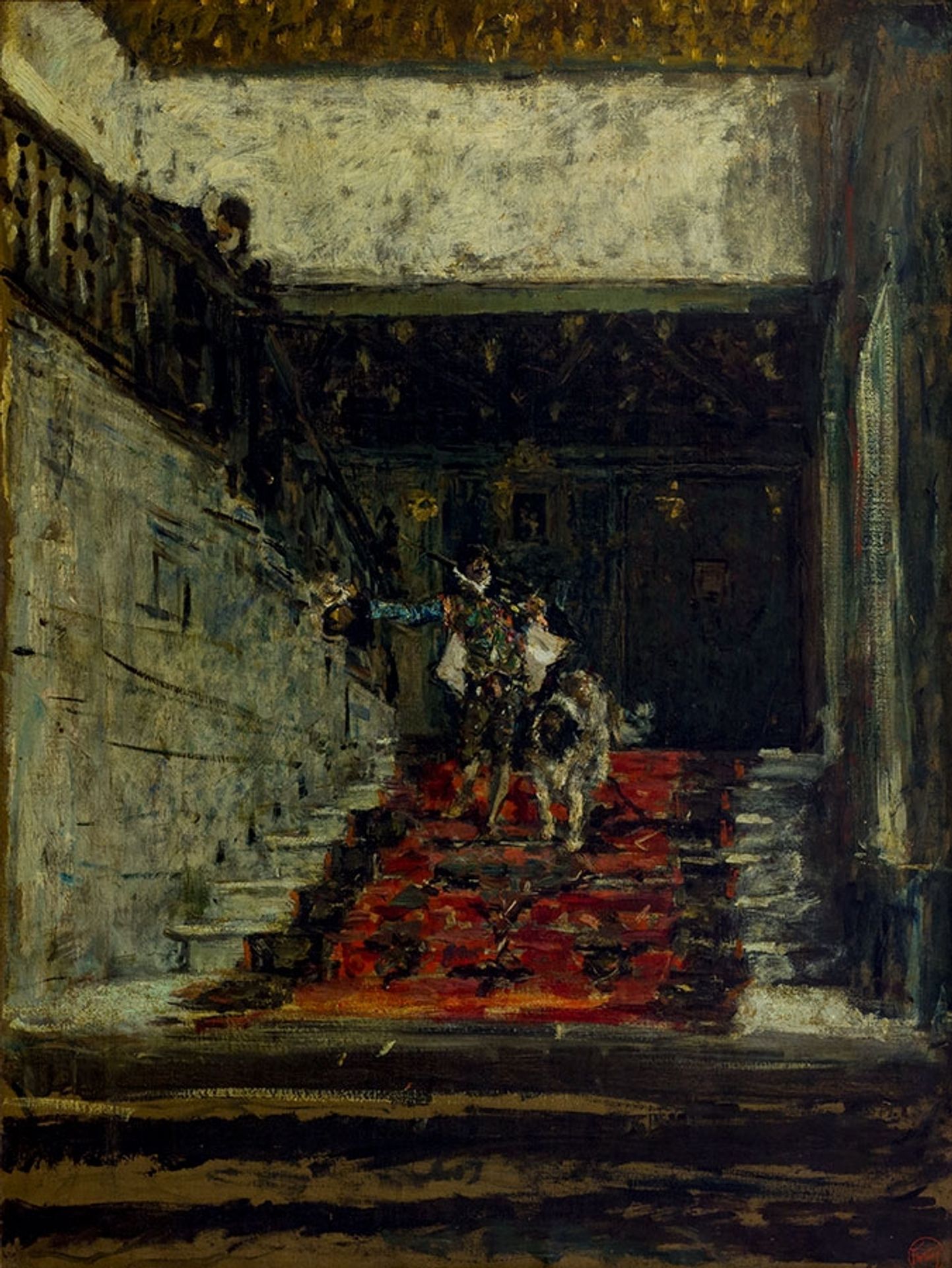
The Stairs at the Casa De Pilatos, Seville

Listen to curator's interpretation
Curatorial notes
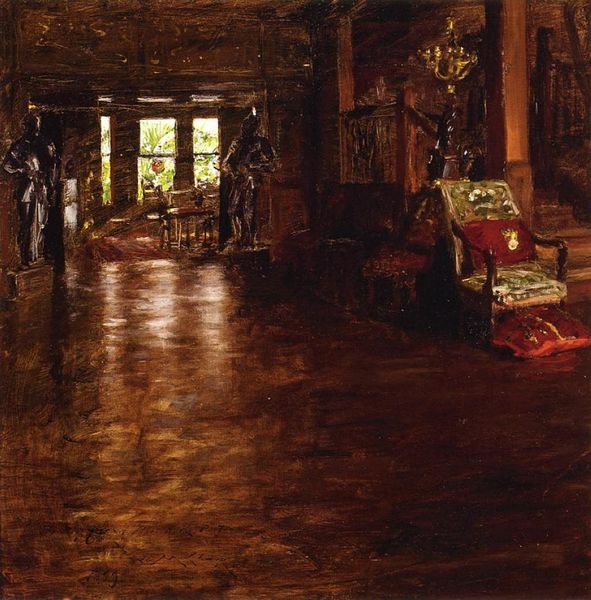
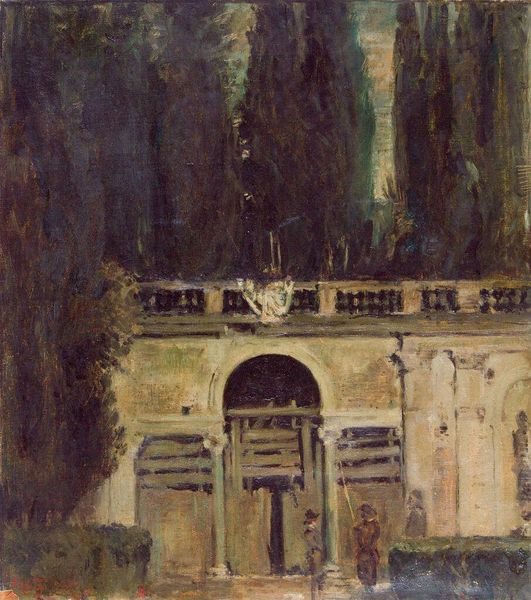
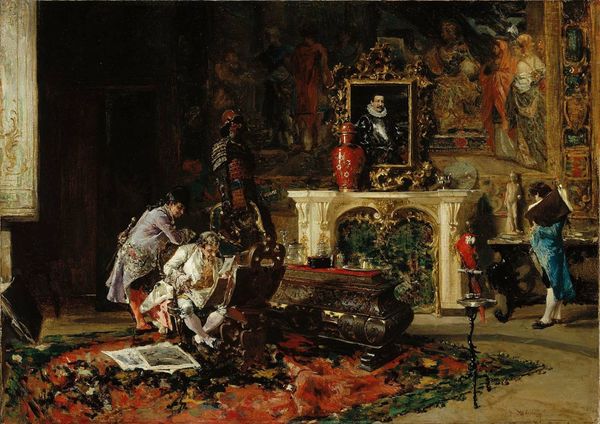
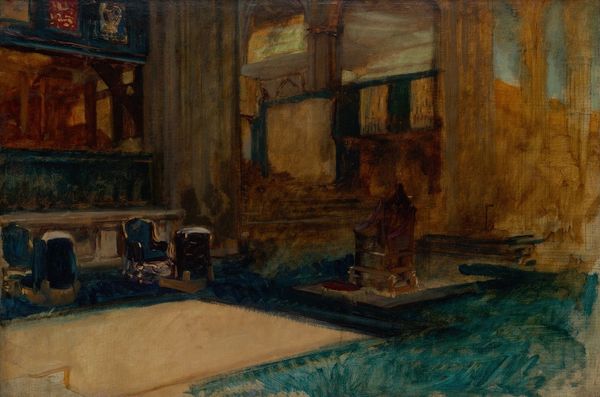
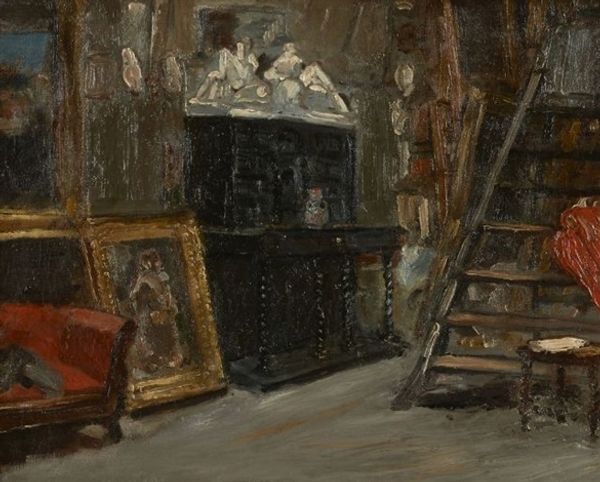
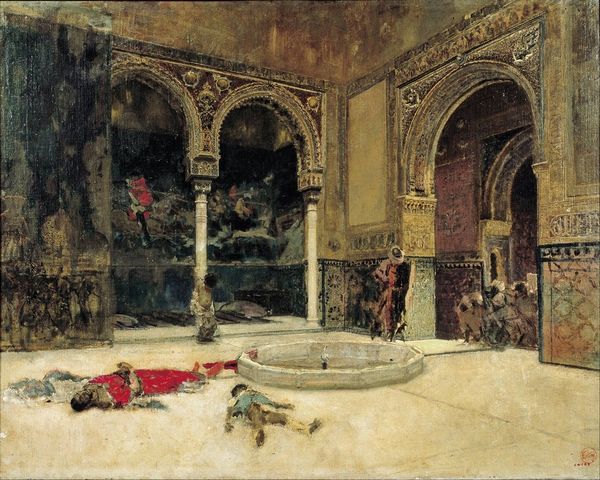
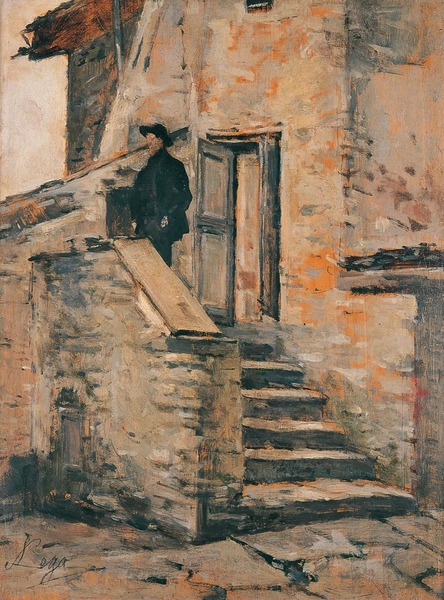
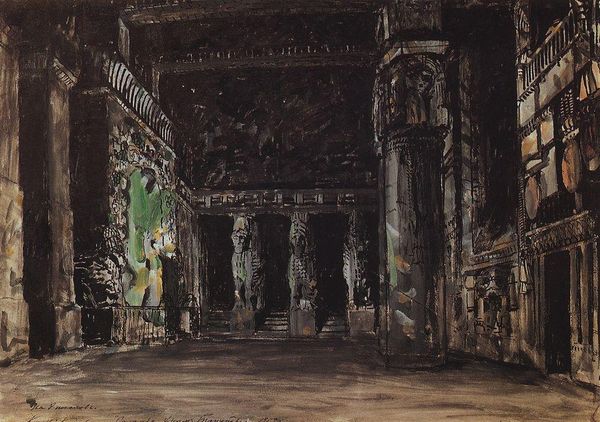
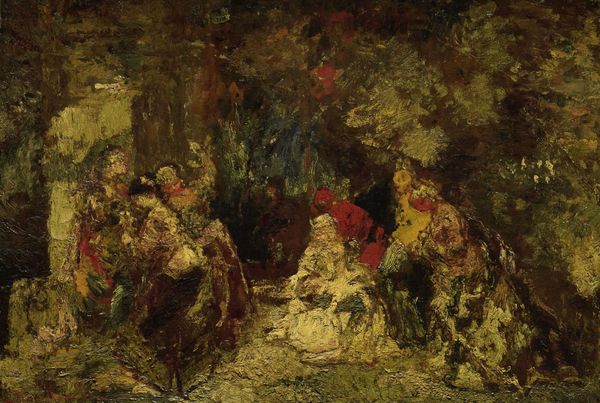
Curator: What immediately strikes me is how theatrical this scene appears—the saturated red carpet and dramatic lighting certainly create a stage-like atmosphere. Editor: That’s a keen observation. Here we have “The Stairs at the Casa De Pilatos, Seville”, an oil painting, attributed to Mariano Fortuny Marsal. While undated, it certainly captures a slice of life through a particular lens, wouldn’t you agree? The way Fortuny handles the medium, applying such visible impasto brushstrokes, emphasizes process, almost as much as subject matter. Curator: Indeed, those thick applications! One cannot ignore Fortuny's visible brushstrokes which are central to his artistic approach. But to consider the socio-historical implications of such luxury in this depiction? What does it tell us about representation? Editor: The inclusion of figures ascending the stairs adds to a compelling narrative, of course. But my mind races back to Spain’s history and the architecture it encompasses. Built in the late 15th and early 16th centuries, the Casa de Pilatos in Seville itself symbolizes power, status, and conquest during that period, right? Its architectural influences, combining Renaissance and Moorish elements, reflect cultural layering—each conquest adds new styles and layers of visual narratives! Fortuny himself seems very self-aware. Curator: Precisely! One recognizes that his masterful employment of painterly brushstrokes and a vibrant palette enhances visual appeal here. Fortuny highlights the material quality, thus moving this piece beyond the simple recording. Editor: And in so doing, reinforces some problematic power dynamics... Those at the top and those ascending! It invites a dialogue on socio-economic status. I do wonder about labor implications within grand estates such as Casa de Pilatos. We can contemplate if art and labor must go together... Curator: We definitely can. As the artist explores the architectural features alongside his application and use of impasto, the work itself offers itself as a vehicle for considering broader artistic expression and craftsmanship. This goes far beyond just architectural study of a place. Editor: Exactly! And the political dimensions. Fortuny's "Stairs" challenges viewers, like ourselves, to engage in that intersection. Thanks! Curator: The conversation around materiality and its historical contexts really allows this artwork to resonate even further with audiences. Thank you, also!