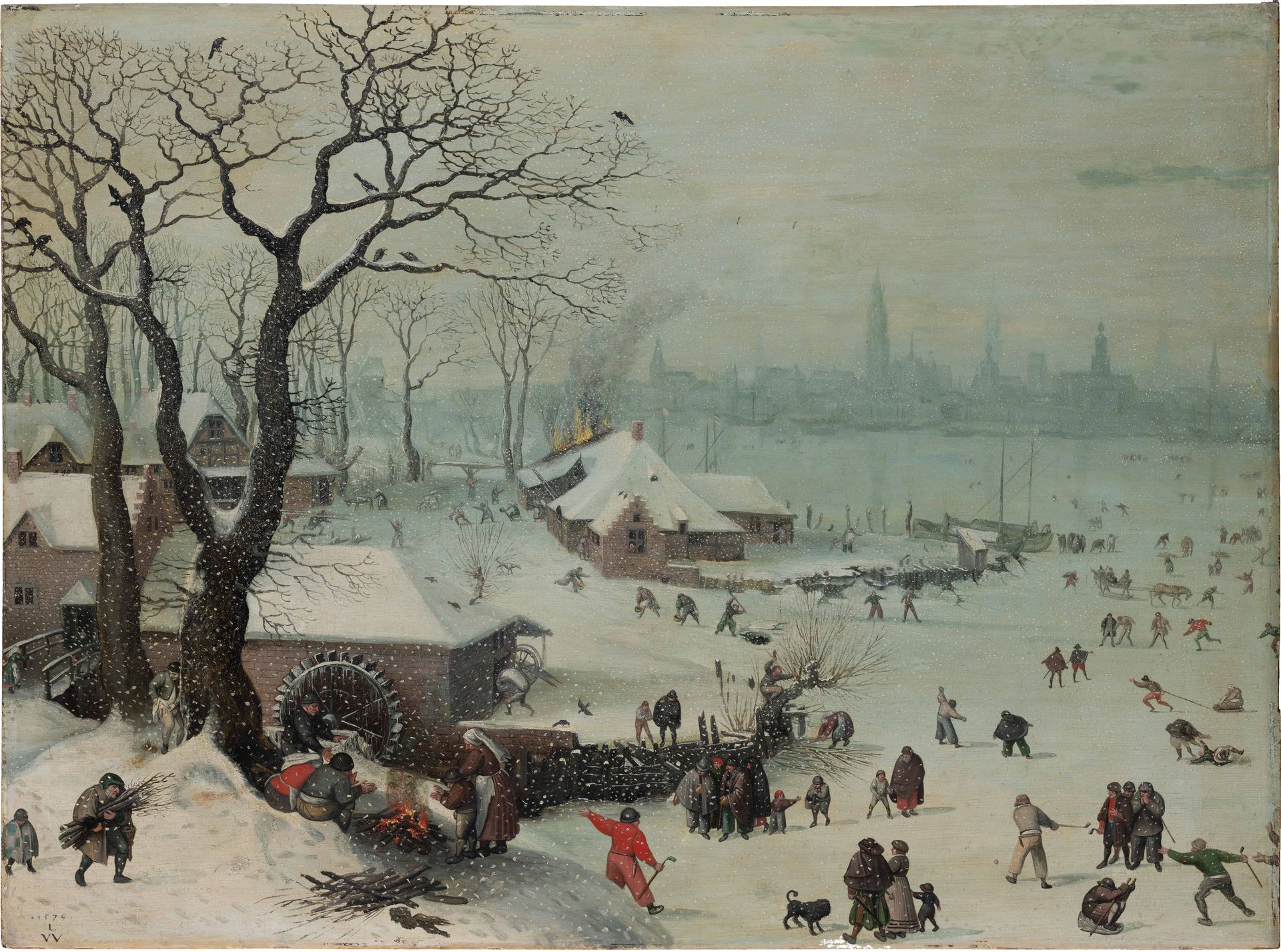
1575
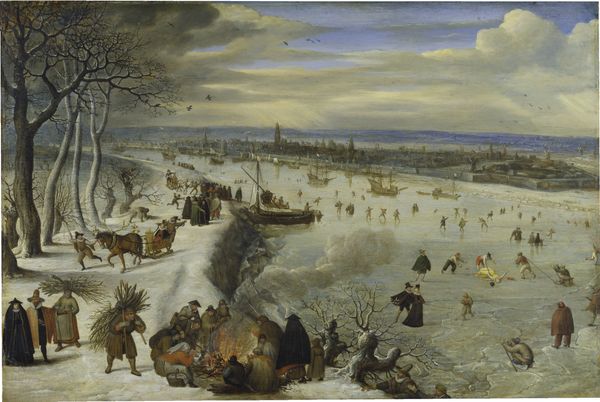
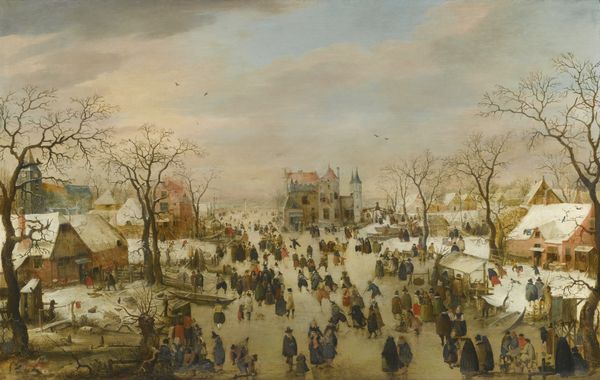
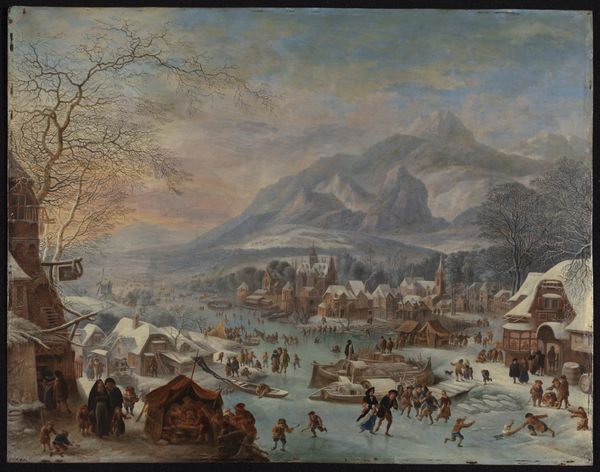
Winter Landscape with Snowfall near Antwerp


Listen to curator's interpretation
Curatorial notes
Editor: So, this is Lucas van Valckenborch’s "Winter Landscape with Snowfall near Antwerp" from 1575. It’s oil and tempera on panel, and what strikes me is the way the dark figures pop against the stark white snow, a bit like looking into a memory. What do you see in this piece, considering its imagery? Curator: The enduring power of winter landscapes like this lies in their archetypal quality. Snow, particularly, is symbolically potent. It represents not just a season, but ideas of purification, dormancy, and even death. The frozen world offers a tabula rasa, a blank slate for both nature and humanity. Editor: Dormancy... that makes sense. Curator: Yes, look at the activity depicted despite the cold. What do you notice about the relationship between the figures and the landscape? The warmth of the fire... What need does it fulfills here? Editor: Well, they’re bundled up and engaged in different activities—playing, working… the fire's keeping them warm but seems a feeble shield against the vast winter scene. It highlights both community and individual resilience. Curator: Precisely! Notice also the placement of the Antwerp skyline in the background. A city is continuity, the promise of warmth, commerce, and structure juxtaposed against the potential chaos of winter. The imagery holds tension between fragility and enduring life, reflecting on the cyclical nature of existence, perhaps even the resilience of Antwerp itself amidst historical conflicts. Editor: I didn't catch all of that... It’s interesting how much symbolism an image can hold! Curator: Visual symbols often act as cultural anchors, connecting us to shared experiences and understandings across time. What we initially perceive as a simple genre scene is in reality a meditation on the human condition. Editor: It changes the way I look at landscapes now! Thanks. Curator: And I am glad for this joint reflection on memory and iconography embedded within.