About this artwork
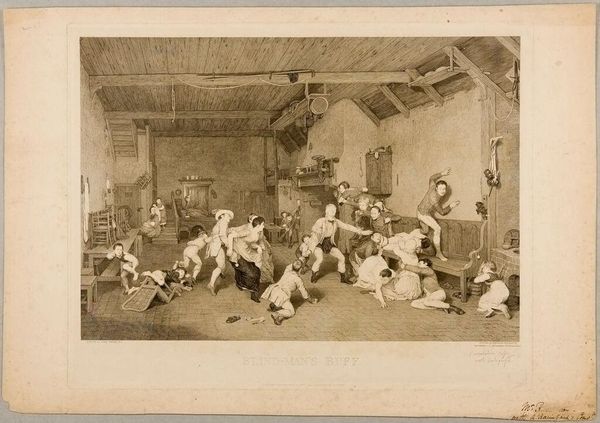
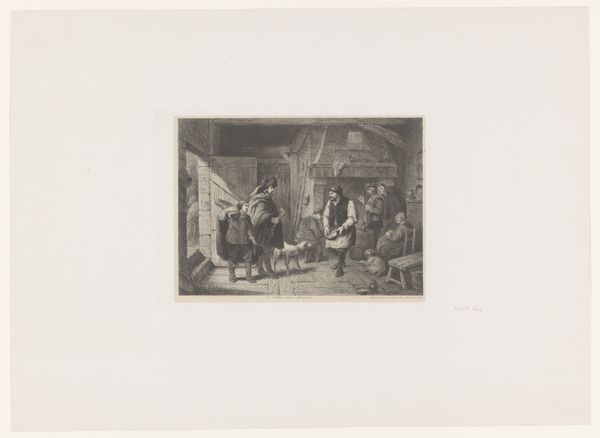
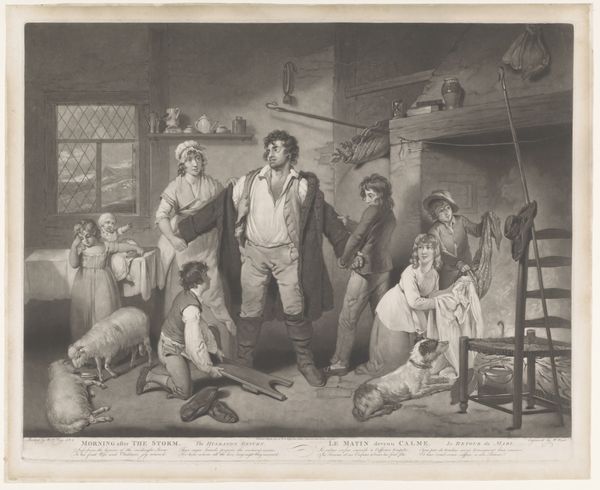
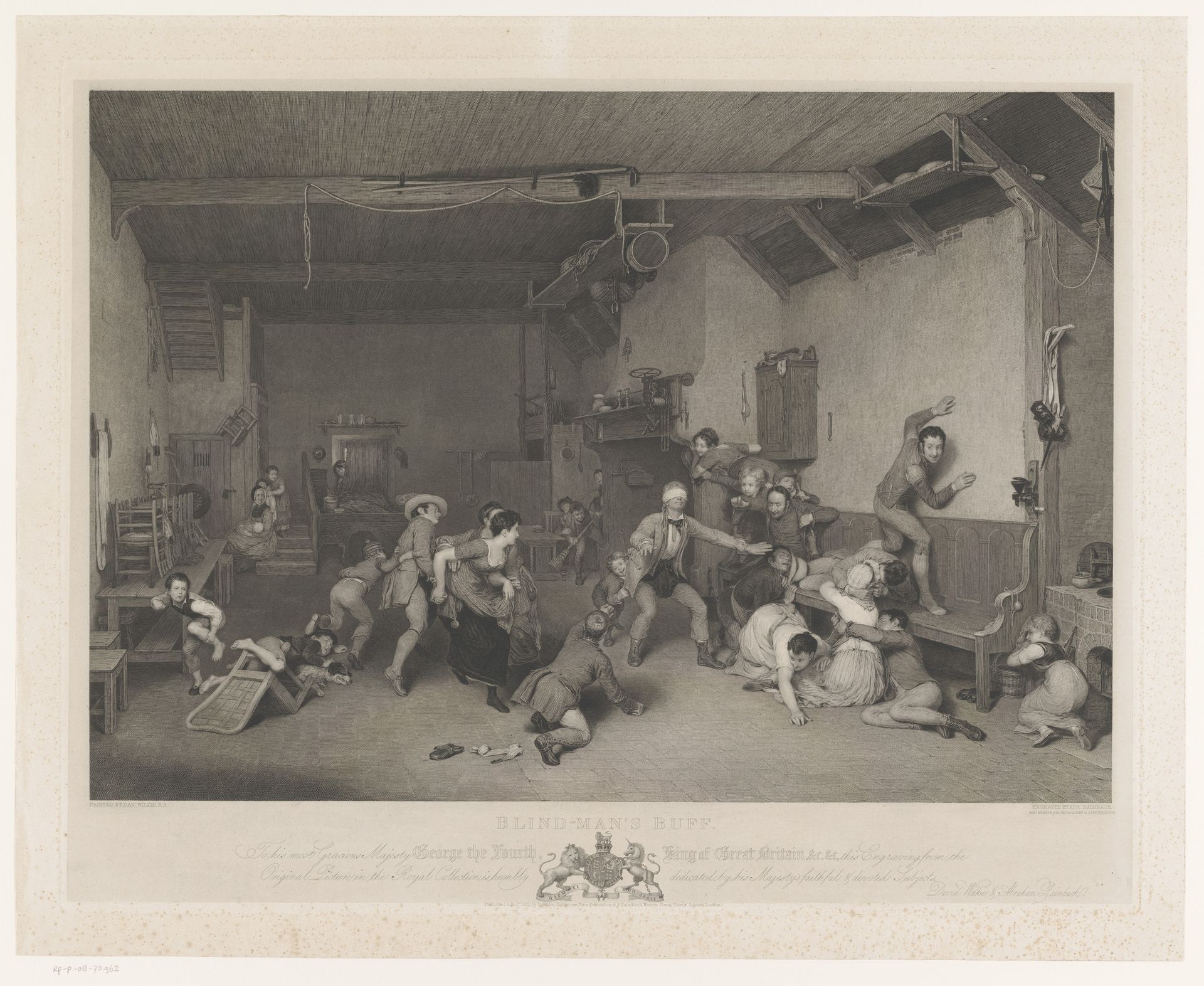
Abraham Raimbach created this print, "Blindemannetje in interieur met openhaard," using etching techniques. The image's detailed composition immediately conveys the chaos and energy of a children's game of blind man's buff. Note how the artist uses light and shadow to create depth and to focus our attention on the frenetic activity at the center. The architectural structure of the interior, with its receding walls and exposed beams, creates a stage for the unfolding drama. Raimbach masterfully uses line and form to capture the poses of the figures: the blindfolded player reaching out, the children scrambling away, and the onlookers positioned along the periphery. The print engages with broader cultural themes about childhood, domesticity, and social interaction. By inviting us to observe this playful scene, Raimbach prompts us to consider the roles and dynamics within a community, capturing a moment of shared experience and delight, that leaves us reflecting on the social rituals we create.
Blindemannetje in interieur met openhaard
1822 - 1826

Abraham Raimbach
1776 - 1843Location
RijksmuseumArtwork details
- Medium
- print, engraving
- Dimensions
- height 504 mm, width 641 mm
- Location
- Rijksmuseum
- Copyright
- Rijks Museum: Open Domain
Tags
Comments
Share your thoughts
About this artwork
Abraham Raimbach created this print, "Blindemannetje in interieur met openhaard," using etching techniques. The image's detailed composition immediately conveys the chaos and energy of a children's game of blind man's buff. Note how the artist uses light and shadow to create depth and to focus our attention on the frenetic activity at the center. The architectural structure of the interior, with its receding walls and exposed beams, creates a stage for the unfolding drama. Raimbach masterfully uses line and form to capture the poses of the figures: the blindfolded player reaching out, the children scrambling away, and the onlookers positioned along the periphery. The print engages with broader cultural themes about childhood, domesticity, and social interaction. By inviting us to observe this playful scene, Raimbach prompts us to consider the roles and dynamics within a community, capturing a moment of shared experience and delight, that leaves us reflecting on the social rituals we create.
Comments
Share your thoughts